

 QuranGPT
The Death of the Password: How Hardware-Bound FIDO2 Passkeys and Decentralized Identity are Powering Enterprise Zero-Trust Security
A comprehensive enterprise cybersecurity, identity access management (IAM), and cryptographic authentication report on organizations replacing legacy passwords and SMS-based OTPs with FIDO2 WebAuthn passkeys, hardware-bound TPM enclaves, and decentralized identity (DID) frameworks.
The Holy Quran Team
Author
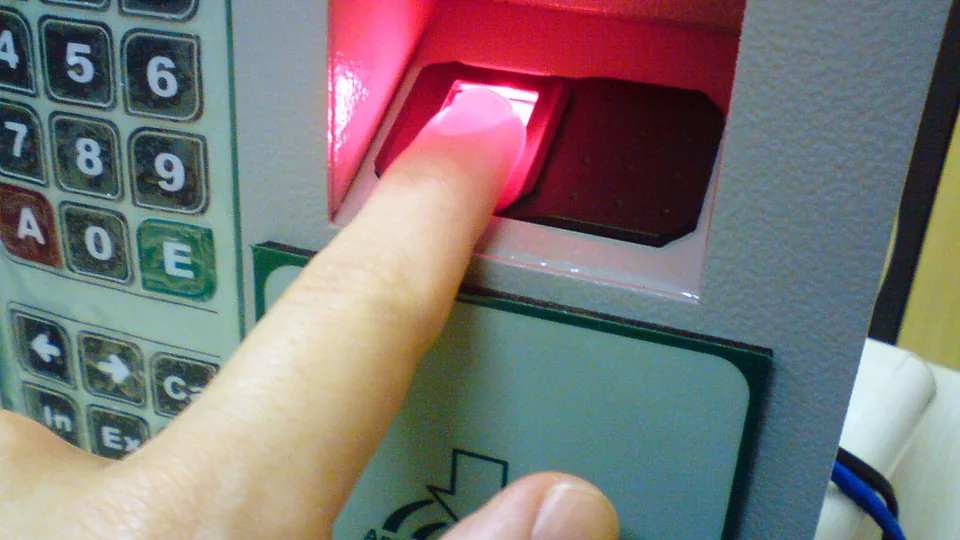
The Death of the Password: How Hardware-Bound FIDO2 Passkeys and Decentralized Identity are Powering Enterprise Zero-Trust Security
In what Chief Information Security Officers (CISOs) celebrate as the definitive triumph over credential theft, phishing vectors, and corporate account takeovers, global enterprise IT architectures have reached the tipping point in the worldwide transition to Passwordless Zero-Trust Identity Access Management (IAM) powered by FIDO2 / WebAuthn cryptographic passkeys and hardware-bound secure enclaves.
For over four decades, static alphanumeric passwords—and their vulnerable step-up counterparts, such as SMS verification codes and push-notification Multi-Factor Authentication (MFA)—have represented the weakest link in enterprise security, accounting for over 85% of all successful corporate data breaches via Adversary-in-the-Middle (AiTM) reverse proxy phishing and MFA fatigue attacks.
By establishing cryptographic origin-bound public-private key pairs stored in hardware Trusted Platform Modules (TPM 2.0), Apple Secure Enclaves, and physical FIDO Security Keys (YubiKeys), modern enterprise authentication has made credential theft mathematically impossible: because private keys never leave the physical client device, an employee cannot inadvertently leak their authentication credentials to a phishing website.
1. Cryptographic Mechanics of FIDO2 / WebAuthn Authentication
The core security of FIDO2 authentication relies on asymmetric public-key cryptography coupled to browser-enforced DNS origin binding:
graph TD
    A["User Attempts Login on Enterprise Portal (e.g., sso.company.com)"] --> B["Enterprise IdP Generates Cryptographic Challenge Nonce & Sends to Browser"]

    B --> C["Browser Queries Hardware Secure Enclave / TPM via WebAuthn API"]
    C --> D["Biometric Local Unlock (Touch ID / Windows Hello / YubiKey Hardware Touch)"]

    D --> E["Hardware Signs Challenge with Device-Bound Private Key Bound Strictly to 'sso.company.com'"]

    E --> F["Sends Digital Signature Back to Enterprise IdP Server for Verification Against Stored Public Key"]

    F --> G["Authentication Success: Phishing Reverse Proxy Cannot Intercept or Replay Signature"]
Key Architectural Pillars of Modern Zero-Trust IAM:
- Cryptographic Origin Binding: The browser automatically signs the exact fully qualified domain name (FQDN). If an employee clicks a malicious clone site (e.g.,
sso-company-login.phish.com), the enclave signs the phishing domain, causing instant server-side signature rejection. - Hardware Security Module (HSM) Isolation: Private keys are generated inside dedicated silicon enclaves with physically unclonable functions (PUF) and cannot be exported or extracted even by root-level malware on the host operating system.
- Decentralized Identity (DID) and Verifiable Credentials (VCs): Integrating W3C Decentralized Identifiers, allowing employees to cryptographically prove employment credentials, security clearances, and role authorizations without exposing unnecessary personal identifiable information (PII).
2. Technical Comparison: Legacy MFA vs. Hardware-Bound Passkeys
The security superiority of hardware-bound passkeys eliminates every vector of traditional cyber exploitation:
| Authentication Mechanism | Phishing Attack Vulnerability | MFA Fatigue / Push Spam Risk | SIM-Swapping Vulnerability | User Login Friction |
|---|---|---|---|---|
| Static Password + SMS OTP | Highly Vulnerable (Phishable) | Not Applicable | Extreme Risk (Carrier Exploit) | High (Manual Code Typing). |
| Authenticator App (TOTP Code) | Vulnerable to AiTM Proxies (Evilginx) | Low | Low | Moderate (Manual 6-digit sync). |
| Mobile Push Notification MFA | Vulnerable to Relay Attacks | High (MFA Bombing / Fatigue) | Low | Low (Single Tap Confirmation). |
| Hardware FIDO2 Passkey (WebAuthn) | Mathematically Phishing-Proof | Zero Risk (Local User Presence Required) | Zero Risk (Hardware-Bound) | Instant Biometric (<2 Seconds). |
3. Continuous Zero-Trust Contextual Evaluation
Authentication is no longer a one-time static event at the perimeter, but a continuous evaluation of device posture and trust:
- Device Health Telemetry Verification: The IdP dynamically verifies that the client endpoint is running an encrypted disk, latest OS security patches, and active Endpoint Detection and Response (EDR) agents before granting access to sensitive cloud databases.
- Risk-Based Step-Up Challenges: If an anomalous network location or impossible travel velocity is detected, the Zero-Trust policy engine dynamically requires re-verification via a hardware-bound physical FIDO key.
4. Conclusion: An Unbreachable Identity Foundation
The widespread enterprise adoption of hardware-bound FIDO2 passkeys represents the long-awaited closure of the password vulnerability era.
By anchoring digital identity in the immutable laws of asymmetric cryptography and hardware-isolated enclaves, organizations have erected an unbreachable barrier against cyber adversaries—delivering a seamless, frictionless, and completely phishing-resistant digital future.