

 QuranGPT
The Architecture of Semantic Memory: How Vector Database Engineering and HNSW Graph Indexing Power Billion-Scale Enterprise RAG
A comprehensive database engineering, information retrieval, and generative AI infrastructure report on high-dimensional vector databases, Hierarchical Navigable Small World (HNSW) graph indexing, Product Quantization (PQ), and hybrid sparse-dense search for enterprise Retrieval-Augmented Generation (RAG).
The Holy Quran Team
Author
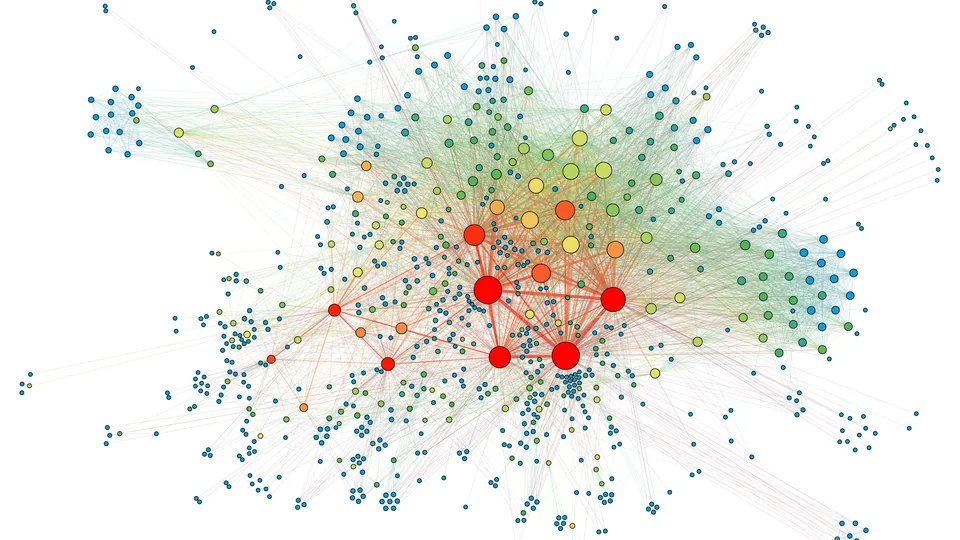
The Architecture of Semantic Memory: How Vector Database Engineering and HNSW Graph Indexing Power Billion-Scale Enterprise RAG
In the modern enterprise artificial intelligence stack, large language models (LLMs) provide the cognitive reasoning engine, but Vector Databases serve as the high-speed, long-term semantic memory architecture.
As global enterprises scale Retrieval-Augmented Generation (RAG) systems across hundreds of millions of internal corporate documents, proprietary source code repositories, and real-time customer transaction logs, traditional relational and full-text keyword search engines (such as BM25/Elasticsearch) falter when tasked with capturing nuanced semantic intent across high-dimensional vector embeddings (e.g., 1,536-dimensional to 4,096-dimensional floating-point vectors).
To execute Approximate Nearest Neighbor (ANN) search across billions of high-dimensional vectors in single-digit milliseconds (<5 ms), specialized vector database engines—such as Milvus, Qdrant, Pinecone, and pgvector—rely on advanced algorithmic graph structures, predominantly Hierarchical Navigable Small World (HNSW) graphs paired with Scalar and Product Quantization (PQ), fundamentally redefining the boundaries of real-time information retrieval.
1. Algorithmic Mechanics: The Hierarchical Navigable Small World (HNSW) Graph
The HNSW algorithm organizes high-dimensional vectors into a multi-layered geometric graph structure inspired by the "Skip List" data structure:
graph TD
    A["Query Vector Embedding Enters Index at Top Layer (Sparse Long-Distance Highway)"] --> B["Greedy Traversal: Moves to Graph Node Closest to Query Vector (Cosine Similarity)"]

    B --> C["Reaches Local Minimum in Top Layer: Steps Down to Next Denser Graph Layer"]

    C --> D["Layer 1 & Layer 0 (Dense Base Layer with High Clustering Coefficient)"]

    D --> E["Short-Range Fine Search Amongst Nearest Vector Neighbors"]

    E --> F["Product Quantization (PQ): Decompresses Asymmetric Distances in L3 CPU Cache"]

    F --> G["Returns Top-K Semantically Relevant Document Chunks in <5 Milliseconds"]
Key Architectural Innovations in Vector Indexing:
- Multi-Layer Skip Connections: Upper graph layers contain only a sparse subset of vectors with long-range geometric links, allowing the search query to traverse vast regions of the high-dimensional vector space in logarithmic time O(log N).
- Product Quantization (PQ) Compression: Slicing a 1,536-dimensional float32 vector (6,144 bytes) into 64 sub-vectors and mapping each to an 8-bit centroid codebook, compressing memory footprint by over 95% (down to 64 bytes per vector) while preserving >98% search recall accuracy.
- Hybrid Search Fusion (Reciprocal Rank Fusion / RRF): Uniting dense neural semantic vector embeddings with exact sparse keyword inverted indexes (BM25) inside a single unified query pipeline, eliminating hallucination risks when querying specific alphanumeric part numbers, legal case codes, or API method signatures.
2. Technical Comparison: Vector Search Indexing Strategies
Choosing the right indexing algorithm is critical for balancing search recall, latency, and RAM memory cost:
| Vector Indexing Algorithm | Search Latency (QPS) | Recall Accuracy (Top-10) | Memory Overhead (RAM) | Index Build / Ingestion Speed |
|---|---|---|---|---|
| Flat / Brute-Force (Exact kNN) | Extremely Slow (Linear O(N)) | 100% Perfect Ground Truth | Low (Raw Embeddings only) | Zero build time (No index). |
| IVF-Flat (Inverted File Index) | Fast (2 to 10 ms) | sim 85% to 92% | Low to Moderate | Fast K-Means Clustering. |
| HNSW (Hierarchical Graph) | Ultra-Fast (<2 ms Latency) | >98.5% Exceptional Recall | High (Graph Link Overhead) | Moderate (Link Construction). |
| HNSW + Product Quantization (PQ) | Ultra-Fast (<3 ms Latency) | sim 96.8% High Recall | Ultra-Low (95% RAM Reduction) | High Ingestion Throughput. |
3. Production Enterprise RAG Pipeline Architecture
Modern enterprise RAG systems have evolved far beyond naive vector lookup into sophisticated multi-stage retrieval workflows:
- Contextual Chunking & Late Chunking: Preserving document-level semantic context across chunk boundaries, ensuring that retrieved paragraphs retain their structural hierarchy and pronoun references.
- Neural Re-Ranking (Cross-Encoders): Passing the top-50 candidate document chunks retrieved by HNSW through a high-precision Cross-Encoder re-ranker model, selecting the definitive top-5 most relevant passages to inject into the LLM context window.
4. Conclusion: The Foundation of Enterprise Intelligence
Vector databases represent the essential bridge connecting static corporate knowledge with dynamic generative reasoning.
By engineering ultra-fast, memory-efficient HNSW graph indexes capable of searching billions of conceptual ideas in the blink of an eye, database systems engineers have provided the fundamental cognitive architecture that makes enterprise AI accurate, trustworthy, and instantly responsive to the complex demands of modern business.