

 QuranGPT
United Nations Security Council Marks 25th Anniversary of 9/11 with Recommitment to Global Counter-Terrorism Framework
The UN Security Council convenes a historic session marking the 25th anniversary of 9/11, reaffirming global consensus on counter-terrorism and international law.
The Holy Quran Global Affairs & Diplomatic Desk
Author
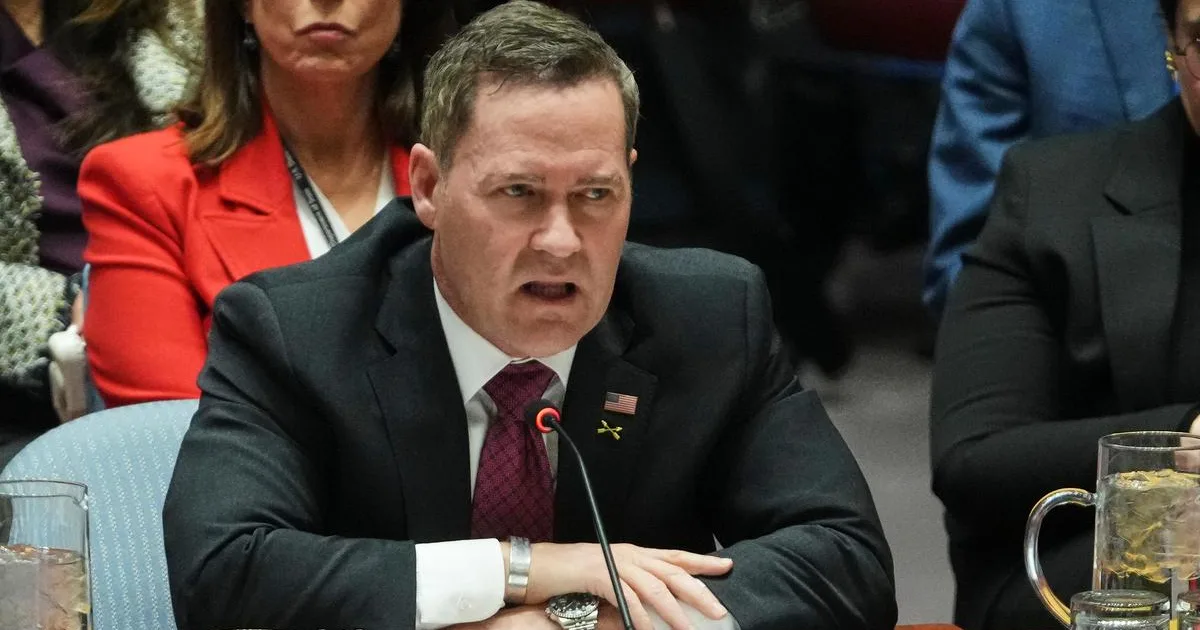
The United Nations Security Council gathered in a solemn and historic special session at UN Headquarters in New York to mark the 25th anniversary of the September 11, 2001 terrorist attacks. Delegates from all 15 member states, alongside representatives of nations that have suffered catastrophic acts of transnational terrorism, unanimously reaffirmed their commitment to the international counter-terrorism architecture established under UNSC Resolution 1373.
The commemorative session provided a global platform to evaluate a quarter-century of multilateral counter-terrorism cooperation, identifying successes in intelligence-sharing and financial interdiction while confronting emergent threats posed by artificial intelligence, encrypted cyber networks, and unmonitored digital assets.
1. Executive Summary: 25 Years of Global Counter-Terrorism Evolution
The transformation of the international counter-terrorism regime from 2001 to 2026 reflects significant institutional milestones:
| Evolutionary Phase | Core Regulatory Instruments | Key Operational Focus |
|---|---|---|
| Immediate Post-9/11 (2001–2006) | UNSC Res 1373 & Counter-Terrorism Committee (CTC) | Criminalisation of terror financing and border control protocols |
| Digital Expansion (2007–2018) | Financial Action Task Force (FATF) 40 Recommendations | Anti-Money Laundering (AML) & combating the financing of terrorism (CFT) |
| Modern Era (2019–2026) | Global Counter-Terrorism Strategy 8th Review | AI monitoring, drone defense, cryptocurrency tracking, and human rights |
2. Addresses by Major Delegations and Shared Consensus
During the deliberations, delegates reviewed major terrorist attacks across global capitals over the past two and a half decades—from New York and Washington to Mumbai, London, Madrid, Paris, Nairobi, and Bali—highlighting that terrorism knows no religion, nationality, or geographic boundary.
Key highlights from the debate included:
- Zero-Tolerance Principle: Delegates emphasized that no political, ideological, or religious justification can legitimize acts of terror against innocent civilians.
- Dismantling Financial Safe Havens: Member states pledged to strengthen coordination with the Financial Action Task Force (FATF) to eradicate illicit darknet funding channels, shell companies, and unregulated crypto-asset transfers.
- Judicial and Extradition Cooperation: Renewed calls for expediting pending extradition requests for internationally designated terrorists and enforcing sanctions list compliance without political conditionality.
3. Confronting 21st-Century Cyber and Technological Threats
A major focus of the 2026 session was the adaptation of multilateral counter-terrorism frameworks to address rapidly evolving dual-use technologies:
Emerging Technology Risk Vectors Addressed:
1. Generative AI & Disinformation: Deepfake propaganda campaigns and automated recruitment algorithms across decentralized platforms.
2. Unmanned Aerial Systems (UAS): Proliferation of commercial drone components modified for kinetic attacks against soft civilian targets.
3. Decentralized Financial Rails: Anonymous cross-border micro-funding via privacy coins and peer-to-peer crypto networks.
The Security Council directed the UN Office of Counter-Terrorism (UNOCT) to expand technical assistance and capacity-building programs for developing nations to bolster their digital forensic and cyber-interception capabilities.
4. Human Rights and Rule of Law Alignment
Member states and international human rights bodies underscored that effective counter-terrorism measures must strictly adhere to the rule of law, international humanitarian law, and refugee protection conventions. Disproportionate surveillance, arbitrary detention, or the misuse of security laws to suppress legitimate civil liberties undermines community trust and ultimately degrades long-term security outcomes.
5. Frequently Asked Questions (FAQ)
What was the main objective of the UN Security Council's 9/11 25th anniversary session?
The session commemorated the victims of global terrorism, evaluated the 25-year efficacy of Resolution 1373, and reaffirmed international consensus on combating terror financing and emerging technological threats.
How has counter-terrorism cooperation changed over the last 25 years?
Cooperation has expanded from basic border control and intelligence sharing to comprehensive financial regulation through FATF, cyber-forensics, drone defense, and cryptocurrency tracking mechanisms.
What role do emerging technologies play in modern counter-terrorism strategies?
International agencies are actively deploying AI-powered forensic analytics, automated financial anomaly detection, and satellite tracking to counter the misuse of decentralized technologies by non-state actors.
6. Strategic Takeaways & Outlook
- Indivisible Global Security: Transnational terrorism remains a collective global challenge that requires unreserved international solidarity and intelligence sharing.
- Technological Preparedness: Future counter-terrorism efficacy hinges on developing agile regulatory and technical frameworks to prevent the weaponisation of AI, drones, and digital currencies.
- Protection of Civil Liberties: Sustainable counter-terrorism strategies must maintain a rigorous balance between national security imperatives and fundamental constitutional freedoms.