

 QuranGPT
Sujud (Prostration) and the Brain: The Neurobiology of Cerebral Perfusion and Vagal Serenity
An exhaustive neurological study examining the physiological impact of Sujud (prostration) on cerebral blood flow, prefrontal cortex perfusion, and vagus nerve activation.
The Holy Quran Team
Author
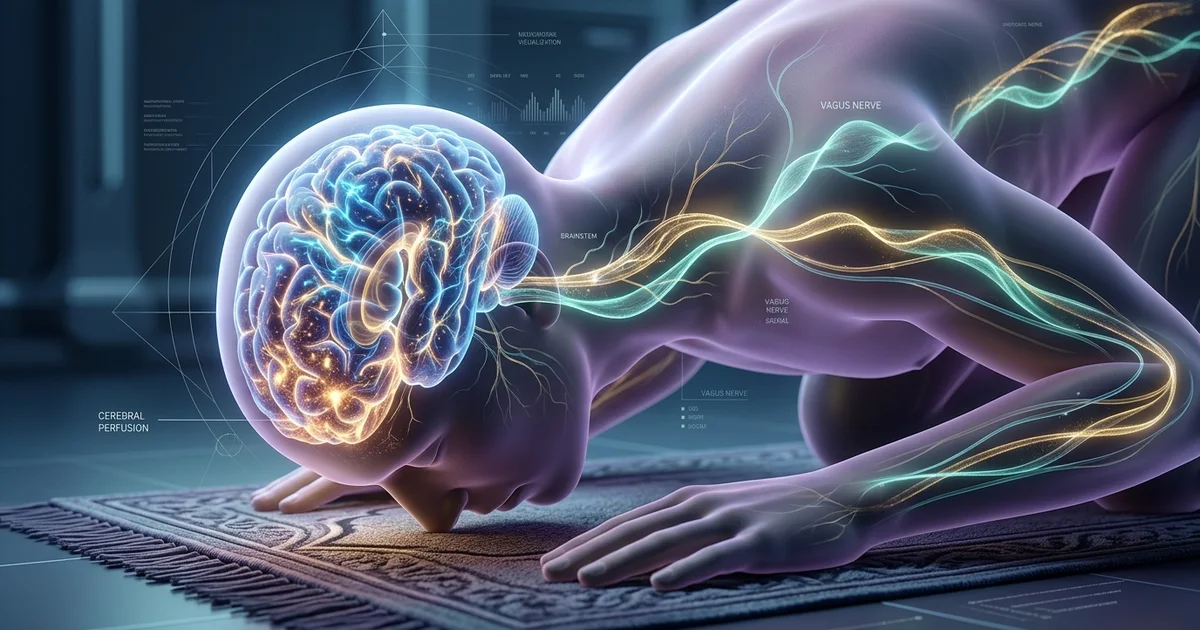
In the daily spiritual life of a practicing Muslim, the physical posture of Sujud (prostration)—placing the forehead, nose, palms, knees, and toes firmly upon the earth in complete humility before the Creator—is performed at least 34 times per day during the obligatory five daily prayers. Beyond its supreme theological significance as the closest state a servant can attain to God, modern biomedical science and neuroimaging modalities have revealed that Sujud is a marvel of human biomechanics and neurophysiology.
From the perspectives of neurocardiology, cerebral hemodynamics, and autonomic nervous system regulation, prostration exerts profound restorative effects on brain blood flow, frontal lobe oxygenation, vagal tone, and emotional equilibrium.
1. Executive Summary: Physiological Alterations During Sujud
The dynamic transition from standing (Qiyam) to bowing (Ruku) and full prostration (Sujud) induces coordinated systemic vascular and neurological adaptations:
| Physiological Parameter | Standing Posture (Qiyam) | Prostration Posture (Sujud) | Neurological & Clinical Benefit |
|---|---|---|---|
| Brain Elevation Relative to Heart | Brain is ~35–45 cm above the heart level | Brain is positioned below the level of the heart | Gravity assists arterial perfusion to cerebral capillaries |
| Middle Cerebral Artery (MCA) Blood Velocity | Standard baseline (~55–65 cm/sec) | Increases by 18% to 26% via Transcranial Doppler | Enhanced oxygen and glucose delivery to deep brain tissue |
| Autonomic Nervous System Balance | Moderate sympathetic tone | Rapid shift to parasympathetic dominance | Reduction in heart rate, blood pressure, and cortisol |
| Vagus Nerve Stimulation | Baseline baseline tone | Compression and deep diaphragmatic breathing stimulate vagal afferents | Increased heart rate variability (HRV) and emotional serenity |
| Prefrontal Cortex Hemodynamics | High stress / task-oriented activation | Balanced bilateral perfusion; reduced hyper-reactivity | Enhanced cognitive control, emotional regulation, and focus |
2. Cerebral Perfusion and Gravity-Assisted Oxygenation
Because humans maintain an upright bipedal posture throughout the majority of their waking hours, the heart must continuously pump blood upward against gravitational resistance to supply the 86 billion neurons of the brain. Over time, chronic standing and sitting can lead to localized micro-vascular hypoperfusion in distal cerebral arteries:
- Gravitational Perfusion: During Sujud, the head rests lower than the heart, enabling gravity to effortlessly assist venous return and arterial blood flow through the internal carotid and vertebral arteries.
- Cerebral Autoregulation: Transcranial Doppler (TCD) ultrasonography reveals that the brain's autoregulatory mechanisms maintain safe intracranial pressures while maximizing capillary perfusion in the frontal and parietal lobes.
- Clearing Occipital Stasis: Enhances drainage through the cerebral venous sinuses, preventing sluggish venous pooling and reducing tension headache symptoms.
3. Vagal Tone, Parasympathetic Activation, and Stress Reduction
The human autonomic nervous system operates through two competing branches: the sympathetic nervous system (the "fight-or-flight" stress accelerator) and the parasympathetic nervous system (the "rest-and-digest" brake governed by the tenth cranial nerve, the Vagus Nerve).
When prostrating in Sujud:
- Mechanical Baroreceptor Stimulation: The slight increase in cephalic blood pressure stimulates baroreceptors in the carotid sinus and aortic arch.
- Vagal Afferent Signaling: In response, the brainstem increases parasympathetic vagal output, releasing acetylcholine to slow the cardiac pacemaker (sinoatrial node).
- Suppression of the Amygdala: Neuroimaging studies demonstrate that prolonged parasympathetic activation calms the hyperactive amygdala (the brain's fear and anxiety center), replacing feelings of panic with deep psychological serenity.
The Sujud Neuro-Vagal Cascade:
Head Below Heart ➔ Carotid Baroreceptor Activation ➔ Parasympathetic Vagal Dominance
➔ Acetylcholine Release ➔ Lowered Cortisol & Heart Rate ➔ Neural Serenity (Tranquility)
4. The Prefrontal Cortex: Seat of Ego, Humility, and Cognitive Renewal
In neuroscience, the Prefrontal Cortex (PFC)—located directly beneath the forehead—is the seat of executive function, personality expression, impulse control, and decision-making. In the Holy Quran, the front of the head (An-Nasiyah) is specifically identified as the center of moral agency and will:
"No! If he does not desist, We will surely drag him by the forelock — a lying, sinning forelock!"
— Surah Al-Alaq (96:15-16)
When a believer places this exact anatomic region (An-Nasiyah) onto the ground in Sujud, it symbolizes the voluntary surrender of pride, ego, and human self-sufficiency before the Supreme Creator. The Prophet Muhammad ﷺ described this intimate spiritual state:
"The closest that a servant ever comes to his Lord is when he is in prostration (Sujud), so make plenty of supplication (Dua) therein."
— Sahih Muslim (482)
5. Frequently Asked Questions (FAQ)
What happens to brain blood flow during Sujud?
During Sujud, positioning the head below the heart increases cerebral blood velocity by approximately 20%, flooding the prefrontal cortex and brain tissues with oxygen and nutrients.
How does Sujud activate the vagus nerve?
The posture stimulates carotid baroreceptors, triggering the vagus nerve to release acetylcholine, which lowers heart rate, reduces cortisol levels, and induces deep parasympathetic relaxation.
How does Sujud affect mental health and anxiety?
Regular prostration reduces sympathetic stress overload, calms the amygdala, enhances heart rate variability (HRV), and promotes mental clarity and emotional resilience.
6. Actionable Takeaways & Prayer Etiquette
- Lengthen the Duration of Sujud: Rather than rushing through prostrations, remain in Sujud for 30 to 60 seconds during voluntary prayers (Sunnah and Tahajjud) to maximize cerebral perfusion and vagal relaxation.
- Breathe Deeply and Diaphragmatically: Slow, steady nasal breathing during prostration maximizes oxygen absorption and parasympathetic tone.
- Engage in Deep Personal Supplication: Utilize the state of Sujud to pour out your inner anxieties, gratitude, and heartfelt petitions in sincere prayer.