

 QuranGPT
The Chokepoint Compromise: Oman and Iran Advance Emergency Maritime Transit Accord for the Strait of Hormuz Amid US Secondary Sanctions
A comprehensive Middle Eastern energy geopolitics, maritime law, and sanctions report on the Sultanate of Oman and the Islamic Republic of Iran drafting an emergency commercial transit corridor protocol through the Strait of Hormuz to safeguard international oil tankers from escalating regional maritime interdictions.
The Holy Quran Team
Author
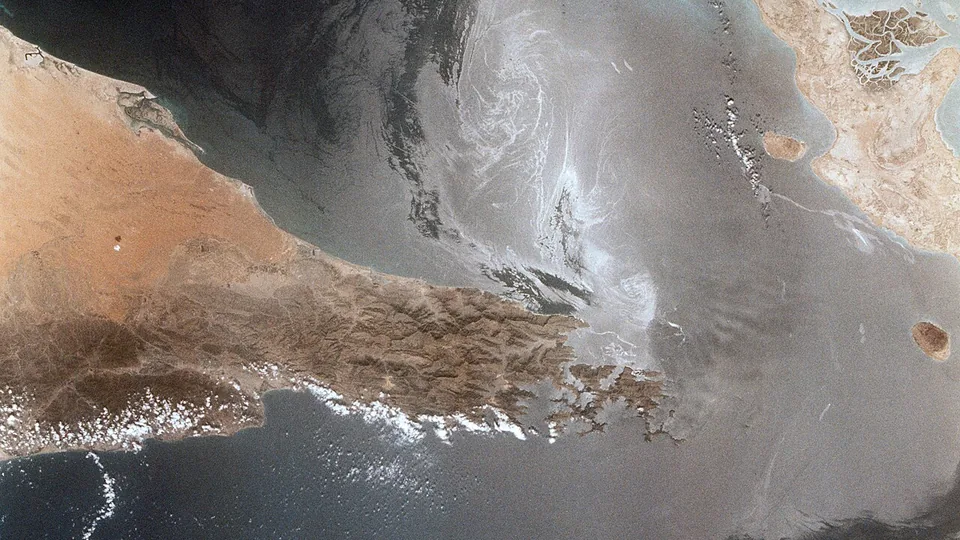
The Chokepoint Compromise: Oman and Iran Advance Emergency Maritime Transit Accord for the Strait of Hormuz Amid US Secondary Sanctions
In a high-stakes diplomatic breakthrough aimed at averting a catastrophic disruption to the global energy supply, the Sultanate of Oman and the Islamic Republic of Iran have finalized draft protocols for the "Muscat Maritime Transit and Energy Corridor Accord", establishing a formalized, internationally monitored transit system for commercial oil and liquefied natural gas (LNG) tankers traversing the narrow waters of the Strait of Hormuz.
The strategic waterway—measuring just 39 kilometers (21 nautical miles) wide at its narrowest point between the Musandam Peninsula of Oman and the Iranian coast of Bandar Abbas—handles approximately 21 million barrels of crude petroleum per day, representing more than 20% of total global petroleum consumption.
The bilateral framework follows months of severe escalating tensions sparked by Washington’s new "Economic Maximum Pressure Campaign", which had threatened punitive secondary banking sanctions against global shipping registries, cargo insurers, and foreign oil refineries accepting Iranian crude.
1. Structure of the Muscat Maritime Transit Framework
The transit accord resolves the primary maritime legal and security friction points in the Persian Gulf:
graph TD
    A["Escalating Gulf Tensions: US Sanctions Threaten Tanker Interdictions"] --> B["Muscat Diplomatic Mediation: Oman & Iran Convene Security Working Group"]

    B --> C["Pillar 1: Dedicated Oman-Territorial Deep-Water Inbound/Outbound Traffic Separation Scheme (TSS)"]
    B --> D["Pillar 2: Joint Omani-Iranian Civilian Maritime Safety & Search-and-Rescue Center"]
    B --> E["Pillar 3: Real-Time Non-Military AIS Tracking & De-Escalation Hotline in Muscat"]

    C --> F["Guarantees Safe, Unimpeded Transit for 21M Barrels / Day of Global Oil & LNG"]
    D --> F
    E --> F
Key Technical Clauses in the Agreement:
- Preservation of Innocent and Transit Passage: Reaffirming the fundamental principles of the 1982 United Nations Convention on the Law of the Sea (UNCLOS), guaranteeing the unhindered right of international commercial merchant vessels to transit the international strait without arbitrary seizure.
- De-Escalation Inspection Protocols: Mandating that any commercial maritime inspection or customs verification must be conducted jointly with Omani civilian maritime observers stationed at Khasab port on the Musandam Peninsula.
- Emergency Bunker and Towing Corridors: Establishing designated emergency repair anchorages in Omani territorial waters for damaged vessels or tankers experiencing GPS navigation jamming.
2. The Strategic Geography of Global Oil Flows
The Strait of Hormuz remains the irreplaceable artery of the world economy:
| Energy Commodity / Route | Daily Volume Transiting Hormuz | Share of Global Seaborne Trade | Major Export Destinations |
|---|---|---|---|
| Crude Petroleum | ~17.5 Million Barrels / Day | ~28% of all maritime oil | China, India, Japan, South Korea, European Union. |
| Liquefied Natural Gas (LNG) | ~5.5 Billion Cubic Feet / Day | ~20% of global LNG trade | Dominantly Qatari LNG exports to Europe and East Asia. |
| Refined Petroleum Products | ~3.5 Million Barrels / Day | ~18% of global jet/diesel trade | Industrial hubs across South Asia and Southeast Asia. |
| Bypass Pipelines (Saudi & UAE) | Limited Capacity (~4.5M bpd max) | Incapable of replacing Hormuz | East-West Petroline (Yanbu) and Fujairah Pipeline. |
3. Reaction of Energy Markets and Asian Consumer Nations
News of the Muscat transit accord provided immediate relief to global commodity exchanges:
- Brent Crude Benchmark Easing: Global crude oil benchmark prices retreated by $4.20 per barrel, stabilizing around $78/bbl after speculative risk premiums eased.
- Welcomed by Asian Energy Importers: Major importing nations—including India, China, and Japan—applauded Oman’s neutral, visionary diplomacy, noting that uninterrupted maritime transit through Hormuz is essential for domestic energy security and manufacturing stability.
4. Conclusion: Diplomacy as the Ultimate Guardian of the Commons
The successful negotiation of the Hormuz transit accord highlights the indispensable role of the Sultanate of Oman as a trusted, principled bridge of regional peace.
By prioritizing international law, maritime safety, and economic pragmatism over military confrontation, Muscat and Tehran have demonstrated that even in times of profound geopolitical polarization, dialogue can safeguard the vital lifelines of humanity.