

 QuranGPT
Salatul Istikharah: Step-by-Step Prayer Guide, Exact Dua, Meaning & Dream Myths
Master Salatul Istikharah with authentic Arabic text from Sahih al-Bukhari, word-by-word transliteration, English translation, step-by-step prayer instructions, and signs.
The Holy Quran Team
Author

Human life is an ongoing series of crossroads. Whether deciding on marriage, choosing a career path, accepting a job offer, purchasing a home, or undertaking a major life relocation, human foresight is fundamentally constrained by finite knowledge. We analyze data, project scenarios, and weigh pros and cons, yet we can never foresee what tomorrow conceals.
In Islamic tradition, the believer does not face life's uncertainties in isolation. The Prophet Muhammad ﷺ bequeathed to the Muslim community a profound, timeless spiritual mechanism that combines human consultation (Istisharah) with divine alignment: Salatul Istikharah (صلاة الاستخارة — the Prayer of Seeking Counsel from Allah).
Istikharah is neither fortune-telling nor an emotional talisman; it is an act of total surrender (Tawakkul) to the All-Knowing (Al-'Alim) and the All-Powerful (Al-Qadir), asking the Creator to decree what is beneficial, facilitate its realization, and turn away what is harmful.
1. What is Salatul Istikharah? (Core Definition & Theological Foundation)
The Arabic root of Istikharah is Kh-Y-R (خ-ي-ر), which signifies goodness, virtue, and benefit. Morphologically, placing it on the pattern Istif'al denotes asking for or seeking that goodness. Thus, Istikharah literally translates to "asking Allah to guide one to the best choice."
In Surah Al-Baqarah, Allah highlights the limits of human perception:
كُتِبَ عَلَيْكُمُ ٱلْقِتَالُ وَهُوَ كُرْهٌۭ لَّكُمْ ۖ وَعَسَىٰٓ أَن تَكْرَهُوا۟ شَيْـًۭٔا وَهُوَ خَيْرٌۭ لَّكُمْ ۖ وَعَسَىٰٓ أَن تُحِبُّوا۟ شَيْـًۭٔا وَهُوَ شَرٌّۭ لَّكُمْ ۗ وَٱللَّهُ يَعْلَمُ وَأَنتُمْ لَا تَعْلَمُونَ
Surah Al-Baqarah (2:216): "Fighting has been enjoined upon you while it is hateful to you. But perhaps you hate a thing and it is good for you; and perhaps you love a thing and it is bad for you. And Allah knows, while you do not know."
Because mortal wisdom is partial, relying solely on human calculation leaves one vulnerable to regret. Through Istikharah, the believer acknowledges: "O Allah, You possess absolute knowledge of consequences, while my sight extends only to the surface."
The Prophet's ﷺ Sacred Method
Jabir ibn Abdullah (may Allah be pleased with him) documented the exceptional importance the Prophet ﷺ assigned to this supplication:
"The Messenger of Allah ﷺ used to teach us the way of doing Istikharah in all matters as he taught us the Surahs of the Quran. He said: 'If anyone of you thinks of doing any matter, he should offer a two-rak'at prayer other than the compulsory ones and then say: [the Istikharah Dua]...'"
— Sahih al-Bukhari #1162 (Also recorded in Sunan at-Tirmidhi #480, Sunan an-Nasa'i #3253, Sunan Abi Dawud #1536)
Scholars emphasize the phrase "as he taught us the Surahs of the Quran". The Prophet ﷺ ensured his companions memorized the exact vocabulary, word order, and reverence of this supplication, demonstrating that Istikharah is an essential foundation for intentional living.
2. When Should You Pray Salatul Istikharah?
Istikharah is performed when a person is deliberating between permissible (Mubah) options, or deciding whether to embark on a specific permissible path.
| When to Perform Istikharah | When NOT to Perform Istikharah |
|---|---|
| Marriage proposals: Selecting between prospective suitors or deciding whether to accept a proposal. | Obligatory duties (Fard): You do not pray Istikharah to decide whether to pray Fajr, pay Zakat, or perform Hajj. |
| Career & Education: Accepting a job offer, signing a contract, choosing a university major, or changing careers. | Prohibited matters (Haram): You do not pray Istikharah to decide whether to consume alcohol, take interest (Riba), or commit injustice. |
| Relocation & Major Purchases: Buying a vehicle, moving to another city, investing capital, or signing a lease. | Disliked matters (Makruh): Seeking divine guidance on actions discouraged by Islamic law. |
| Timing of Good Deeds: When to perform a recommended action (e.g., whether to undertake Umrah in Ramadan or Shawwal). | Routine trivialities: Whether to wear blue or grey shoes, or what to eat for lunch today. |
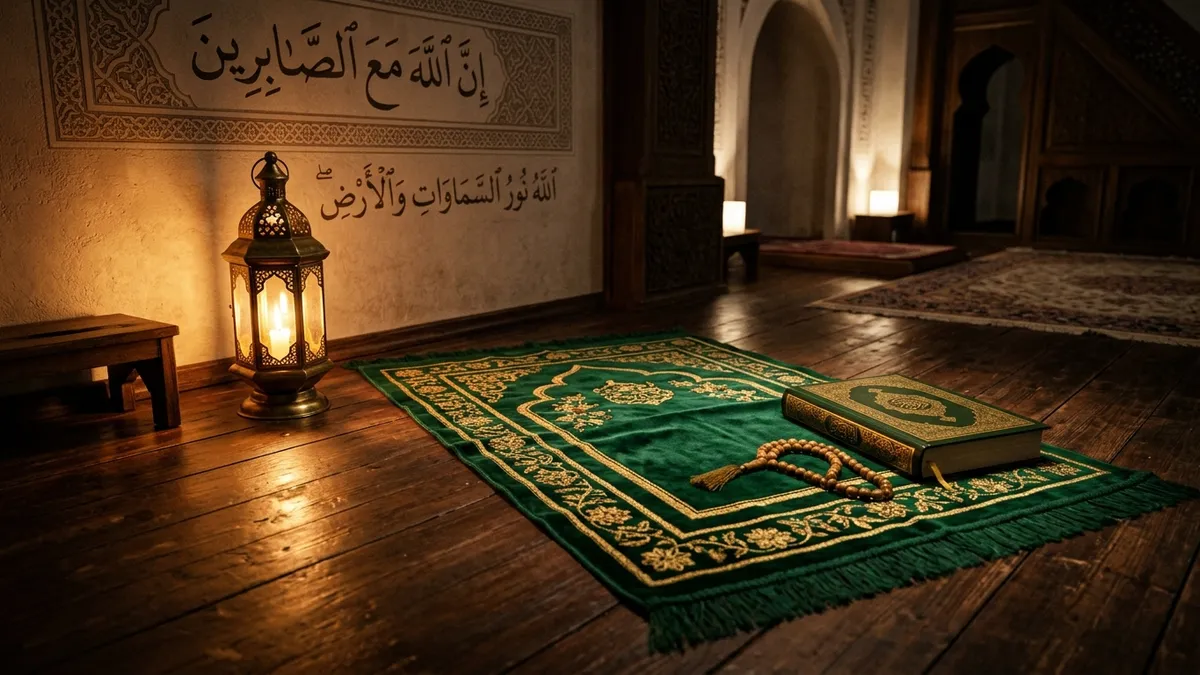
3. The Step-by-Step Prayer Instructions
Performing Salatul Istikharah is simple, dignified, and accessible to every Muslim. Follow these exact sequential steps:
Step 1: Perform Thorough Ablution (Wudu)
Ensure you are in a state of physical and ritual purity.
Step 2: Formulate the Sincere Intention (Niyyah)
Make the quiet, internal intention in your heart to pray two voluntary units (Rak'ahs) of prayer for Salatul Istikharah.
Step 3: Pray Two Voluntary Rak'ahs
Pray two regular Rak'ahs of Nafl (voluntary) prayer:
- First Rak'ah: Recite Surah Al-Fatihah, followed by any passage of the Quran (many classical scholars, including Imam an-Nawawi, recommend Surah Al-Kafirun [109] to affirm sincere monotheism).
- Second Rak'ah: Recite Surah Al-Fatihah, followed by another passage of the Quran (scholars often recommend Surah Al-Ikhlas [112] to emphasize absolute devotion).
- Complete your bowing (Ruku), prostrations (Sujud), Tashahhud, and terminate the prayer with the Taslim (As-salamu 'alaykum wa rahmatullah to the right and left).
Step 4: Praise Allah and Send Salawat upon the Prophet ﷺ
Immediately following the prayer (or while sitting in Tashahhud before Taslim, both are valid according to classical jurists), begin your supplication by:
- Praising Allah (Alhamdulillah, Subhanallah).
- Invoking blessings upon the Messenger of Allah ﷺ (such as the Salawat Ibrahimiyyah recited during prayer).
Step 5: Recite the Authentic Istikharah Supplication
Recite the exact supplication transmitted by the Prophet ﷺ.
4. The Authentic Istikharah Dua (Arabic, Transliteration & English Translation)
اللَّهُمَّ إِنِّي أَسْتَخِيرُكَ بِعِلْمِكَ، وَأَسْتَقْدِرُكَ بِقُدْرَتِكَ، وَأَسْأَلُكَ مِنْ فَضْلِكَ الْعَظِيمِ، فَإِنَّكَ تَقْدِرُ وَلَا أَقْدِرُ، وَتَعْلَمُ وَلَا أَعْلَمُ، وَأَنْتَ عَلَّامُ الْغُيُوبِ، اللَّهُمَّ إِنْ كُنْتَ تَعْلَمُ أَنَّ هَذَا الْأَمْرَ خَيْرٌ لِي فِي دِينِي وَمَعَاشِي وَعَاقِبَةِ أَمْرِي، فَاقْدُرْهُ لِي وَيَسِّرْهُ لِي ثُمَّ بَارِكْ لِي فِيهِ، وَإِنْ كُنْتَ تَعْلَمُ أَنَّ هَذَا الْأَمْرَ شَرٌّ لِي فِي دِينِي وَمَعَاشِي وَعَاقِبَةِ أَمْرِي، فَاصْرِفْهُ عَنِّي وَاصْرِفْنِي عَنْهُ، وَاقْدُرْ لِيَ الْخَيْرَ حَيْثُ كَانَ ثُمَّ أَرْضِنِي بِهِ
Word-by-Word Transliteration
"Allahumma inni astakhiruka bi-'ilmika, wa-astaqdiruka bi-qudratika, wa-as'aluka min fadlika-l-'azim. Fa-innaka taqdiru wa-la aqdir, wa-ta'lamu wa-la a'lam, wa-anta 'allamu-l-ghuyub.
Allahumma in kunta ta'lamu anna hadha-l-amra [name your specific matter here] khayrun li fi dini wa-ma'ashi wa-'aqibati amri (aw qala: 'ajili amri wa-ajilih), faqdurhu li wa-yassirhu li thumma barik li fih.
Wa-in kunta ta'lamu anna hadha-l-amra [name your specific matter here] sharrun li fi dini wa-ma'ashi wa-'aqibati amri (aw qala: fi 'ajili amri wa-ajilih), fasrifhu 'anni wasrifni 'anhu, waqdur liya-l-khayra haythu kana thumma ardini bih."
Faithful English Translation
"O Allah, I seek Your counsel through Your knowledge, and I seek ability through Your power, and I ask You from Your immense bounty. For indeed, You possess power while I possess none; You know while I know not; and You are the Knower of the unseen.
O Allah, if You know that this matter [mention your decision, e.g., marrying so-and-so, or accepting this job] is good for me in my religion, my livelihood, and the end of my affairs (in the immediate and the distant future), then decree it for me, facilitate it for me, and then bless me in it.
And if You know that this matter is harmful for me in my religion, my livelihood, and the end of my affairs (in the immediate and the distant future), then turn it away from me and turn me away from it, and decree for me what is good wherever it may be, and make me content with it."
— Sahih al-Bukhari #1162
(Note: When you reach the words "hadha-l-amra", mentally or verbally name your affair specifically, such as "accepting the offer from Company X" or "marrying [Name]").
5. Dispelling the "Dream Myth": How Does the Answer Actually Manifest?
One of the most widespread cultural misconceptions across Muslim communities is the belief that after praying Istikharah, one must experience a vivid dream featuring symbolic colors (such as green or white indicating approval, and red or black indicating rejection).
What Do the Scholars of Islam State?
Classical Hadith commentators and jurists have systematically debunked this superstition:
-
No Requirement for Dreams in Sunnah:
Imam an-Nawawi (Al-Majmu' Sharh al-Muhadhdhab, Vol. 3, p. 544) states:"After performing Istikharah, a person should not rely on what his heart was inclined toward prior to the prayer. Rather, he should abandon his personal bias, proceed with the matter, and see what Allah facilitates. If it is destined for him, Allah will make the causes easy; if it is not, Allah will place insurmountable barriers."
-
Facilitation vs. Obstruction:
Hafidh Ibn Hajar al-Asqalani (Fath al-Bari, Vol. 11, p. 187) highlights that the dua explicitly asks: "Faqdurhu li wa-yassirhu li" (decree it for me and facilitate it for me). Therefore, the sign of Istikharah is the unfolding of practical reality.- If the matter moves forward smoothly with mutual agreement and legal ease, it is a sign of goodness.
- If closed doors, unexplained persistent obstacles, or sudden structural impediments emerge, it is a sign that Allah is turning it away.
-
Contentment of the Heart (Rida):
The dua concludes with: "Thumma ardini bih" (and then make me pleased with it). Even if the outcome appears disappointing on the surface, the spiritual fruit of Istikharah is that the believer's soul experiences profound tranquility, knowing that Allah averted hidden calamity.
                    ┌────────────────────────────────────────┐
                    │    Formulate Halal Options & Intent    │
                    └───────────────────┬────────────────────┘
                                        │
                                        ▼
                    ┌────────────────────────────────────────┐
                    │   Seek Sincere Counsel (Istisharah)    │
                    └───────────────────┬────────────────────┘
                                        │
                                        ▼
                    ┌────────────────────────────────────────┐
                    │  Pray 2 Rak'ahs & Recite Istikharah    │
                    └───────────────────┬────────────────────┘
                                        │
                                        ▼
                    ┌────────────────────────────────────────┐
                    │      Take Action & Trust Allah         │
                    └───────────┬────────────────┬───────────┘
                                │                │
                 Facilitated Pathways      Closed Doors & Obstacles
                                │                │
                                ▼                ▼
                         Proceed with Barakah   Accept with Peace (Rida)

6. Combining Istikharah (Divine Counsel) with Istisharah (Human Consultation)
Islamic guidance balances spiritual surrender with intellectual diligence. Istikharah does not replace thorough investigation, due diligence, background checks, or consulting qualified experts.
Allah commanded the Prophet Muhammad ﷺ himself:
فَبِمَا رَحْمَةٍۢ مِّنَ ٱللَّهِ لِنتَ لَهُمْ ۖ وَلَوْ كُنتَ فَظًّۭا غَلِيظَ ٱلْقَلْبِ لَٱنفَضُّوا۟ مِنْ حَوْلِكَ ۖ فَٱعْفُ عَنْهُمْ وَٱسْتَغْفِرْ لَهُمْ وَشَاوِرْهُمْ فِى ٱلْأَمْرِ ۖ فَإِذَا عَزَمْتَ فَتَوَكَّلْ عَلَى ٱللَّهِ ۚ إِنَّ ٱللَّهَ يُحِبُّ ٱلْمُتَوَكِّلِينَ
Surah Ali 'Imran (3:159): "So by mercy from Allah, [O Muhammad], you were lenient with them. And if you had been rude [in speech] and harsh in heart, they would have disbanded from about you. So pardon them and ask forgiveness for them and consult them in the matter. And when you have decided, then rely upon Allah. Indeed, Allah loves those who rely [upon Him]."
Scholars explain the harmonious golden sequence:
- Analyze: Gather facts, analyze costs, interview prospects, and inspect offers.
- Consult (Istisharah): Seek counsel from experienced, trustworthy, God-fearing individuals who possess wisdom in that specific field.
- Seek Divine Counsel (Istikharah): Pray the two Rak'ahs and recite the prophetic dua with full humility.
- Act with Resolve (Tawakkul): Execute the plan without crippling anxiety or analysis paralysis.
7. Frequently Asked Questions (FAQ)
Can I pray Istikharah if I do not have the Arabic dua memorized?
Yes. You may read the Arabic text from a sheet of paper or smartphone screen after your prayer. If reading Arabic is difficult, recite the meaning with deep sincerity in English or your native tongue while striving to learn the authentic wording.
Can a menstruating woman perform Istikharah?
A woman experiencing post-natal bleeding or menstruation cannot perform the physical two Rak'ahs of Salah. However, scholars including Sheikh Ibn Baz and Ibn Uthaymeen affirmed that she can recite the Istikharah supplication alone at any time without prayer, because Dhikr and Dua remain fully permissible for her.
How many times should Istikharah be repeated?
There is no fixed limit. While doing it once with conviction is sufficient, classical scholars noted that one may repeat Istikharah up to seven times or until clarity and peace settle in the heart regarding the decision.
What if I cannot decide between two positive options?
You can perform Istikharah twice — once focusing on Option A, and separately focusing on Option B. Then assess which pathway Allah makes smoother and more feasible.
8. Summary & Spiritual Takeaway
Salatul Istikharah transforms decision-making from a source of existential stress into an act of intimate worship. When you submit your dilemma to Allah, you trade human vulnerability for divine guardianship.
As Allah promises in Surah At-Talaq:
وَيَرْزُقْهُ مِنْ حَيْثُ لَا يَحْتَسِبُ ۚ وَمَن يَتَوَكَّلْ عَلَى ٱللَّهِ فَهُوَ حَسْبُهُۥٓ ۚ إِنَّ ٱللَّهَ بَـٰلِغُ أَمْرِهِۦ ۚ قَدْ جَعَلَ ٱللَّهُ لِكُلِّ شَيْءٍۢ قَدْرًۭا
Surah At-Talaq (65:3): "And will provide for him from where he does not expect. And whoever relies upon Allah - then He is sufficient for him. Indeed, Allah will accomplish His purpose. Allah has already set for everything a [decreed] extent."
Approach your next life crossroads with confidence: perform your ablution, stand before your Lord in the stillness of the night, pour out your heart with the Prophetic supplication, and move forward knowing that the best protector is directing your steps.