

 QuranGPT
The Rise of American Muslim Civic Leaders: Local Governance, Public Service & Common Ground
How a new generation of American Muslim public servants is transforming local governance, building cross-cultural coalitions, and embodying the prophetic ethic of Khidmah.
The Holy Quran Team
Author
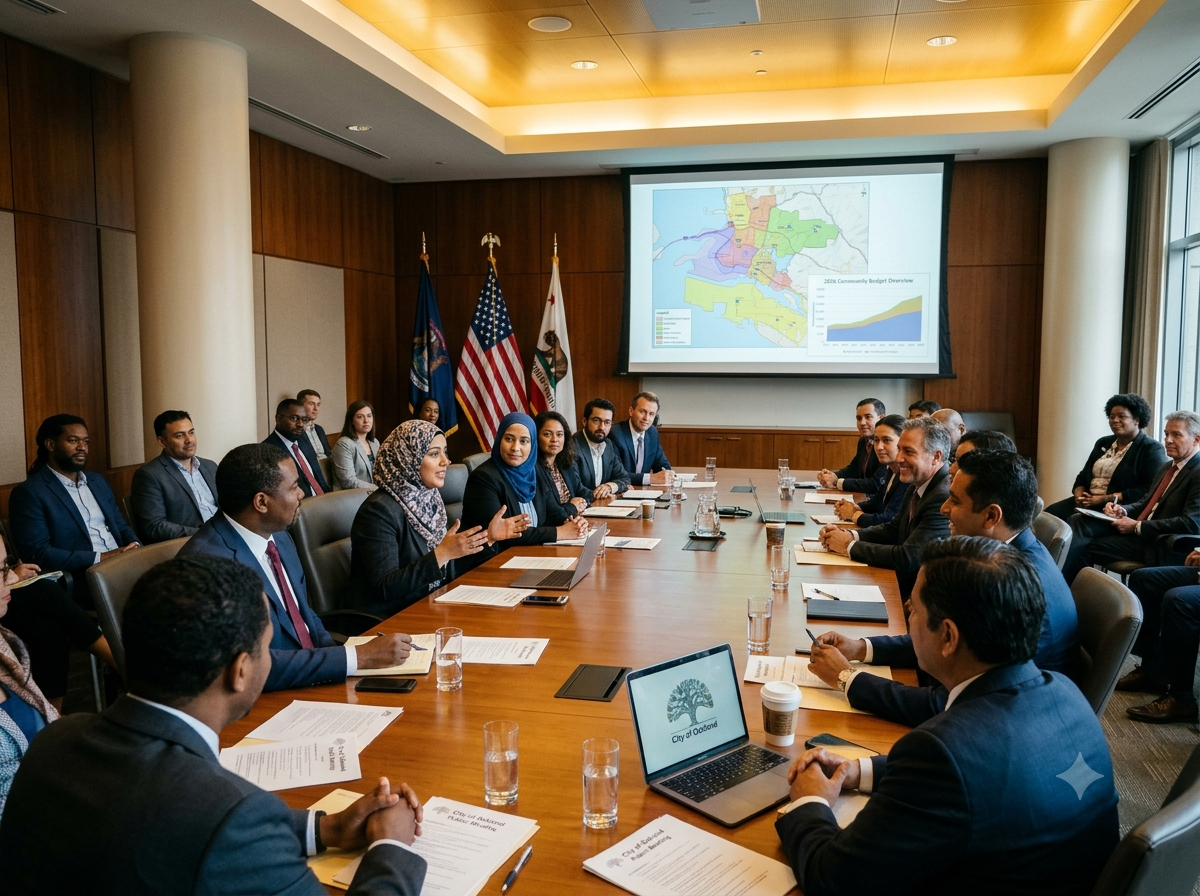
Across the United States in 2026, a quiet yet profound transformation is reshaping the landscape of public service. From the municipal council chambers of the Midwest to school boards in suburban Texas, from state judicial benches to county health commissions, American Muslims are stepping forward into public leadership in unprecedented numbers.
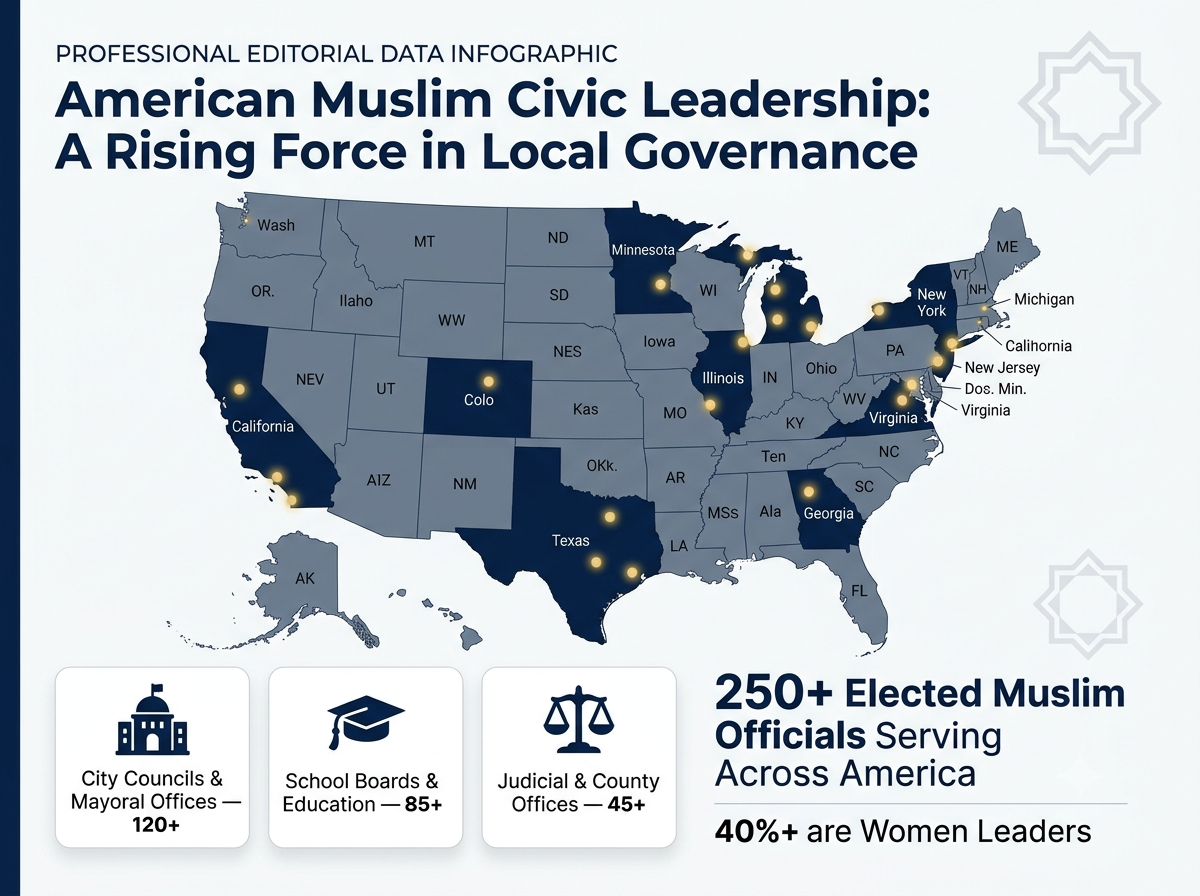
National civic directories now document over 250 elected Muslim officials serving at municipal, county, judicial, and state levels across dozens of states. Yet the defining characteristic of this rising cohort is not ideological polarization or partisan confrontation. Rather, it is a pragmatic, community-first ethos anchored in civic stewardship, collaborative bridge-building, and the pursuit of the common good.
By focusing on tangible municipal challenges — improving public school curricula, expanding affordable healthcare access, repairing civil infrastructure, and ensuring fiscal transparency — these leaders are demonstrating that sincere faith and dedicated civic contribution do not merely coexist; they reinforce one another.
1. The Theological Imperative: Khidmah (Public Service) as Worship
In the Islamic tradition, public engagement is not viewed as a cynical contest for personal power or tribal dominance. Rather, it is rooted in the sacred concept of Khidmah — selfless service to fellow human beings as an expression of devotion to the Creator.
The Prophet Muhammad ﷺ established this principle as a core benchmark of spiritual excellence. Narrated by Abdullah ibn Umar (may Allah be pleased with him), the Messenger of Allah ﷺ declared:
"The most beloved of people to Allah are those who bring the most benefit to people. And the most beloved of deeds to Allah is bringing happiness to a fellow human, relieving them of distress, paying off their debt, or dispelling their hunger."
(Al-Mu'jam al-Awsat of At-Tabarani #6026; graded Hasan-Sahih by Sheikh al-Albani in Sahih al-Jami' #176)
The Prophet ﷺ did not restrict "people" (An-Nas) to fellow Muslims. The obligation of benevolence (Ihsan) and justice (Adl) extends to every neighbor and fellow citizen.
وَتَعَاوَنُوا۟ عَلَى ٱلْبِرِّ وَٱلتَّقْوَىٰ ۖ وَلَا تَعَاوَنُوا۟ عَلَى ٱلْإِثْمِ وَٱلْعُدْوَٰنِ ۚ وَٱتَّقُوا۟ ٱللَّهَ ۖ إِنَّ ٱللَّهَ شَدِيدُ ٱلْعِقَابِ
Surah Al-Ma'idah (5:2): "And cooperate in righteousness and piety, but do not cooperate in sin and aggression. And fear Allah; indeed, Allah is severe in penalty."
This Quranic mandate establishes the moral foundation for broad-based civic coalitions: whenever people organize for justice, civic flourishing, or the protection of the vulnerable, believers are commanded to be at the forefront of cooperation.
2. Hilf al-Fudul: The Prophetic Blueprint for Common Ground
Centuries before modern constitutional democracy, the Arabian peninsula witnessed the creation of Hilf al-Fudul (The League of the Virtuous). Prior to receiving divine revelation, the young Muhammad ﷺ joined leaders from various Makkan clans in the home of Abdullah ibn Jud'an to establish a civic pact.
Their mission was singular: to stand united in defense of anyone wronged within the borders of Makkah — whether a local resident or a foreign merchant with no clan protection — until justice was restored.
Decades later, after becoming the Messenger of Allah and establishing the Islamic state in Madinah, the Prophet ﷺ looked back on that coalition with profound reverence:
"I witnessed in the house of Abdullah ibn Jud'an a pact that was more beloved to me than red camels. If I were summoned to a similar pact in Islam, I would eagerly respond."
(Al-Bidayah wan-Nihayah by Ibn Kathir; Dalail al-Nubuwwah by Al-Bayhaqi; authenticated by classical scholars)
This historical precedent demonstrates that working alongside citizens of different faiths and philosophies to establish common civic welfare (Maslahah Mursalah) is not an unprincipled compromise; it is an authentic Sunnah of the Prophet Muhammad ﷺ.
┌────────────────────────────────────────────────────────────────────────┐
│ The Core Pillars of Faith-Driven Civic Engagement                      │
│                                                                        │
│ 1. Khidmah (Public Service)      ──► Benefiting all human beings       │
│ 2. Maslahah Mursalah (Common Good) ──► Transparent local governance    │
│ 3. Hilf al-Fudul (Coalitions)    ──► Defending fairness and justice    │
│ 4. Amanah (Sacred Trust)         ──► Moral and fiscal integrity        │
└────────────────────────────────────────────────────────────────────────┘
3. The Power of Local Governance: Building From the Ground Up
While national cable news frequently fixates on hyper-polarized federal politics, American Muslim civic leadership has deliberately chosen a different path: investing deeply in local institutions.
Nearly two-thirds of all elected American Muslim officials serve in municipal and county roles:
| Public Office Level | Primary Focus & Responsibilities | Percentage of Muslim Officials |
|---|---|---|
| City Councils & Mayoralties | Municipal zoning, clean water systems, public safety, local economic development | ~38% |
| School Boards & Education Districts | Academic standards, mental health resources, student nutrition, safe school facilities | ~26% |
| State Legislatures | State budgets, public transit funding, consumer protection laws, civil rights defense | ~21% |
| Judiciary & County Commissions | Impartial judicial administration, public health boards, community mental health clinics | ~15% |
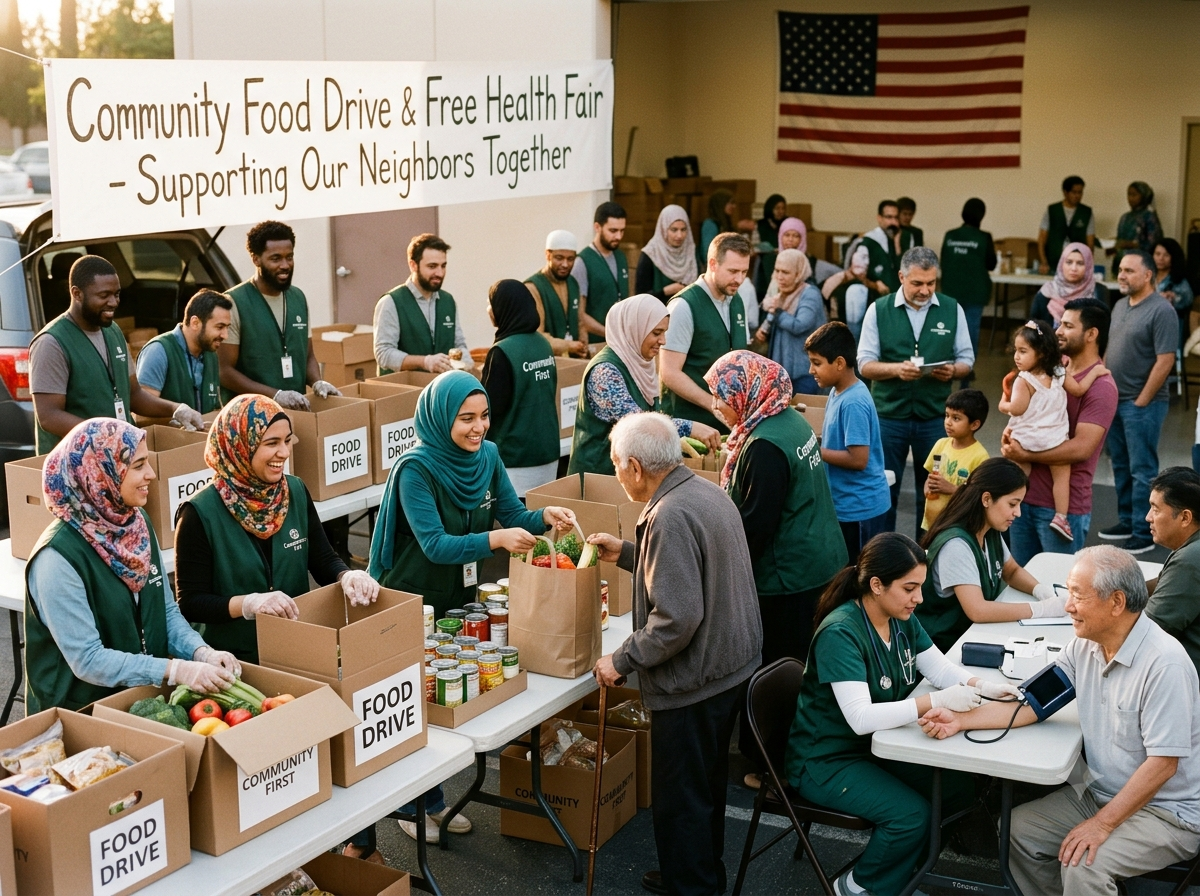
By focusing on pragmatic local issues that directly impact daily life — such as improving public library resources, ensuring reliable winter snow removal, upgrading drinking water pipes, and supporting neighborhood small businesses — Muslim public servants earn trust through competence and integrity rather than partisan rhetoric.
4. Women at the Vanguard of Civic Innovation
One of the most remarkable dimensions of the contemporary American Muslim civic movement is the prominent leadership of women. According to demographic surveys conducted by research institutes including ISPU and CAIR, women comprise between 40% and 43% of all elected Muslim officials nationwide.
These leaders represent a diverse tapestry of backgrounds — including educators, public health physicians, civil rights attorneys, and community organizers. Their leadership carries forward the legacy of historical Muslim women like Fatima al-Fihri (founder of the world's first university in Fez, Morocco) and Shifa bint Abdullah (appointed by Caliph Umar ibn al-Khattab as an inspector over the market of Madinah).
In municipalities across New Jersey, Michigan, Illinois, Minnesota, and California, Muslim women serving on city councils and school boards are leading policy initiatives that bridge communities:
- Expanding bilingual education programs and literacy initiatives.
- Championing mental health first responders within municipal emergency services.
- Advocating for affordable family housing and sensible municipal green spaces.
5. Upholding Justice Without Bias: The Quranic Standard
A central hallmark of mature leadership is the refusal to engage in tribal favoritism. The Holy Quran explicitly commands believers to uphold impartial justice even when it runs contrary to their personal interests or the desires of their own group:
يَـٰٓأَيُّهَا ٱلَّذِينَ ءَامَنُوا۟ كُونُوا۟ قَوَّٰمِينَ بِٱلْقِسْطِ شُهَدَآءَ لِلَّهِ وَلَوْ عَلَىٰٓ أَنفُسِكُمْ أَوِ ٱلْوَٰلِدَيْنِ وَٱلْأَقْرَبِينَ ۚ إِن يَكُنْ غَنِيًّا أَوْ فَقِيرًۭا فَٱللَّهُ أَوْلَىٰ بِهِمَا ۖ فَلَا تَتَّبِعُوا۟ ٱلْهَوَىٰٓ أَن تَعْدِلُوا۟ ۚ وَإِن تَلْوُۥٓا۟ أَوْ تُعْرِضُوا۟ فَإِنَّ ٱللَّهَ كَانَ بِمَا تَعْمَلُونَ خَبِيرًۭا
Surah An-Nisa (4:135): "O you who have believed, be persistently standing firm in justice, witnesses for Allah, even if it be against yourselves or parents and relatives. Whether one is rich or poor, Allah is more worthy of both. So follow not [personal] inclination, lest you not be just. And if you distort [your testimony] or refuse [to give it], then indeed Allah is ever, with what you do, Acquainted."
This verse — famously inscribed at the entrance of Harvard Law School as one of history's greatest expressions of justice — provides the ethical compass for Muslim judges, attorneys, and public officials.
When public officials govern with the conviction that power is a sacred trust (Amanah) for which they will be held accountable before the Supreme Judge, public cynicism begins to dissolve, and community trust is restored.
6. The Next Generation: Institutionalizing the Leadership Pipeline
To ensure that civic involvement is not a transient moment but an enduring commitment, American Muslim communities have built specialized institutional infrastructure:
A. Professional Fellowship Networks
Organizations such as Muslim Americans in Public Service (MAPS), the Muslim Civic Coalition, and university leadership initiatives (such as USC's American Muslim Civic Leadership Initiative) provide structured fellowships for aspiring civil servants. These programs offer mentorship, policy training, and ethical leadership development for young people entering city management, public policy, and public health.
B. Overcoming the Generation Gap
With over 50% of American Muslims under the age of 35, the community is uniquely youthful. Civic groups have actively bridged voter registration gaps, launched non-partisan voter education portals, and organized neighborhood town halls that bring local residents into direct contact with municipal decision-makers.
C. Celebrating Human Diversity (Ta'aruf)
The ultimate vision animating this civic engagement is the Quranic concept of Ta'aruf — knowing and appreciating one another across cultural and religious divides:
يَـٰٓأَيُّهَا ٱلنَّاسُ إِنَّا خَلَقْنَـٰكُم مِّن ذَكَرٍۢ وَأُنثَىٰ وَجَعَلْنَـٰكُمْ شُعُوبًۭا وَقَبَآئِلَ لِتَعَارَفُوٓا۟ ۚ إِنَّ أَكْرَمَكُمْ عِندَ ٱللَّهِ أَتْقَىٰكُمْ ۚ إِنَّ ٱللَّهَ عَلِيمٌ خَبِيرٌۭ
Surah Al-Hujurat (49:13): "O mankind, indeed We have created you from male and female and made you peoples and tribes that you may know one another. Indeed, the most noble of you in the sight of Allah is the most righteous of you. Indeed, Allah is Knowing and Acquainted."
Conclusion: A Living Legacy of Service
The rise of American Muslim civic leaders is not merely a political story; it is a spiritual testament to the enduring power of Islamic values in the modern world.
By stepping beyond isolationism, embracing the hard work of local governance, and building common ground across diverse communities, these public servants are honoring the timeless legacy of the prophets: seeking neither praise nor dominance, but striving to leave their neighborhoods and society more just, compassionate, and flourishing than they found them.