

 QuranGPT
The Miracle of the Quran: How an Unlettered Prophet Produced the Greatest Arabic Literary Work in History
An analysis of the Quran's literary miracle (I'jaz al-Quran) — its unmatched Arabic linguistic perfection, unique literary form, internal consistency across 23 years, and its challenge to humanity that remains unmet after 1,400 years.
The Holy Quran Team
Author
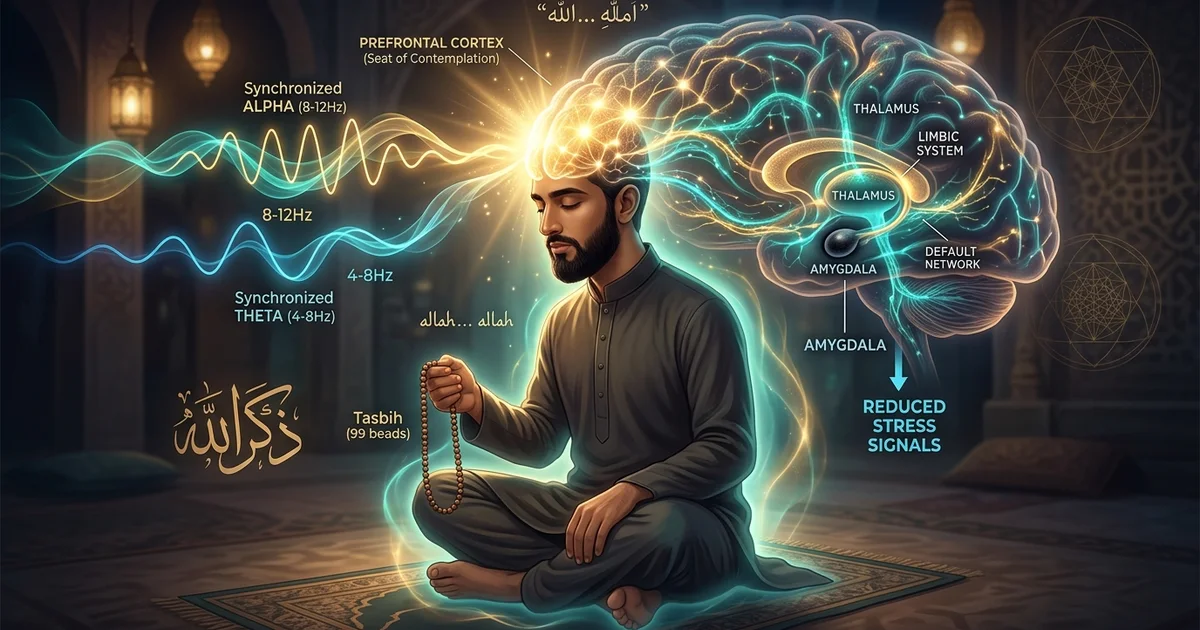
The Prophet Muhammad ﷺ was illiterate — he could neither read nor write. His society was pre-literate, with no formal schools. He worked as a merchant. He had received no training in poetry, rhetoric, or literary composition.
Yet the Holy Quran — revealed through him over 23 years — is unanimously recognized by Arab linguists and literary scholars as the greatest work of Arabic literature in history. It established new linguistic standards that Arabic scholars still study. It introduced a literary form (Saj' al-Quran) that no human writer has successfully replicated. It contains zero internal contradictions across 23 years of gradual revelation.
This is the literary miracle of the Quran — I'jaz al-Quran (the Quran's Inimitability). And it begins with a direct challenge.
1. The Quranic Challenge: Produce Something Like It
The Quran issues the most audacious challenge in literary history — and it remains unmet after 1,400 years:
قُل لَّئِنِ اجْتَمَعَتِ الْإِنسُ وَالْجِنُّ عَلَىٰ أَن يَأْتُوا بِمِثْلِ هَٰذَا الْقُرْآنِ لَا يَأْتُونَ بِمِثْلِهِ وَلَوْ كَانَ بَعْضُهُمْ لِبَعْضٍ ظَهِيرًا
"Say: If mankind and the jinn gathered in order to produce the like of this Quran, they could not produce the like of it, even if they were to each other assistants."
(Surah Al-Isra 17:88)
And more specifically:
فَأْتُوا بِسُورَةٍ مِّن مِّثْلِهِ وَادْعُوا شُهَدَاءَكُم مِّن دُونِ اللَّهِ إِن كُنتُمْ صَادِقِينَ
"Then produce a surah like it and call upon your witnesses other than Allah, if you should be truthful."
(Surah Al-Baqarah 2:23)
The challenge is specific: produce one chapter (surah) comparable in literary quality to the shortest chapters of the Quran. The shortest surah (Al-Kawthar) is just three verses and ten words.
No individual or committee has ever produced a response that was accepted as comparable by Arab literary scholars — not in 1,400 years, not with unlimited time, resources, or collaboration.
The divine preservation and mathematical structural perfection of the Quranic text across fourteen centuries.
2. The Unique Literary Form: Neither Prose Nor Poetry
Pre-Islamic Arabic literature had two primary forms:
- Shi'r (poetry) — structured with regular meter (bahr) and end rhyme (qafiya)
- Nathr (prose) — unmetered, unrhymed narrative text
The Quran fits neither category. It has:
- No regular poetic meter — it cannot be scanned according to any of the 16 classical Arabic meters
- Frequent end rhyme — but irregular, not following any fixed scheme
- Unique rhythmic quality — each verse (ayah) has an internal rhythm distinct from poetry
- Extraordinary precision of expression — every word choice is exactly optimal
Arab linguists call this unique form Uslub al-Quran — the Quranic style — a category that exists only for the Quran. No author before or after has produced sustained text in this form.
3. Linguistic Precision: Every Word Is Irreplaceable
A hallmark of Quranic inimitability is that every Arabic word in the Quran is exactly optimal — linguists consistently find that no synonym could replace any word without loss of meaning, precision, or aesthetic quality.
Example 1: Surah Al-Baqarah 2:31
وَعَلَّمَ آدَمَ الْأَسْمَاءَ كُلَّهَا
"And He taught Adam the names of all things."
The word Kullaha (all of them) — not "many of them," not "some," not "most" — establishes the totality of language capacity given to Adam. The word is exact. Any alternative weakens the theological precision.
Example 2: The Bee Verse (Surah An-Nahl 16:68)
وَأَوْحَىٰ رَبُّكَ إِلَى النَّحْلِ أَنِ اتَّخِذِي مِنَ الْجِبَالِ بُيُوتًا
"And your Lord inspired (revealed to) the bee: 'Take for yourself among the mountains, houses.'"
The Arabic verb Awha — revealed, inspired — is the same verb used for prophetic revelation. Applying the same word to the bee's navigational instinct as to prophetic guidance is a precise theological statement about the nature of fitra (innate divine guidance) embedded in all creation — expressed in a single word choice.
4. Internal Consistency: Zero Contradictions Across 23 Years
The Quran was revealed gradually over 23 years — in Mecca and Medina, under wildly different circumstances: persecution and peace, war and diplomacy, revelation about law, cosmology, ethics, history, and prayer.
Yet the Quran contains no internal contradictions. Its theological statements are fully consistent. Its linguistic style — across chapters revealed years apart — is uniform. Its historical references to earlier scriptures and peoples are consistent throughout.
The Quran itself challenges anyone to find a contradiction:
أَفَلَا يَتَدَبَّرُونَ الْقُرْآنَ ۚ وَلَوْ كَانَ مِنْ عِندِ غَيْرِ اللَّهِ لَوَجَدُوا فِيهِ اخْتِلَافًا كَثِيرًا
"Do they not reflect upon the Quran? If it had been from any other than Allah, they would have found within it much contradiction."
(Surah An-Nisa 4:82)
No human author producing a single book over 23 years — under the circumstances of Prophetic life — would be expected to produce a text with zero internal inconsistency. The Quran's consistency is itself evidence of its singular divine origin.
5. Preservation: The Most Verified Text in Human History
The Quran is the most precisely preserved text in human history:
- Memorized completely by hundreds of thousands of Muslims (Huffaz) in every generation since revelation
- The world currently has an estimated 10 million+ memorizers of the entire 604-page text
- The oldest complete manuscript (Topkapi Manuscript, 7th century CE) matches today's printed editions exactly
- Zero verified variant readings have ever emerged — unlike every other ancient text
No other document in human history has been preserved with this combination of written and oral verification across 1,400 years and across every continent.
6. Scientific Accuracy: The Literary Miracle Extends to Content
As explored in other articles on this platform, the Quran's literary miracle is amplified by its scientific accuracy — statements about embryology, oceanography, cosmology, hydrology, and geology that match modern science despite being revealed in the 7th century.
A human author producing a literary masterpiece in the 7th century could be expected to reflect the scientific limitations of that era. The Quran consistently transcends them — not in isolated statements, but systematically across natural domains.
7. The Emotional and Spiritual Effect: Beyond Literary Analysis
The Prophet Muhammad ﷺ said:
"Beautify the Quran with your voices."
(Abu Dawud 1468)
The Quran's recitation (Tilawa) produces a measurable acoustic and emotional response unlike any other text. Studies of heart rate variability during Quranic recitation show:
- Significant reduction in cortisol (stress hormone) levels
- Increased parasympathetic nervous system activity (relaxation response)
- Reduced blood pressure and heart rate in both Muslim and non-Muslim subjects
These effects occur even in subjects who do not understand Arabic — suggesting the Quran's acoustic structure itself carries therapeutic properties, independent of semantic content.
Conclusion: The Book That Has No Author Except Allah
The Quran was delivered by a man who could not read. It was produced over 23 years under every kind of circumstance. It established a literary form that no human has replicated. It challenges humanity to produce even ten words comparable to its shortest chapter — and 1,400 years of human civilization has not met that challenge.
Its internal consistency is perfect. Its preservation is unique in human history. Its scientific accuracy transcends its era. Its emotional and physiological effect on listeners is measurable and real.
There is only one coherent explanation — the one the Quran provides for itself:
وَإِنَّهُ لَتَنزِيلُ رَبِّ الْعَالَمِينَ
"And indeed, it is the revelation of the Lord of the worlds."
(Surah Ash-Shu'ara 26:192)
The Quran is not a human achievement. It is a divine gift — to every human being who opens its pages with a sincere heart.