

 QuranGPT
The Psychology of Tears in Sujood: How Weeping Heals Trauma
Discover the neuroscience and spiritual catharsis of weeping in Sujood. How emotional tears and prostration release trauma, lower cortisol, and heal the soul.
The Holy Quran Team
Author
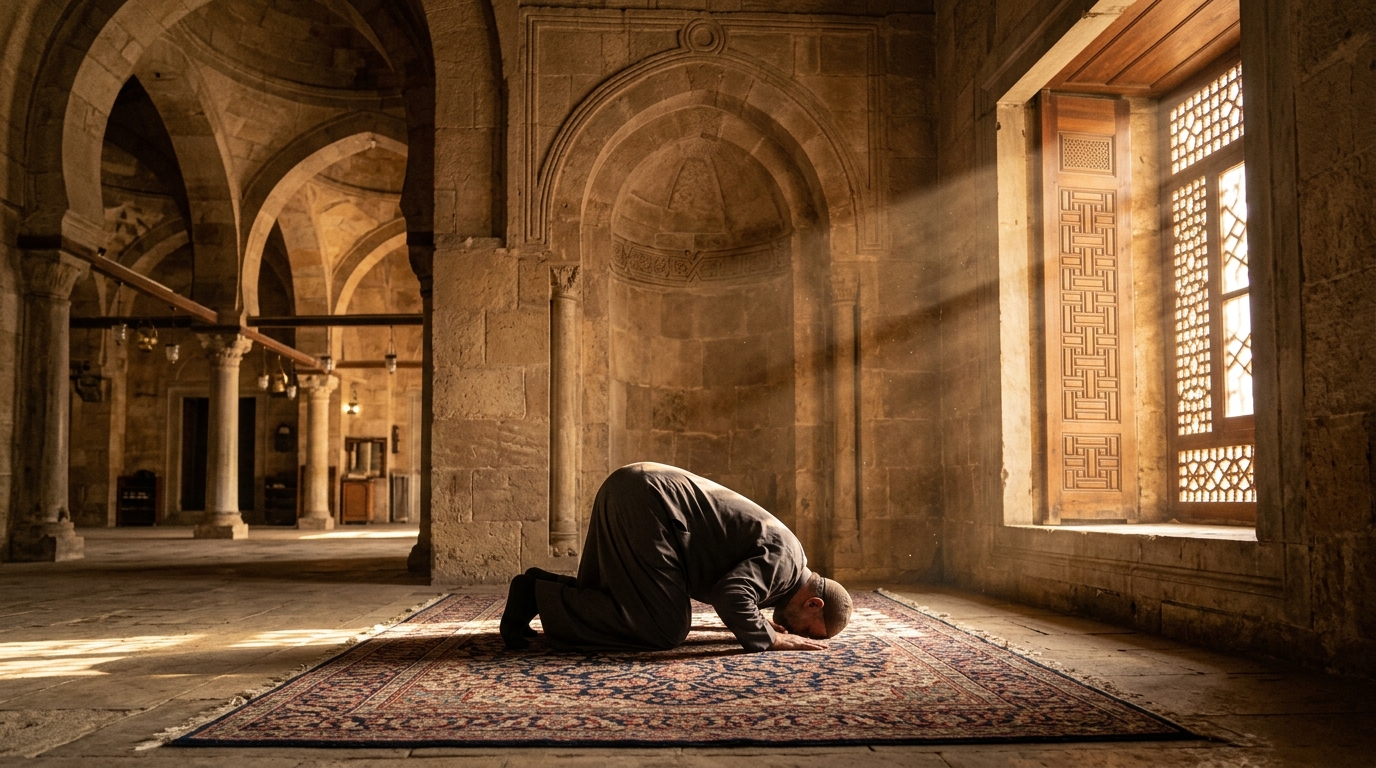
Human beings spend much of their lives hiding their tears. Modern culture teaches us to swallow our grief, disguise our vulnerability behind polished social smiles, and view crying as a symptom of fragility or defeat. When we break down before people, we often leave the encounter feeling exposed, diminished, or judged. The soul learns to hoard its grief in silence, and the body pays the price in somatic tension, chronic exhaustion, and an unquiet mind.
Yet in the sanctuary of Islamic worship, tears are transformed into the ultimate manifestation of strength, lucidity, and nobility. The Prophets of God—the most resilient, courageous men to walk the earth—were men whose beards were frequently damp with weeping. When Ibrahim (alayhis salam) stood in prayer, when Ya'qub (alayhis salam) cried until his sight clouded from grief, and when Prophet Muhammad ﷺ prostrated in the dead of night, their tears were not acts of despair. They were sacred channels of emotional restoration and unyielding trust (Tawakkul).
Why does weeping before Allah bring an immediate, profound sense of tranquility that hours of secular venting can never replicate? When modern neurobiology, endocrinology, and autonomic physiology examine the mechanics of emotional tears and the posture of prostration (Sujood), they uncover an extraordinary biological reality: the human body was systematically designed to shed its emotional burdens upon the earth before its Maker.
1. The Divine Anatomy of Weeping: Quranic Perspectives
The Noble Quran does not treat human grief as a moral flaw. Rather, Allah explicitly takes ownership of the human capacity to weep, elevating it to an ontological sign of His supreme sovereignty over our internal states:
وَأَنَّهُۥ هُوَ أَضْحَكَ وَأَبْكَىٰ
Surah An-Najm (53:43): "And that it is He who makes [one] laugh and weep."
Classical exegetes, including Imam Ibn Kathir, noted that Allah created both joy and tears as vital instruments for human balance. Joy expands the soul in gratitude, while weeping softens the crust of worldly arrogance, tenderizes the heart, and restores clarity to the conscience.
In another sweeping passage, Allah describes the distinguishing hallmark of His elite messengers and righteous servants:
أُو۟لَـٰٓئِكَ ٱلَّذِينَ أَنْعَمَ ٱللَّهُ عَلَيْهِم مِّنَ ٱلنَّبِيِّـۧنَ مِن ذُرِّيَّةِ ءَادَمَ وَمِمَّنْ حَمَلْنَا مَعَ نُوحٍۢ وَمِن ذُرِّيَّةِ إِبْرَٰهِيمَ وَإِسْرَٰٓءِيلَ وَمِمَّنْ هَدَيْنَا وَٱجْتَبَيْنَآ ۚ إِذَا تُتْلَىٰ عَلَيْهِمْ ءَايَـٰتُ ٱلرَّحْمَـٰنِ خَرُّوا۟ سُجَّدًۭا وَبُكِيًّۭا ۩
Surah Maryam (19:58): "Those were the ones upon whom Allah bestowed favor from among the prophets of the descendants of Adam and of those We carried [in the ship] with Noah, and of the descendants of Abraham and Israel, and of those whom We guided and chose. When the verses of the Most Merciful were recited to them, they fell in prostration and weeping."
Notice the intimate pairing in the Divine text: prostration (Sujood) and weeping (Bukiyya). The physical descent of the body to the lowest point of the earth coincides with the psychological ascent of the soul to its purest spiritual elevation.
Similarly, in Surah Al-Isra, the physical expression of weeping is connected with humility and depth of faith:
وَيَخِرُّونَ لِلْأَذْقَانِ يَبْكُونَ وَيَزِيدُهُمْ خُشُوعًۭا ۩
Surah Al-Isra (17:109): "And they fall upon their faces weeping, and the Quran increases them in humble submission."
When grief overwhelmed Prophet Ya'qub (alayhis salam) over the loss of Yusuf (alayhis salam), his response set the gold standard for Islamic emotional regulation:
قَالَ إِنَّمَآ أَشْكُوا۟ بَثِّى وَحُزْنِىٓ إِلَى ٱللَّهِ وَأَعْلَمُ مِنَ ٱللَّهِ مَا لَا تَعْلَمُونَ
Surah Yusuf (12:86): "He said, 'I only complain of my suffering and my grief to Allah, and I know from Allah that which you do not know.'"
Ya'qub did not bottle his sorrow; he redirected its entire current toward the only One who possess both absolute empathy and absolute power to alter reality.
2. The Night Tears of the Messenger of Allah ﷺ
The Prophet Muhammad ﷺ possessed unmatched emotional depth. His companions preserved detailed, reverent accounts of his prayer life that dismantle modern notions of stoic emotional suppression.
Mutarrif bin Abdullah narrated from his father, Abdullah bin Ash-Shikhkhir (may Allah be pleased with him):
"I came to the Messenger of Allah ﷺ while he was praying, and from his chest came a sound like the boiling of a pot due to weeping."
Source: Sunan Abi Dawud #904, Jami` at-Tirmidhi #283. Graded Sahih by Sheikh al-Albani and cited by Imam an-Nawawi in Riyad as-Salihin (#448).
Imagine the leader of an entire emerging civilization, a statesman, commander, and Prophet, prostrating alone in the night until his chest resonated with the deep, trembling vibrations of a boiling kettle. This was not a breakdown; it was the ultimate source of his daytime tranquility, moral courage, and fathomless kindness toward children, orphans, and adversaries.
In another authentic tradition, the Prophet ﷺ promised profound divine shelter for those who discover the sanctuary of private tears:
Narrated Abu Hurairah (may Allah be pleased with him): The Prophet ﷺ said:
"Seven people will be shaded by Allah under His shade on the Day when there will be no shade except His... [including] a person who remembers Allah in seclusion and his eyes overflow with tears."
Source: Sahih al-Bukhari #660, Sahih Muslim #1031.
Furthermore, Ibn Abbas (may Allah be pleased with him) narrated that the Messenger of Allah ﷺ said:
"Two eyes will never be touched by the Fire: an eye that wept out of the fear and love of Allah, and an eye that spent the night guarding in the path of Allah."
Source: Jami` at-Tirmidhi #1639. Graded Hasan-Sahih by Imam at-Tirmidhi and authenticated by Sheikh al-Albani.
3. The Biochemical Miracle of Emotional Lacrimation
Why do humans produce tears when experiencing profound sorrow, relief, or spiritual awe? Among all organisms on Earth, human beings are the only species that sheds emotional tears (psychic lacrimation). Other animals shed basal tears to lubricate the cornea or reflex tears to flush out foreign debris, but only humans weep from internal states.
In landmark medical research conducted by biochemist Dr. William H. Frey II at the St. Paul-Ramsey Medical Center and the University of Minnesota (Crying: The Mystery of Tears), researchers compared the biochemical profile of irritant-induced tears (caused by sliced onions) against emotional tears (triggered by emotional catharsis). The findings stunned the scientific community:
- Higher Protein Density: Emotional tears contained significantly higher concentrations (nearly 24% greater) of total protein than reflex tears.
- Excretion of Stress Peptides: Emotional tears selectively contained high levels of Adrenocorticotropic Hormone (ACTH)—the primary pituitary peptide that signals the adrenal glands to flood the body with cortisol during stress.
- Prolactin Secretion: High levels of prolactin, a hormone heavily tied to the endocrine response to psychological trauma and emotional overload, were directly expelled in emotional weeping.
- Natural Analgesics (Leucine-Enkephalin): Dr. Frey’s team identified that emotional lacrimation contains leucine-enkephalin, an endogenous opioid peptide that functions as the body's natural painkiller, capable of dulling both physical ache and psychological agony.
| Biochemical Marker | Reflex Tears (Irritant) | Emotional Tears (Sujood / Catharsis) | Physiological Function |
|---|---|---|---|
| Protein Concentration | Low baseline | 24% Higher Concentration | Facilitates excretion of neurochemical waste |
| Adrenocorticotropic Hormone (ACTH) | Undetectable | Highly Elevated | Directly reduces systemic cortisol synthesis |
| Prolactin | Minimal | Substantially Present | De-escalates autonomic hyperarousal |
| Leucine-Enkephalin | Absent | Active Excretion | Endogenous opioid that soothes psychological pain |
| Potassium & Manganese | Moderate | 30x Higher in Tears than Serum | Stabilizes emotional volatility and nerve transmission |
When you resist crying out of false pride or societal conditioning, these toxic stress biomolecules remain locked within your bloodstream and nervous tissue, contributing to long-term immune dysregulation, chronic headaches, and hypertension. But when your forehead touches the prayer mat and your tears fall freely, your endocrine system literally performs a targeted chemical detox.
4. The Biomechanics of Sujood: Autonomic Nervous System Reset
The physical posture of Sujood is an anatomical masterpiece. When a human being prostrates according to the Sunnah—placing the forehead, bridge of the nose, both palms, both knees, and the tips of the toes firmly on the earth—the body enters an extraordinary hemodynamic and neurological state.
وَاسْجُدْ وَاقْتَرِب ۩
Surah Al-Alaq (96:19): "Fall in prostration and draw near [to Allah]."
Abu Hurairah (may Allah be pleased with him) reported that the Messenger of Allah ﷺ said:
"The closest a servant ever comes to his Lord is when he is in prostration, so make abundant supplication [therein]."
Source: Sahih Muslim #482.
From a physiological perspective, several restorative mechanisms engage simultaneously during Sujood:
A. Cerebral Blood Perfusion & Frontal Venous Drainage
In normal upright postures (sitting or standing), the heart works against gravity to supply oxygenated blood to the high-demand capillary beds of the cerebral cortex. In Sujood, the head rests lower than the heart. This gravitational inversion:
- Enhances microvascular perfusion to the prefrontal cortex (PFC)—the seat of executive function, emotional regulation, and decision-making.
- Facilitates cerebral venous drainage through the jugular pathways, relieving intracranial tension and soothing ocular pressure.
B. Baroreceptor Activation and Vagal Tone
As venous blood returns to the right atrium under gravity, the carotid sinuses and aortic arch baroreceptors detect the subtle rise in arterial pressure. They instantly signal the solitary tract in the brainstem, triggering an increase in vagal parasympathetic outflow.
Heart rate decelerates, systemic vascular resistance drops, and the sympathetic "fight-or-flight" circuit shuts down. The nervous system transitions from the alarm state of the amygdala into the rest-and-digest state governed by the ventral vagus nerve (Porges, Polyvagal Theory).
C. The Grounding of Somatic Stress
The forehead contains a dense cluster of sensory nerve endings connected to the ophthalmic branch of the trigeminal nerve. Resting the forehead against the earth produces a grounding proprioceptive anchor that signals to the limbic system: You are safe. You can let down your guard.
5. Psychological Safety: Crying to the Creator vs. Crying to Creation
Many people dread crying in front of other human beings for reasons deeply rooted in relational psychology:
- The Fear of Burdening Others: When we break down before family or friends, we worry we are exhausting them with our unresolved trauma.
- The Dread of Judgment: Revealing our deepest wounds or secret failures risks being labeled weak, overly sensitive, or incompetent.
- The Limitation of Human Solace: Even the most loving human being cannot heal an aching soul or alter the decree of the universe. Their comfort is finite.
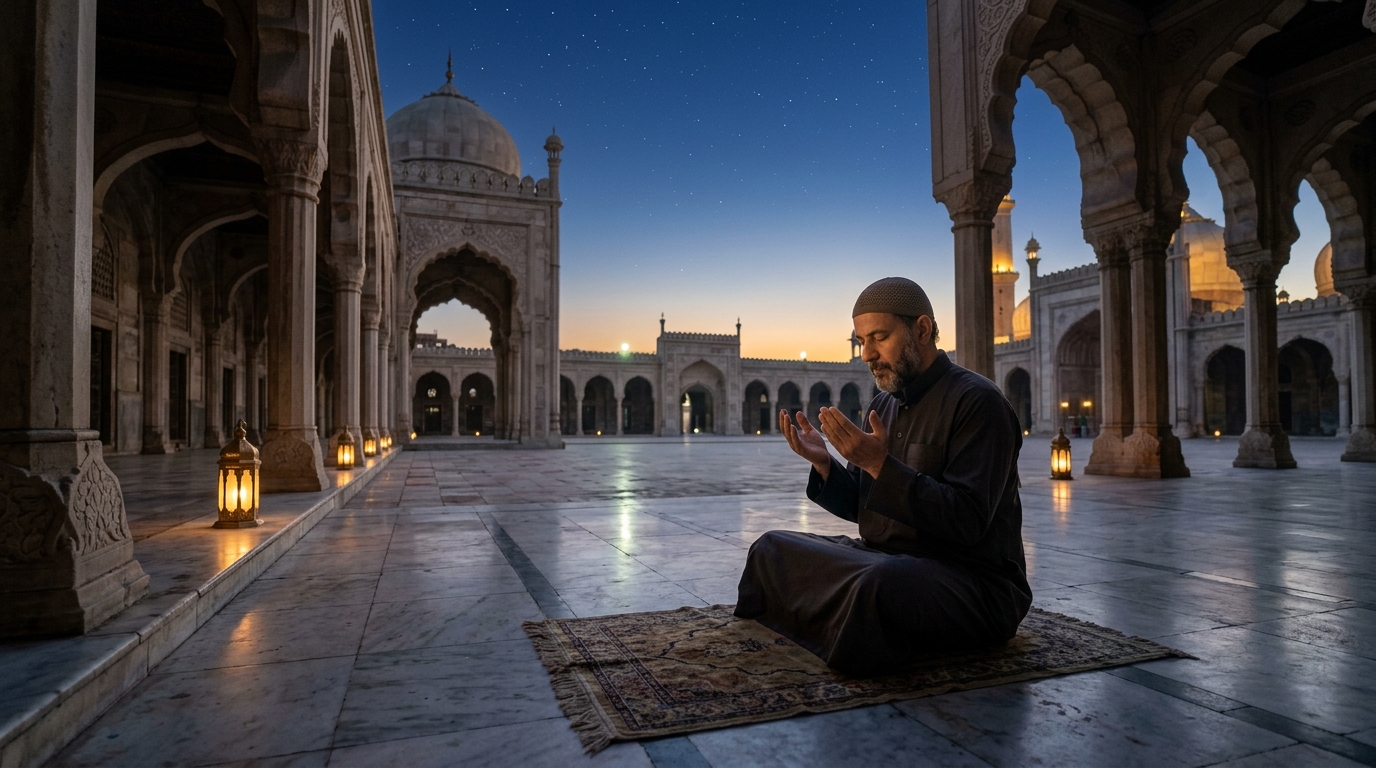
In contrast, weeping in Sujood offers the only context of Absolute Psychological Safety:
- No Mask Required: Allah already knows every unexpressed whisper of your heart ("And He knows what is within the breasts", Surah Al-Hadid 57:6). You do not need to construct articulate sentences or worry about stumbling over words.
- Your Brokenness is Cherished: While humans tire of repeated complaints, Allah loves when His servant displays complete, unreserved humility (Dhikr, Du'a, and Iftiqar) before His infinite majesty.
- Immediate Empowerment: Crying to humans often leaves a person feeling powerless and depleted. But weeping to the Owner of the Heavens and the Earth leaves you feeling elevated, shielded, and renewed. You handed your burdens to the One who controls every atom in existence.
6. How to Cultivate Healing Tears: A Step-by-Step Practical Guide
If your eyes feel dry, your heart feels hardened by the relentless velocity of modern life, or you struggle to release your emotions in prayer, use the following Prophetic disciplines to awaken true emotional tenderness in your worship:
1. Guard the Solitude of the Pre-Dawn (Tahajjud)
The Prophet ﷺ said:
"Our Lord descends every night to the nearest heaven when only the last third of the night remains, saying: 'Who is calling upon Me, that I may answer him? Who is asking of Me, that I may give him? Who is seeking My forgiveness, that I may forgive him?'"
Source: Sahih al-Bukhari #1145, Sahih Muslim #758.
Remove your phone from the room, leave the lights off, and step onto your prayer mat in complete darkness. The absence of sensory distractions invites the soul out of hiding.
2. Lengthen Your Sujood Beyond the Routine
Do not rush your prostrations to complete a checklist. After saying Subhana Rabbiyal A'la (Glory be to my Lord, the Most High) three times, remain still. Let your forehead sink into the earth. Breathe deeply through your nose. Give your nervous system permission to decelerate.
3. Confess Without Filter
Speak to Allah in your own mother tongue. Lay out your anxieties by name:
- "O Allah, I feel overwhelmed by this burden."
- "O Allah, my heart is hurting, and only You can mend it."
- "O Allah, I made mistakes, and I turn back to Your limitless mercy."
When you voice your vulnerability honestly, tears will come naturally—not out of panic, but out of profound relief.
4. Close with Unshakable Conviction (Husn al-Dhann)
Never end your prostration feeling defeated. Rise from Sujood knowing that every tear that fell was seen, recorded, and answered by the Most Generous.
وَإِذَا سَأَلَكَ عِبَادِى عَنِّى فَإِنِّى قَرِيبٌ ۖ أُجِيبُ دَعْوَةَ ٱلدَّاعِ إِذَا دَعَانِ ۖ فَلْيَسْتَجِيبُوا۟ لِى وَلْيُؤْمِنُوا۟ بِى لَعَلَّهُمْ يَرْشُدُونَ
Surah Al-Baqarah (2:186): "And when My servants ask you concerning Me, indeed I am near. I respond to the invocation of the caller when he calls upon Me. So let them respond to Me and believe in Me that they may be [rightly] guided."
Final Thoughts: The Tears That Cleanse the Soul
The tears you shed in Sujood are never wasted. They are the water that washes away the dust of anxiety, the sacred release of biological tension, and the bridge between human helplessness and divine assistance.
The next time your heart feels heavy, do not seek distractions, do not numb yourself with screens, and do not carry your pain alone. Find a quiet corner, face the Qiblah, lower your head to the dust, and let your tears flow to the One who made you. You will rise from that prostration with a lighter chest, a sharper mind, and a soul anchored in eternal peace.