

 QuranGPT
Pomegranate (Rumman) in Quran & Modern Cardiovascular Medicine
Discover the Quranic honor of pomegranate (Ar-Rumman), its heavenly status, and breakthroughs in cardiology — punicalagins, nitric oxide, and arterial plaque reversal.
The Holy Quran Team
Author
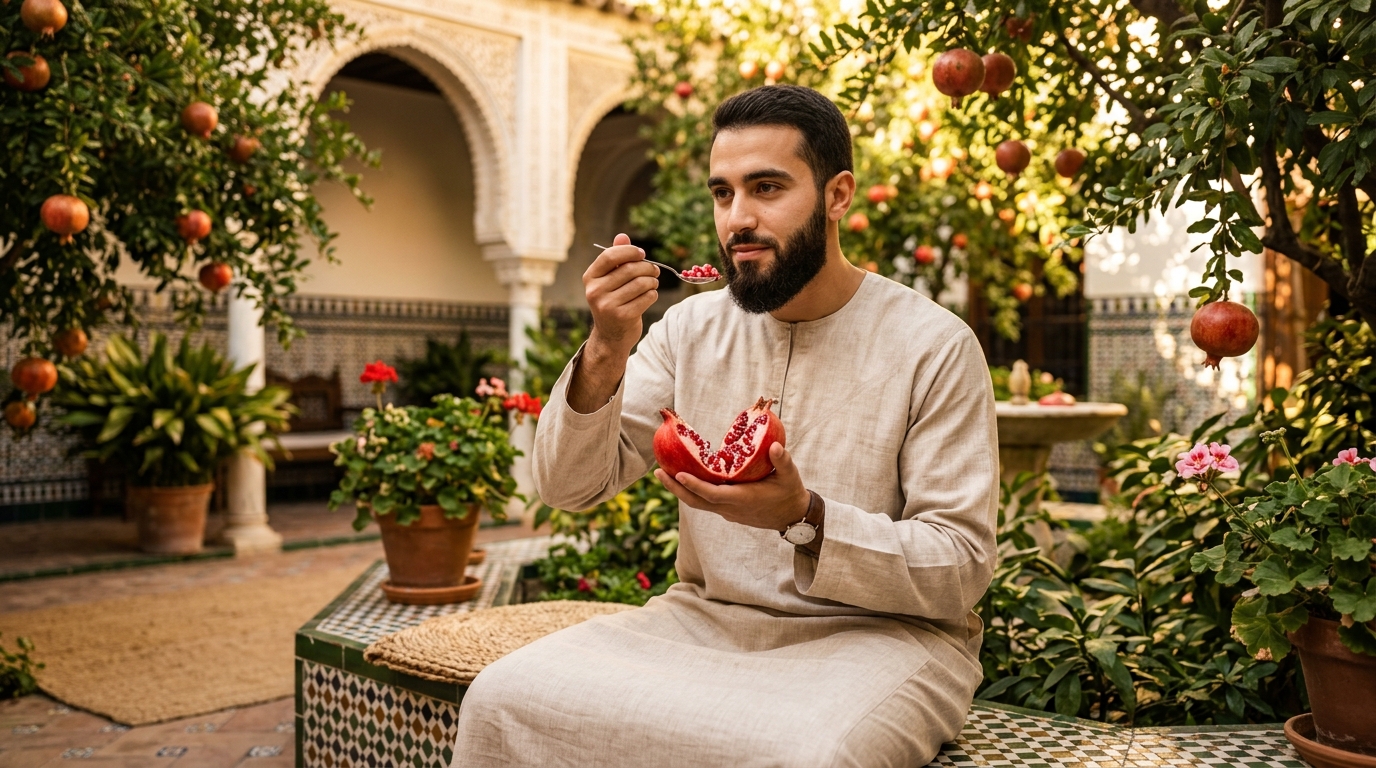
Among the blessed botanical treasures explicitly mentioned across the Holy Quran, the Pomegranate (Ar-Rumman / الرُّمَّان) occupies an exalted station. Revered both as an earthly provision of immense biological complexity and as a sublime delicacy flourishing within the gardens of Jannah (Paradise), this ruby-crowned fruit represents a masterpiece of divine bio-design.
وَهُوَ الَّذِي أَنزَلَ مِنَ السَّمَاءِ مَاءً فَأَخْرَجْنَا بِهِ نَبَاتَ كُلِّ شَيْءٍ فَأَخْرَجْنَا مِنْهُ خَضِرًا نُّخْرِجُ مِنْهُ حَبًّا مُّتَرَاكِبًا وَمِنَ النَّخْلِ مِن طَلْعِهَا قِنْوَانٌ دَانِيَةٌ وَجَنَّاتٍ مِّنْ أَعْنَابٍ وَالزَّيْتُونَ وَالرُّمَّانَ مُشْتَبِهًا وَغَيْرَ مُتَشَابِهٍ ۗ انظُرُوا إِلَىٰ ثَمَرِهِ إِذَا أَثْمَرَ وَيَنْعِهِ ۚ إِنَّ فِي ذَٰلِكُمْ لَآيَاتٍ لِّقَوْمٍ يُؤْمِنُونَ
"And it is He who sends down rain from the sky, and We produce thereby the growth of all things. We produce with it green [vegetation] from which We produce grains arranged in layers. And from the palm trees - of its emerging fruit are clusters hanging low. And [We produce] gardens of grapevines and olives and pomegranates, similar yet varied. Look at [each of] its fruit when it yields and [at] its ripening. Indeed in that are signs for a people who believe."
— Surah Al-An'am (6:99)
In contemporary clinical medicine, cardiovascular diseases (CVDs) remain the leading cause of global mortality, claiming approximately 18 million lives annually. Yet, over the past two decades, landmark trials in molecular cardiology, pharmacology, and nutritional biochemistry have revealed that the humble pomegranate possesses unmatched therapeutic power: reversing arterial calcification, regenerating the vascular endothelium, optimizing blood pressure, and preserving the human heart.
1. Pomegranate in the Holy Quran: Divine Botanical Symmetry
The Holy Quran honors the pomegranate (Punica granatum) in three separate revelations across two major Surahs:
A. The Heavenly Delicacy of Jannah
In Surah Ar-Rahman, Allah Almighty distinguishes pomegranates alongside dates as fruits gracing the sublime gardens of Paradise:
فِيهِمَا فَاكِهَةٌ وَنَخْلٌ وَرُمَّانٌ
"In both of them are fruit and date palms and pomegranates."
— Surah Ar-Rahman (55:68)
Classical exegetes, such as Imam Ibn Kathir and Imam Al-Qurtubi, observed that mentioning dates (Nakhl) and pomegranates (Rumman) specifically after the general term "fruit" (Fakihah) signifies their unparalleled medicinal, nutritional, and spiritual nobility (Dhikr al-Khass ba'd al-'Amm).
وَهُوَ الَّذِي أَنشَأَ جَنَّاتٍ مَّعْرُوشَاتٍ وَغَيْرَ مَعْرُوشَاتٍ وَالنَّخْلَ وَالزَّرْعَ مُخْتَلِفًا أُكُلُهُ وَالزَّيْتُونَ وَالرُّمَّانَ مُتَشَابِهًا وَغَيْرَ مُتَشَابِهٍ ۚ كُلُوا مِن ثَمَرِهِ إِذَا أَثْمَرَ وَآتُوا حَقَّهُ يَوْمَ حَصَادِهِ ۖ وَلَا تُسْرِفُوا ۚ إِنَّهُ لَا يُحِبُّ الْمُسْرِفِينَ
"And He it is who causes gardens to grow, [both] trellised and untrellised, and palm trees and crops of different [kinds of] food and olives and pomegranates, similar and varied. Eat of [each of] its fruit when it yields and give its due [zakah] on the day of its harvest. And be not excessive. Indeed, He does not like those who commit excess."
— Surah Al-An'am (6:141)
2. Classical Islamic Wisdom & Gastric Preservation
The companions of the Prophet ﷺ and early Islamic physicians recognized the unique therapeutic properties embedded within the entire structure of the pomegranate:
Reported from Ali ibn Abi Talib (may Allah be pleased with him):
"Eat the pomegranate with its inner white pulp (al-shahm), for indeed it cleanses, coats, and heals the stomach (fa innahu dabaghul-ma'idah)."
— Musannaf Ibn Abi Shaybah #24220, Kitab az-Zuhd by Imam Ahmad #871
In classical Arabic medical terminology, Dabagh refers to the tanning, tightening, and fortifying of leather. Ali (RA) used this brilliant metaphor to describe how the inner fibrous pith tones the mucosal lining of the gastrointestinal tract, preventing ulcerations and reducing hyperacidity.
3. The Molecular Arsenal: Punicalagins, Punicic Acid & Polyphenols
Modern phytochemistry reveals that the pomegranate contains one of the densest antioxidant and bio-active matrices in the plant kingdom:
| Phytochemical Compound | Botanical Location | Key Biological & Cardiovascular Action |
|---|---|---|
| Punicalagins (A & B) | Pith, peel & aril juice | Extremely potent hydrolyzable ellagitannins; scavenges free radicals (3× the potency of green tea) |
| Punicic Acid (Omega-5) | Seed oil (70–80%) | Unique conjugated linolenic acid; suppresses vascular inflammation and lipid peroxidation |
| Anthocyanins | Ruby arils & juice | Cyanidin and delphinidin glucosides; preserves microvascular elasticity and protects capillary beds |
| Ellagic Acid | Peel & arils | Upregulates cellular glutathione; exerts direct anti-atherosclerotic effects |
| Urolithin A Precursors | Hydrolyzable tannins | Gut microbiota converts tannins into Urolithin A, stimulating mitophagy in cardiomyocytes |
4. Cardiovascular Breakthroughs: How Pomegranate Heals the Heart
Clinical cardiology has substantiated the protective mechanisms of pomegranate through rigorous randomized controlled human trials:
A. Reversal of Carotid Artery Plaque & Atherosclerosis
In a landmark clinical investigation conducted at the Rambam Medical Center and published in Clinical Nutrition (Aviram et al., 2004), patients with severe carotid artery stenosis (narrowing of the main arteries supplying blood to the brain) were administered concentrated pomegranate juice daily for one year:
- Carotid Intima-Media Thickness (CIMT): Reduced by an astounding 30% in the pomegranate group, whereas the control group experienced a 9% increase in arterial thickness.
- LDL Oxidation Resistance: Pomegranate consumption increased the resistance of Low-Density Lipoprotein (LDL) to copper ion-induced oxidation by 90%, effectively halting the formation of foam cells that construct arterial atheromas.
Oxidized LDL + Macrophage Scavenger Receptors → Foam Cells (Atheroma Core) → [Inhibited by 90% via Punicalagins]
B. Stimulation of Endothelial Nitric Oxide Synthase (eNOS)
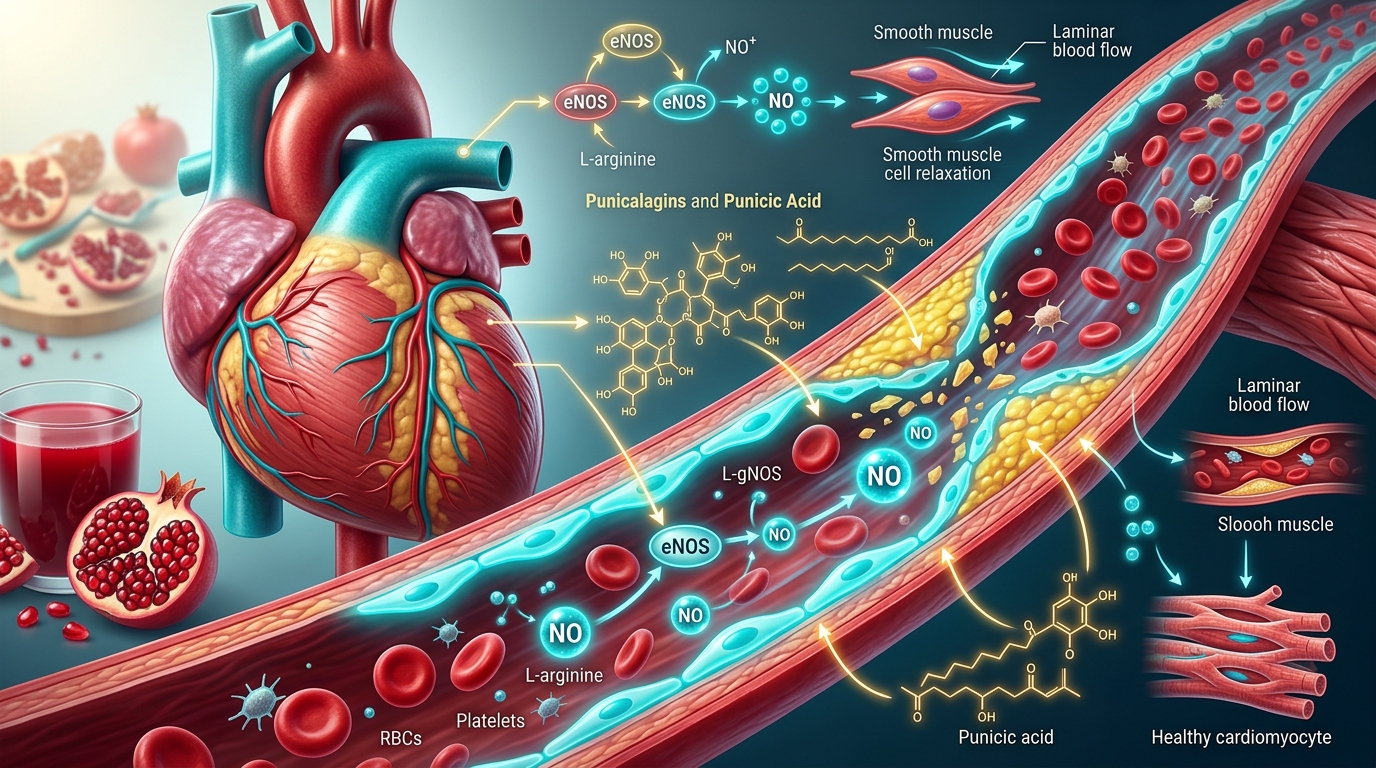
The vascular endothelium is a single layer of cells lining all blood vessels. It regulates blood pressure through the release of Nitric Oxide (NO), a powerful endogenous vasodilator:
- Polyphenols in pomegranate directly upregulate the expression of endothelial Nitric Oxide Synthase (eNOS) while protecting synthesized NO from oxidative destruction by superoxide radicals (Stowe et al., Journal of Cardiovascular Pharmacology, 2011).
- This results in natural vasodilation, improved arterial compliance, reduced cardiac afterload, and significant reductions in both systolic and diastolic blood pressure.
C. Natural ACE Inhibition & Blood Pressure Optimization
Pomegranate compounds naturally inhibit Angiotensin-Converting Enzyme (ACE) by approximately 36% (Aviram & Dornfeld, Atherosclerosis, 2001). By modulating the renin-angiotensin system naturally, it relaxes peripheral vascular beds without the adverse side effects associated with pharmaceutical ACE inhibitors.
5. The Gut-Heart Axis: Urolithin A & Cellular Mitophagy
One of the most revolutionary discoveries in modern geroscience and mitochondrial biology centers on Urolithin A:
A. The Microbiome Transformation
When you consume pomegranate arils and their natural ellagitannins, the beneficial microbes of the human gut flora (Gordonibacter urolithinfaciens and Ellagibacter isohanfensis) metabolize punicalagins into the bioavailable metabolite Urolithin A.
B. Rejuvenation of Aging Cardiomyocytes
In a seminal study published in Nature Medicine (Ryu et al., 2016):
- Urolithin A was proven to be the first natural compound capable of triggering Mitophagy — the selective recycling and removal of dysfunctional, aged mitochondria within cardiac muscle cells (cardiomyocytes) and skeletal tissue.
- By clearing out toxic mitochondrial debris, heart muscle cells generate ATP with higher metabolic efficiency, reducing myocardial fatigue and preventing age-related heart failure.
6. Practical Sunnah Guidance: How to Consume Pomegranate for Maximum Vitality
To reap both the spiritual reward and optimal biological benefits of this Quranic superfood:
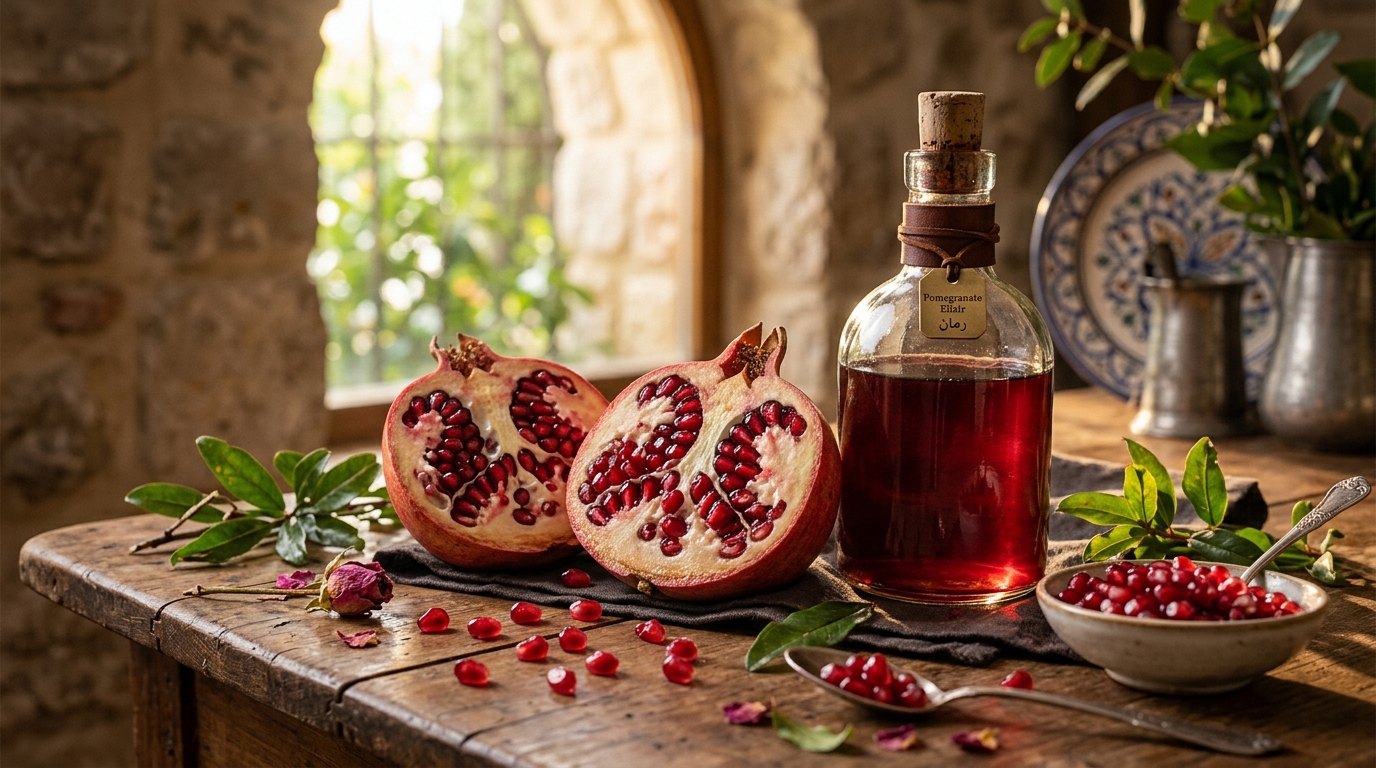
- Eat the Whole Fruit (Including the White Pith): Do not discard the delicate white pith (Al-Shahm). As Sayyiduna Ali (RA) taught, its high ellagitannin density provides a protective lining for the stomach and delivers the highest concentration of prebiotic polyphenols to the gut microbiome.
- Chew the Seeds Thoroughly: The woody seeds inside each ruby aril contain punicic acid (Omega-5) and essential dietary fiber. Chewing them releases beneficial conjugated fatty acids directly into the bloodstream.
- Choose Pure, Cold-Pressed, Unsweetened Juice: If consuming pomegranate juice, ensure it is 100% pure without added refined sugars or artificial preservatives, which negate its anti-glycation benefits.
- Begin with the Basmalah and Gratitude: Reflect upon the intricate symmetry and divine craftsmanship of each jewel-like seed, thanking Allah for the healing remedies embedded within the earth.
Scientific & Islamic References
- Aviram, M., et al. (2004). Pomegranate juice consumption for 3 years by patients with carotid artery stenosis reduces common carotid intima-media thickness, blood pressure and LDL oxidation. Clinical Nutrition, 23(3), 423–433.
- Aviram, M., & Dornfeld, L. (2001). Pomegranate juice consumption inhibits serum angiotensin converting enzyme activity and reduces systolic blood pressure. Atherosclerosis, 158(1), 195–198.
- Ryu, D., et al. (2016). Urolithin A induces mitophagy and prolongs lifespan in C. elegans and increases muscle function in rodents. Nature Medicine, 22(8), 879–888.
- Stowe, C. B. (2011). The effects of pomegranate juice on cardiovascular health: Endothelial function and nitric oxide bioavailability. Journal of Cardiovascular Pharmacology, 57(6), 680–687.
- Ibn Kathir, I. (2000). Tafsir al-Qur'an al-Azim (Exegesis of the Great Quran). Dar Ibn Hazm, Beirut (Commentary on Surah Al-An'am 6:99 & Surah Ar-Rahman 55:68).
- Ibn Abi Shaybah. Al-Kitab al-Musannaf fi al-Ahadith wa al-Athar. Dar al-Taj, Beirut (Vol. 5, Hadith #24220).