

 QuranGPT
Plant Neurobiology and Phytochemical Signaling: How Flora Communicates, Senses Stimuli, and Glorifies the Creator in Quranic Botany
A cutting-edge botanical and Quranic investigation into plant neurobiology, subterranean mycorrhizal networks (the Wood Wide Web), volatile organic compound (VOC) signaling, and the Quranic affirmation that trees and plants actively prostrate and praise their Creator.
The Holy Quran Team
Author
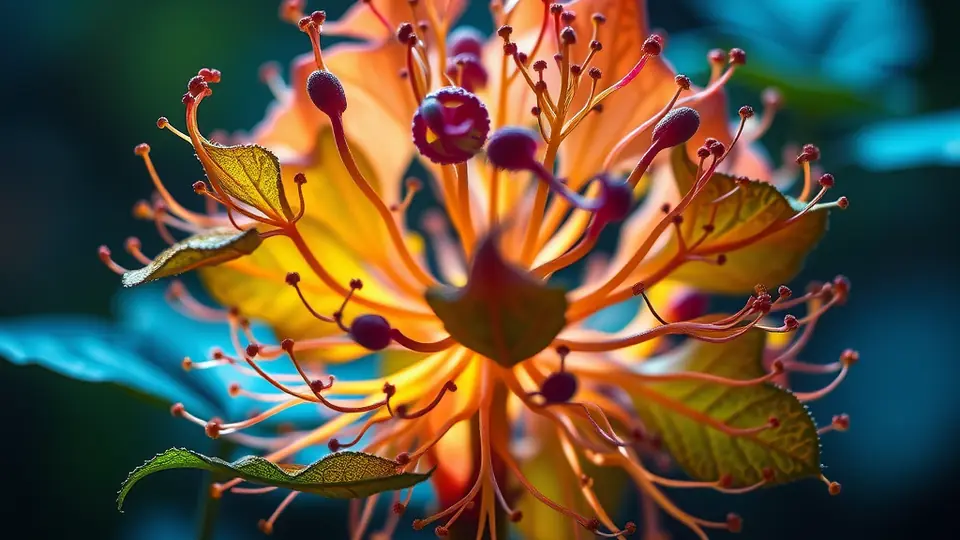
For centuries, Western mechanistic philosophy viewed the plant kingdom as passive, inert, and purely decorative organisms lacking sensory awareness, communication, or internal signaling.
However, over the last two decades, the emerging discipline of Plant Neurobiology and Phytochemistry—spearheaded by researchers at institutes like the University of Florence, Bonn, and Oxford—has radically overturned this obsolete paradigm. Scientists now know that plants possess complex electro-physiological signaling networks:
- Propagating action potentials through vascular phloem tissues (analogous to animal nervous systems).
- Transmitting danger warnings and nutrient sharing across vast underground fungal networks famously dubbed the "Wood Wide Web" (Mycorrhizal networks).
- Emitting airborne Volatile Organic Compounds (VOCs) to summon predatory wasps when attacked by herbivores.
- Detecting acoustic vibrations and rhythmic sound frequencies.
Remarkably, this dynamic, living consciousness of the botanical world was revealed over 1,400 years ago in the Holy Quran, which explicitly states that every tree, plant, and leaf exists in an active state of prayer, prostration, and glorification of Allah (The Creator).
1. The Quranic Proclamation of Botanical Prostration and Glorification
The Holy Quran reveals the living, sentient submission of the plant kingdom in unmistakable terms:
وَالنَّجْمُ وَالشَّجَرُ يَسْجُدَانِ
"And the herbs and the trees prostrate."
(Surah Ar-Rahman 55:6)
And in Surah Al-Hajj:
أَلَمْ تَرَ أَنَّ اللَّهَ يَسْجُدُ لَهُ مَن فِي السَّمَاوَاتِ وَمَن فِي الْأَرْضِ وَالشَّمْسُ وَالْقَمَرُ وَالنُّجُومُ وَالْجِبَالُ وَالشَّجَرُ وَالدَّوَابُّ وَكَثِيرٌ مِّنَ النَّاسِ
"Do you not see that to Allah prostrates whoever is in the heavens and whoever is on the earth and the sun, the moon, the stars, the mountains, the trees, the moving creatures and many of the people?"
(Surah Al-Hajj 22:18)
graph TD
    A["Plant Sensory & Communication Systems"] --> B["Electrical Action Potentials (Phloem Voltage Pulses)"]
    A --> C["Mycorrhizal Subterranean Fungal Grids ('Wood Wide Web')"]
    A --> D["Airborne VOC Terpene Distress Signals"]
    A --> E["Acoustic Resonance & Root Nanotropism"]

    B --> F["Scientific Echo of Quranic Truth: Plants are Sentient Glorifiers"]
    C --> F
    D --> F
    E --> F
2. Electrophysiology and Vascular Action Potentials in Plants
Plants do not possess brain tissue with neurons, yet they utilize the exact same neurotransmitters and voltage-gated ion channels found in human nervous systems:
- Glutamate Receptor-Like (GLR) Channels: When a caterpillar bites a leaf, the damaged cells release glutamate, triggering a wave of calcium ions (Ca2+) and electrical depolarization that races through the entire plant at 1 millimeter per second.
- Systemic Defense Priming: Within minutes of the electrical wave reaching distant leaves, the plant begins synthesizing bitter defensive tannins, toxic alkaloids, and protease inhibitors to make its foliage unpalatable to pests.
3. The "Wood Wide Web": Altruistic Mycorrhizal Fungal Communities
In ancient forests, subterranean mycorrhizal fungi link the root tips of hundreds of distinct tree species into a massive, interconnected biological internet.
| Ecological Phenomenon | Mechanism in Plant Communities | Spiritual & Quranic Reflection |
|---|---|---|
| Nutrient Sharing & Altruism | Mature "Mother Trees" pump surplus carbon and sugars to shaded saplings. | Direct reflection of divine balance (Mizan) and mutual mercy in creation. |
| Early Warning Broadcasts | A tree infested by pests sends chemical warning pulses through fungal threads. | Cooperative community behavior affirming collective biological cohesion. |
| Acoustic Phonotropism | Roots actively grow toward the acoustic vibration of flowing water (around 200 Hz). | The responsive sensitivity of earth to water described in Surah Al-Hajj (22:5). |
4. Photosynthesis and the Emergence of Green Chlorophyll (Khadiran)
In Surah Al-An'am, the Quran describes the process of plant growth with breathtaking botanical accuracy:
وَهُوَ الَّذِي أَنزَلَ مِنَ السَّمَاءِ مَاءً فَأَخْرَجْنَا بِهِ نَبَاتَ كُلِّ شَيْءٍ فَأَخْرَجْنَا مِنْهُ خَضِرًا نُّخْرِجُ مِنْهُ حَبًّا مُّتَرَاكِبًا
"And it is He who sends down rain from the sky, and We produce thereby the growth of all things. We produce with it 'green substance' (Khadiran) from which We produce grains clustered."
(Surah Al-An'am 6:99)
Notice the term Khadiran (خَضِرًا)—literally "the green substance". Modern plant biochemistry confirms that Chlorophyll (the green pigment) is the foundational molecular engine that captures solar photons to convert carbon dioxide and water into glucose, from which all complex grains, fruits, and seeds are subsequently assembled!
5. Conclusion: A Call for Ecological Stewardship
Modern plant neurobiology reminds us that our environment is not a dead, inanimate resource to be exploited; it is a sacred, living sanctuary filled with organisms praising the One True God.
When a Muslim walks beneath the canopy of a forest, they walk among millions of prostrating, vibrating creations engaged in perpetual Tasbih. Recognizing this truth instills profound humility, environmental compassion, and awe for Al-Badi (The Incomparable Originator).