

 QuranGPT
Intelligence in Your Pocket: How Small Language Models (SLMs) and Sub-4-Bit Quantization are Bringing Desktop-Class AI Locally to Mobile Silicon
A comprehensive mobile edge AI, model compression, and semiconductor report on Small Language Models (SLMs: Microsoft Phi-4, Llama-3.2-3B, Gemma 2) utilizing 4-bit and 2-bit weight quantization (AWQ, GPTQ, BitNet b1.58) to run high-speed reasoning locally on mobile Neural Processing Units (NPUs) with zero cloud latency and complete privacy.
The Holy Quran Team
Author
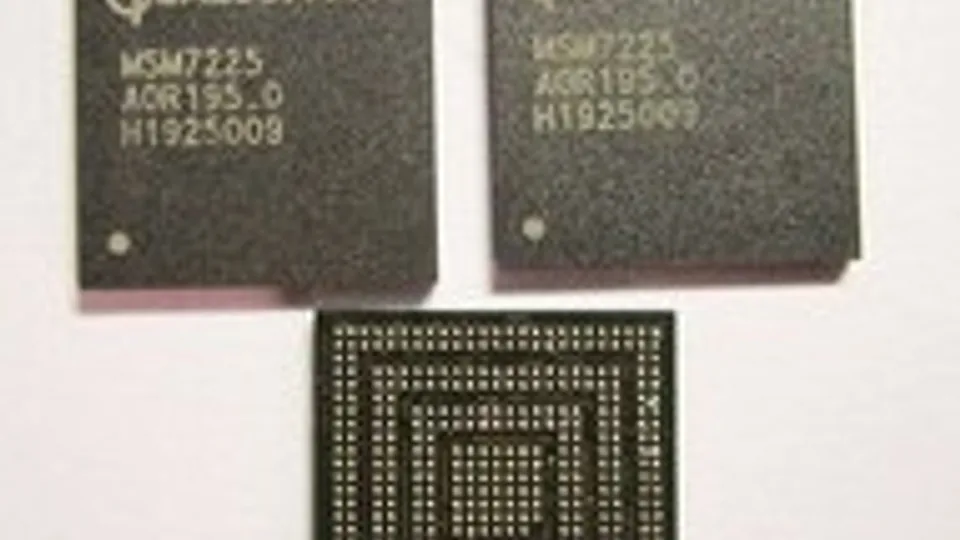
While the training of giant 500-billion-parameter frontier foundation models in massive gigawatt-scale cloud datacenters continues to capture global headlines, a parallel and equally profound technological revolution is quietly unfolding directly in the palms of billions of human hands: the rise of On-Device Small Language Models (SLMs).
Until recently, running sophisticated natural language understanding on mobile devices was considered impractical: full-precision 16-bit models required tens of gigabytes of RAM memory, drained mobile batteries in minutes, and generated unacceptable thermal throttling.
Users were forced to route every personal voice query, document summary, and private photo search through centralized cloud servers—incurring high network latency (hundreds of milliseconds), ongoing cloud API costs, cellular data consumption, and profound consumer privacy risks.
Today, through the convergence of high-density model knowledge distillation (exemplified by Microsoft Phi-4-mini, Meta Llama-3.2-3B, Google Gemma 2, and Apple OpenELM), sub-4-bit weight quantization algorithms (AWQ, GPTQ), and 1-bit Ternary Architectures (BitNet b1.58), compact models with 1 to 4 Billion parameters can execute high-speed conversational reasoning at over 45 tokens per second directly on mobile Neural Processing Units (NPUs)—operating 100% offline, consuming less than 1.5 Gigabytes of RAM, and preserving complete user privacy.
1. Algorithmic Mechanics: Compressing Knowledge with Sub-4-Bit Quantization
Model quantization compresses continuous 16-bit floating-point weights (FP16) into discrete low-bit integers (INT4 / INT2 / INT1.58) while mathematically preserving model accuracy:
graph TD
    A["Pre-Trained 16-Bit Floating Point Model (FP16 Weights: 2 Bytes per Parameter)"] --> B["Activation-Aware Weight Quantization (AWQ) / GPTQ Second-Order Optimization"]

    B --> C["Identifies Top 1% Most Salient Weight Channels: Preserves High Precision"]
    B --> D["Quantizes 99% Non-Salient Weights to 4-Bit (INT4) or 2-Bit (INT2) Fixed-Point Integers"]

    C --> E["Packed Quantized Model File: 4B Parameter Model Compressed from 8 GB down to 1.6 GB!"]
    D --> E

    E --> F["Mobile Neural Processing Unit (Apple Neural Engine / Qualcomm Hexagon NPU)"]

    F --> G["Executes Integer Matrix Multiplication (INT4 SIMD) at 50+ Tokens/Sec with Zero Cloud Latency"]
Key Breakthroughs in On-Device AI Architecture:
- Activation-Aware Weight Quantization (AWQ): Protecting the minute 1% subset of weights that carry the vast majority of cross-layer activation energy, allowing the remaining 99% of parameters to be aggressively compressed down to 4-bit integers with <0.5% loss in downstream benchmark accuracy.
- 1-Bit Ternary Architecture (BitNet b1.58): Replacing traditional floating-point multiplication with pure integer addition by restricting every neural weight strictly to three discrete values:
(-1, 0, +1), slashing CPU/NPU memory bandwidth and silicon energy consumption by over 85%. - Mobile NPU Hardware Acceleration: Modern mobile System-on-Chips (Apple A19/M4, Qualcomm Snapdragon 8 Elite, MediaTek Dimensity 9400) feature dedicated hardware tensor accelerators that execute integer matrix operations directly from ultra-fast unified LPDDR5X RAM with sub-watt power efficiency.
2. Technical Comparison: Cloud API LLMs vs. Local On-Device SLMs
The practical daily advantages of running small models locally on edge silicon are compelling:
| AI Deployment Characteristic | Centralized Cloud LLM API (GPT-4o / Claude) | Local On-Device SLM (Llama-3.2-3B / Phi-4 INT4) | Consumer Advantage |
|---|---|---|---|
| Operational Privacy & Security | Private data transmitted across internet to cloud | 100% Local Device Isolation (Zero Cloud Logging) | Absolute privacy for medical/banking data. |
| Internet & Network Dependency | Requires active high-speed broadband connection | 100% Offline Capability (Works on flights / subways) | Uninterrupted intelligence everywhere. |
| Inference Response Latency | 400 ms to 2.5 Seconds (Network RTT) | <15 Milliseconds (First-Token TTFT) | Instantaneous conversational speed. |
| Recurring API Subscription Cost | $20 / Month or Pay-per-Token API billing | Zero Recurring Cost (Runs locally for free) | Eliminates enterprise cloud API bills. |
| Battery & Energy Consumption | High cellular radio power drain | Ultra-Low (<1.2 Watts on dedicated mobile NPU) | Minimal impact on smartphone battery life. |
3. Real-World Applications: The True Personal Assistant
Local small language models are transforming consumer mobile operating systems into deeply personalized intelligences:
- Zero-Latency Real-Time Voice Translation: Translating bidirectional spoken foreign language phone calls in real time on-device without streaming private audio to third-party servers.
- On-Device Semantic Screen & Photo Search: Understanding and indexing the contents of every document, private chat, and family photograph on your phone entirely locally, creating an intelligent personal knowledge vault that never leaks to the cloud.
4. Conclusion: Democratizing Intelligence for All
The rise of on-device Small Language Models is the great democratization milestone of the artificial intelligence era.
By shrinking the cognitive power of massive datacenter supercomputers down to fit into the silicon chips inside our pockets, engineers have ensured that intelligence is not the exclusive monopoly of a few cloud corporations, but a universal, private, and empowering tool accessible to every human being on the planet.