

 QuranGPT
North Korea Conducts Hypersonic and Ballistic Missile Drills in East Sea Amid Trilateral Defense Exercises
North Korea carries out multiple ballistic and hypersonic missile test launches into the Sea of Japan (East Sea), citing joint US-South Korea-Japan military drills.
The Holy Quran Global Affairs & Diplomatic Desk
Author
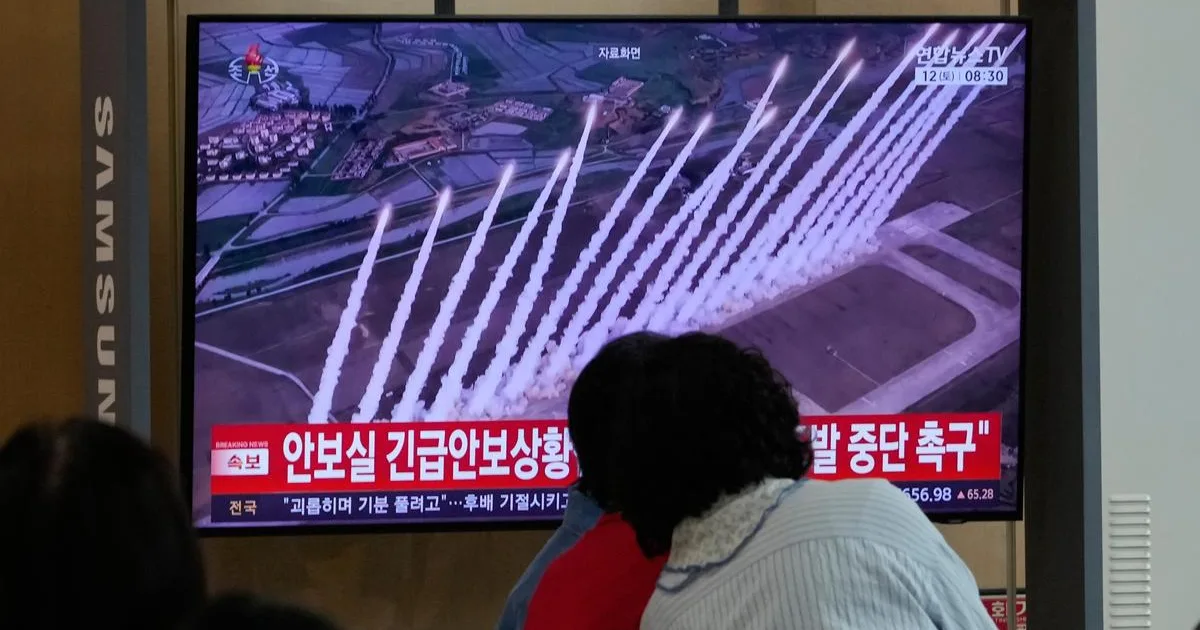
Tensions in the Korean Peninsula escalated once again following a series of synchronized ballistic and hypersonic glide missile test-firings conducted by the Democratic People's Republic of Korea (DPRK) into the Sea of Japan (known as the East Sea in Korea). The military maneuvers were characterized by Pyongyang as a legitimate deterrence response to expansive joint military exercises conducted by the United States, South Korea, and Japan.
Defense ministries in Seoul and Tokyo reported tracking multiple projectile trajectories launched from inland testing sites, with missiles traversing several hundred kilometers before splashing down outside exclusive economic zones. The development underscores the rapid technological evolution of Pyongyang's solid-fuel propulsion and maneuverable reentry vehicle systems.
1. Executive Summary: Technical and Strategic Dimensions of the Tests
The latest test sequence demonstrated advancements in multi-range launch capabilities and rapid deployment readiness:
| Missile Parameter | Monitored Specifications | Strategic Implications |
|---|---|---|
| Launch Platform | Multi-axle Transporter Erector Launchers (TELs) | High mobility and reduced pre-launch satellite detection window |
| Propulsion System | High-thrust solid-fuel rocket boosters | Rapid fueling and immediate launch readiness in all weather conditions |
| Warhead Configuration | Hypersonic Glide Vehicle (HGV) test payload | Low-altitude non-ballistic trajectory to challenge missile defense radars |
| Flight Trajectory | Sub-orbital apogee with lateral pull-up maneuver | Designed to bypass standard THAAD and Aegis interception envelopes |
2. Geopolitical Triggers: Trilateral Military Drills in Focus
Pyongyang's defense ministry issued an official communique framing the test sequence as a direct reaction to the expanded trilateral naval and air defense drills conducted by Washington, Seoul, and Tokyo in regional waters.
The joint trilateral exercises included:
- Integrated Anti-Submarine Warfare (ASW): Synchronized drills involving nuclear-powered attack submarines and P-8A Poseidon maritime patrol aircraft.
- Combined Ballistic Missile Defense (BMD): Real-time tracking data sharing via the Trilateral Real-Time Missile Warning Data Sharing Network established among the three allies.
- Air Combat Readiness: B-52H strategic bomber escort missions coordinated with South Korean F-35A stealth fighters and Japanese F-15J interceptors.
3. Responses from Seoul, Tokyo, and Washington
The international community responded swiftly to the missile launches with synchronized diplomatic and military deterrence measures:
Key Trilateral Responses:
1. South Korea (ROK): Joint Chiefs of Staff heightened 24/7 surveillance posture and conducted simulated precision-strike air-to-surface drills.
2. Japan: Prime Minister's office convened the National Security Council, lodged formal diplomatic protests via embassy channels in Beijing, and ordered enhanced coast guard navigation alerts.
3. United States: Indo-Pacific Command reaffirmed its ironclad extended deterrence commitment to both Seoul and Tokyo, including full spectrum nuclear and conventional umbrella guarantees.
4. Regional Diplomatic Deadlock and Sanctions Fatigue
Despite repeated United Nations Security Council resolutions prohibiting ballistic missile development by North Korea, the diplomatic mechanism in New York remains largely paralyzed by structural veto dynamics among permanent members. China and Russia have consistently advocated for reciprocal de-escalation, urging Washington and its allies to halt large-scale military drills in exchange for North Korean testing moratoria.
The ongoing deadlock highlights the reality that unilateral sanctions have reached their practical limits in curbing technological advancements in regional weapons programs, underscoring the urgent necessity of comprehensive diplomatic risk-reduction channels.
5. Frequently Asked Questions (FAQ)
What types of missiles did North Korea launch in the latest tests?
The tests involved solid-fuel short-to-intermediate range ballistic missiles and experimental hypersonic glide vehicle payloads launched from mobile TEL platforms into the East Sea.
Why did North Korea conduct these missile tests now?
Pyongyang officially stated the tests were a proportional deterrence drill in response to large-scale joint military exercises held by the US, South Korea, and Japan in adjacent international waters.
How did South Korea and Japan track the missile launches?
Both nations utilized terrestrial early-warning radars, Aegis-equipped destroyers, and the trilateral real-time missile data-sharing network to monitor launch apogees, velocities, and splashdown coordinates.
6. Strategic Takeaways & Outlook
- Technological Advancements: The shift toward solid-fuel propulsion and hypersonic glide capabilities significantly reduces early-warning time for regional air defense networks.
- Institutional Impasse: The lack of consensus within the UN Security Council leaves crisis management primarily dependent on bilateral and trilateral military deterrence postures.
- Need for Crisis Prevention Channels: Without direct diplomatic hotlines between Pyongyang, Seoul, and Washington, the risk of accidental escalation during concurrent military exercises remains elevated.