

 QuranGPT
Nigella Sativa (Black Seed) and Thymoquinone: Modern Pharmacology and Prophetic Medicine
An in-depth pharmacological review of Nigella sativa (Black Seed), exploring the molecular mechanisms of Thymoquinone across immunology, oncology, and metabolic health.
The Holy Quran Team
Author
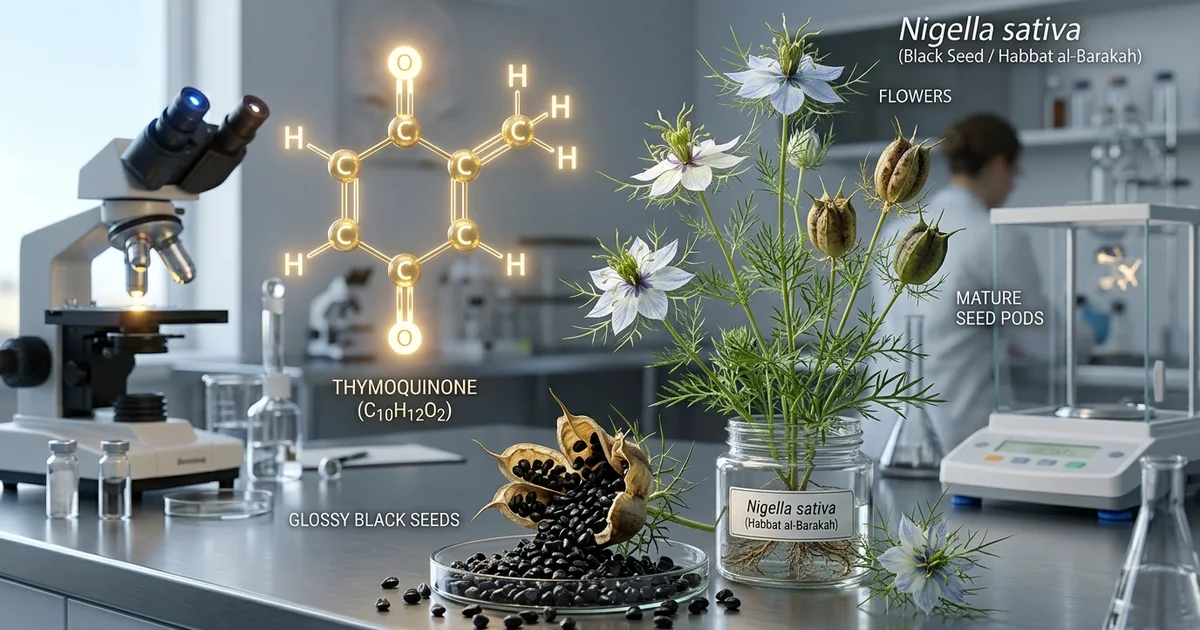
Among all botanical remedies documented across human ethnopharmacological history, few plants have received as much focused scientific investigation in modern molecular pharmacology as Nigella sativa—an annual flowering plant belonging to the Ranunculaceae family, popularly known as Black Seed, Black Cumin, or in Arabic as Habbat al-Barakah (the "Blessed Seed").
In classical Islamic tradition, the therapeutic value of Black Seed was immortalized in a celebrated statement of the Prophet Muhammad ﷺ:
"Use this Black Seed, for indeed it contains a cure for every disease except death."
— Sahih al-Bukhari (5688)
Over the past three decades, thousands of peer-reviewed clinical trials, pharmacological analyses, and biomedical publications indexed on PubMed have systematically characterized the bioactive constituents of Nigella sativa, identifying its principal phytochemical—Thymoquinone (C10H12O2)—as a powerhouse of antioxidant, immunomodulatory, anti-inflammatory, and hepatoprotective properties.
1. Executive Summary: The Pharmacological Profile of Thymoquinone
The seeds of Nigella sativa contain a complex phytotherapeutic matrix comprising fixed oils, volatile essential oils, alkaloids, and flavonoids:
| Bioactive Constituent | Chemical Classification | Molecular Target / Pathway | Therapeutic Clinical Indication |
|---|---|---|---|
| Thymoquinone (TQ) | Monoterpene quinone (30%–48% of essential oil) | Inhibits NF-κB, COX-2, 5-LOX, and downregulates TNF-α | Potent anti-inflammatory, antioxidant, and immunomodulator |
| Thymohydroquinone & Dithymoquinone | Dimeric quinone derivatives | Free radical scavenger; inhibits lipid peroxidation | Protects cell membranes from oxidative stress and DNA damage |
| Nigellidine & Nigellicine | Isoquinoline & pyrazole alkaloids | Modulates opioid receptors and histamine release | Natural analgesic, anti-allergic, and bronchodilator |
| Essential Fatty Acids (Linoleic & Oleic) | Polyunsaturated fatty acids (PUFAs) | Improves lipid lipid ratios and membrane fluidity | Cardiovascular protection, lowers LDL cholesterol |
| p-Cymene & Carvacrol | Monoterpene hydrocarbons | Disrupts bacterial and fungal cell wall integrity | Broad-spectrum antimicrobial and antifungal activity |
2. Molecular Mechanisms of Action: Quelling the Inflammatory Cascade
Chronic systemic inflammation mediated by the Nuclear Factor kappa B (NF-κB) pathway is the root molecular driver of modern chronic illnesses, including rheumatoid arthritis, type 2 diabetes, cardiovascular atherosclerosis, and autoimmune conditions.
Thymoquinone directly intervenes at multiple checkpoints within the inflammatory cascade:
- Inhibition of Pro-Inflammatory Cytokines: Suppresses the gene expression and release of Interleukin-1 beta (IL-1β), Interleukin-6 (IL-6), and Tumor Necrosis Factor-alpha (TNF-α).
- Dual Cyclooxygenase & Lipoxygenase Inhibition: Blocks both COX-2 and 5-LOX enzymatic pathways, reducing the synthesis of inflammatory prostaglandins (PGE2) and leukotrienes without causing the gastrointestinal ulceration common to synthetic NSAIDs.
- Nrf2-ARE Pathway Activation: Upregulates the Master Cellular Antioxidant Defense system (Nrf2), boosting endogenous production of Superoxide Dismutase (SOD), Catalase (CAT), and Glutathione (GSH).
Thymoquinone Molecular Anti-Inflammatory Pathway:
Thymoquinone Intake ➔ Suppresses NF-κB Translocation ➔ Downregulates IL-6, TNF-α & COX-2
➔ Activates Nrf2 Antioxidant Defense ➔ Reduces Systemic Oxidative Stress & Inflammation
3. Clinical Applications in Metabolic and Respiratory Health
Modern randomized controlled trials (RCTs) have validated the efficacy of Nigella sativa across several key clinical domains:
- Glycemic Control and Insulin Sensitivity: Meta-analyses demonstrate that daily supplementation with 1 to 2 grams of powdered Nigella sativa seed or standardized oil significantly reduces fasting blood glucose (FBG), lowers HbA1c levels, and improves peripheral insulin sensitivity in type 2 diabetic patients.
- Bronchial Asthma and Respiratory Relief: Due to its potent bronchodilatory and antihistaminic properties, Nigella sativa extract relaxes tracheal smooth muscle and reduces airway hyper-responsiveness in patients with allergic asthma.
- Cardiovascular & Lipid Management: Regular administration leads to statistically significant reductions in total serum cholesterol, low-density lipoprotein (LDL-C), and triglycerides, while supporting healthy arterial endothelial elasticity.
4. The Holistic Wisdom of Prophetic Medicine
Islamic bioethics and Prophetic tradition treat natural botanical remedies not as magical panaceas, but as manifestations of divine mercy and scientific order embedded within creation. The Prophet ﷺ taught that seeking medical treatment is a religious duty:
"Allah has not sent down any disease except that He has also sent down its cure."
— Sahih al-Bukhari (5678)
The Prophetic description of Black Seed as a "cure for every disease" refers in linguistic and medical context to its broad-spectrum pan-systemic benefits: by modulating the immune system, quenching oxidative stress, and reducing chronic inflammation, it fortifies the body's innate defenses against a vast array of pathologies.
5. Frequently Asked Questions (FAQ)
What is the main active compound in Black Seed (Nigella sativa)?
The primary active pharmacological compound in Black Seed is Thymoquinone (TQ), a monoterpene quinone with potent anti-inflammatory, antioxidant, and immunomodulatory properties.
What are the scientifically proven health benefits of Black Seed?
Clinical research confirms that Black Seed improves blood sugar control, reduces systemic inflammation, relieves asthma symptoms, lowers LDL cholesterol, and supports liver and kidney health.
How should Black Seed be consumed for daily wellness?
It can be consumed as crushed whole seeds (1/2 to 1 teaspoon daily) mixed with raw honey or as cold-pressed Nigella sativa seed oil taken with warm water.
6. Actionable Takeaways & Daily Integration
- Daily Maintenance Dose: Take 1 teaspoon (approx. 2.5–5 ml) of high-grade, cold-pressed virgin Black Seed oil daily, or chew 1 gram of freshly ground seeds with honey.
- Support Respiratory Health: Inhale the gentle steam of hot water infused with a few drops of pure Black Seed oil to clear nasal passages and bronchial airways during seasonal colds.
- Combine with Healthy Lifestyle: Use Nigella sativa as an integral part of a balanced diet rich in whole foods, exercise, and regular hydration.