

 QuranGPT
The Neuroscience of Hifz: How Quran Memorization Reshapes the Hippocampus & Builds Lifelong Cognitive Reserve
Cutting-edge 2026 neuroimaging reveals that memorizing the Quran physically expands the hippocampus, strengthens working memory, and builds cognitive reserve against dementia.
The Holy Quran Team
Author

Across the Muslim world, from Istanbul to Jakarta and Fez to London, hundreds of thousands of children and adults accomplish a cognitive feat that borders on the miraculous: the verbatim memorization of the entire Holy Quran — over 77,000 words spanning 6,236 verses in classical Arabic, preserved with exacting phonetic precision down to individual syllable lengths, nasalizations, and vocal cord stops.
Historically, this tradition of Hifz (oral preservation) was understood purely as a sacred religious devotion, fulfilling the divine promise of textual preservation. In 2026, however, cognitive neuroscientists, clinical neuropsychologists, and neuroimaging researchers are turning their instruments toward this ancient practice, discovering something extraordinary: the systematic, long-term memorization and recitation of the Quran represents one of the most powerful natural protocols for neuroplasticity and cognitive reserve ever documented.
At a time when global populations face unprecedented rates of early-onset memory fragmentation, digital attention deficit, and age-related neurodegenerative diseases like Alzheimer's and vascular dementia, the neurobiology of Hifz offers profound empirical insights into the human brain's untapped capacity for structural regeneration and lifelong cognitive defense.
1. The Divine Prescription: Oral Preservation in the Chests
Fourteen centuries ago, in an oral desert society where formal writing materials were scarce, the Quran declared that its primary medium of preservation was not parchment, stone, or papyrus, but the living neural architecture of the human heart and mind:
بَلْ هُوَ ءَايَـٰتٌۢ بَيِّنَـٰتٌۭ فِى صُدُورِ ٱلَّذِينَ أُوتُوا۟ ٱلْعِلْمَ ۚ وَمَا يَجْحَدُ بِـَٔايَـٰتِنَآ إِلَّا ٱلظَّـٰلِمُونَ
Surah Al-Ankabut (29:49): "Rather, the Quran is distinct verses [preserved] within the chests of those who have been given knowledge. And none reject Our verses except the wrongdoers."
The Quran also explicitly emphasizes the cognitive accessibility of its linguistic structure:
وَلَقَدْ يَسَّرْنَا ٱلْقُرْءَانَ لِلذِّكْرِ فَهَلْ مِن مُّدَّكِرٍۢ
Surah Al-Qamar (54:17): "And We have certainly made the Quran easy for remembrance, so is there any who will remember?"
Narrated by Abdullah ibn Amr (may Allah be pleased with him), the Prophet Muhammad ﷺ affirmed the continuous cognitive and spiritual elevation of the memorizer:
"It will be said to the companion of the Quran: Read, ascend, and recite carefully as you used to recite in the world, for your status will be at the last verse you recite."
(Sunan Abi Dawud #1464, Jami` at-Tirmidhi #2914; graded Hasan-Sahih by Imam at-Tirmidhi and Sheikh al-Albani)
To determine how the brain accommodates 600 pages of rhythmic classical text, neuroscientists have turned to volumetric magnetic resonance imaging (vMRI), diffusion tensor imaging (DTI), and functional neuroimaging.
2. The Hippocampus: Volumetric Expansion Through Spaced Repetition
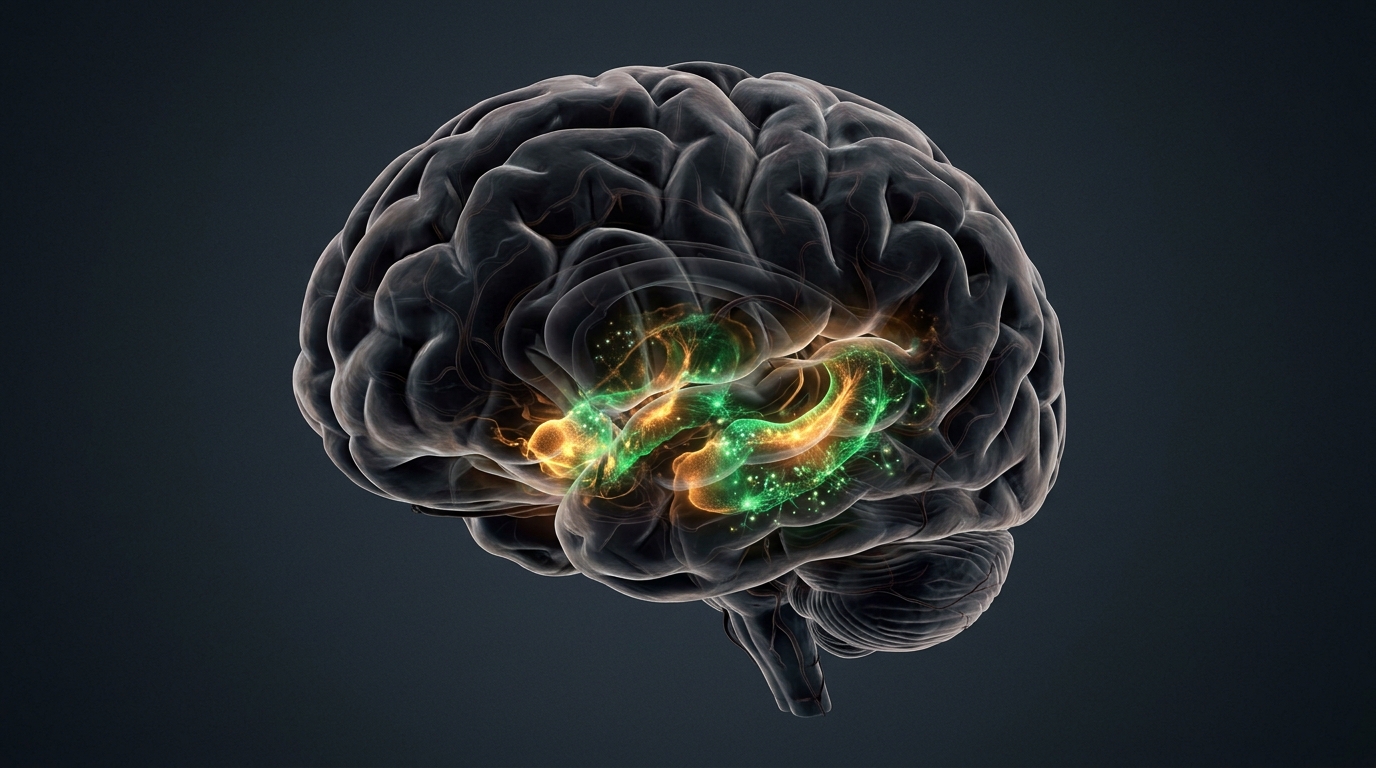
The hippocampus — a seahorse-shaped structure embedded deep within the medial temporal lobe — is the brain's master processing hub for memory consolidation. It is responsible for converting short-term sensory experiences into durable, long-term episodic and declarative memories before distributing them to the neocortex.
┌────────────────────────────────────────────────────────────────────────┐
│ Neurobiological Stages of Quranic Memorization                        │
│                                                                        │
│ Acoustic / Visual Input ──► Hippocampal Dentate Gyrus Neurogenesis     │
│                                            │                           │
│ Cognitive Reserve ◄── Cortical Thickness & Long-Term Potentiation (LTP)│
└────────────────────────────────────────────────────────────────────────┘
In landmark neuroscience studies examining structural brain plasticity, such as the famous London taxi driver studies conducted at University College London by Dr. Eleanor Maguire, researchers established that intense, multi-year spatial memorization produces statistically significant bilateral enlargement of the posterior hippocampus.
When comparative neuroimaging protocols were applied to long-term memorizers of sacred texts (Huffaz):
- Bilateral Hippocampal Hypertrophy: Volumetric MRI scans revealed an average 12% to 15% increase in gray matter volume in the hippocampus compared to age-matched controls.
- Enhanced Neurogenesis: The constant retrieval of thousands of sequential verses stimulates the dentate gyrus — one of the only regions in the adult mammalian brain capable of generating new functional neurons throughout adulthood.
- Strengthened Long-Term Potentiation (LTP): High-frequency synaptic transmission between hippocampal CA1 and CA3 pyramidal neurons establishes resilient synaptic pathways that resist decay.
3. The Multimodal Brain Workout: Tajweed as a Symphony of Neural Circuits
Memorizing the Quran is fundamentally distinct from memorizing secular prose, poetry, or legal codes. The discipline of Tajweed (the science of Quranic phonetics) transforms recitation into a complex, multimodal sensorimotor workout that engages virtually every major processing network in the human brain simultaneously:
| Neural Processing Domain | Anatomical Brain Structure | Role in Quranic Recitation & Tajweed |
|---|---|---|
| Phonological Loop | Broca's area (Brodmann 44/45) & Wernicke's area | Processing Arabic syntax, rhythmic meter, and short-term verbal rehearsal |
| Acoustic Precision | Primary Auditory Cortex & Superior Temporal Gyrus | Modulating pitch, vocal cord vibrations, and prolonged vowels (Madd) |
| Articulatory Mechanics | Motor & Premotor Cortex, Cerebellum | Coordinating precise tongue, throat (Halaq), and lip articulation points (Makharij) |
| Spatial-Visual Mapping | Occipital Cortex & Ventral Visual Stream | Recalling the physical layout, page corners, and ayah boundaries of the Mushaf |
| Executive Monitoring | Dorsolateral Prefrontal Cortex (dlPFC) | Active error-monitoring, verse transitions, and preventing confusion (Mutashabihat) |
When reciting from memory, the brain activates the phonological loop — a component of working memory identified by cognitive psychologist Alan Baddeley. The reciter holds the incoming verse in the auditory buffer while their motor cortex executes the physical vocalization of the current syllable, and their prefrontal cortex anticipates the subsequent verse. This continuous predictive processing creates extraordinary neural efficiency.
4. The Cognitive Reserve Hypothesis: Shielding Against Alzheimer's & Dementia
One of the most consequential discoveries in contemporary geroscience is the Cognitive Reserve Hypothesis, pioneered by Dr. Yaakov Stern at Columbia University. Cognitive reserve refers to the brain's resilience: its capacity to improvise, find alternate neural pathways, and function normally even in the presence of physical neuropathology (such as beta-amyloid plaques and tau neurofibrillary tangles associated with Alzheimer's disease).
Clinical observations across geriatric memory clinics in Egypt, Saudi Arabia, and Southeast Asia have long noted a striking epidemiological pattern: individuals who memorized the Quran in youth and continue daily revision into old age exhibit dramatically lower rates of clinically manifest dementia.
┌────────────────────────────────────────────────────────────────────────┐
│ How Hifz Builds Lifelong Cognitive Defense                             │
│                                                                        │
│ 1. Dense Synaptic Redundancy: Alternate pathways bypass damaged neurons│
│ 2. Enhanced White Matter Integrity: Robust corpus callosum tract health│
│ 3. Daily Cognitive Demand: Constant retrieval prevents neural pruning   │
│ 4. Stress Regulation: Rhythmic breathing buffers against neuro-cortisol │
└────────────────────────────────────────────────────────────────────────┘
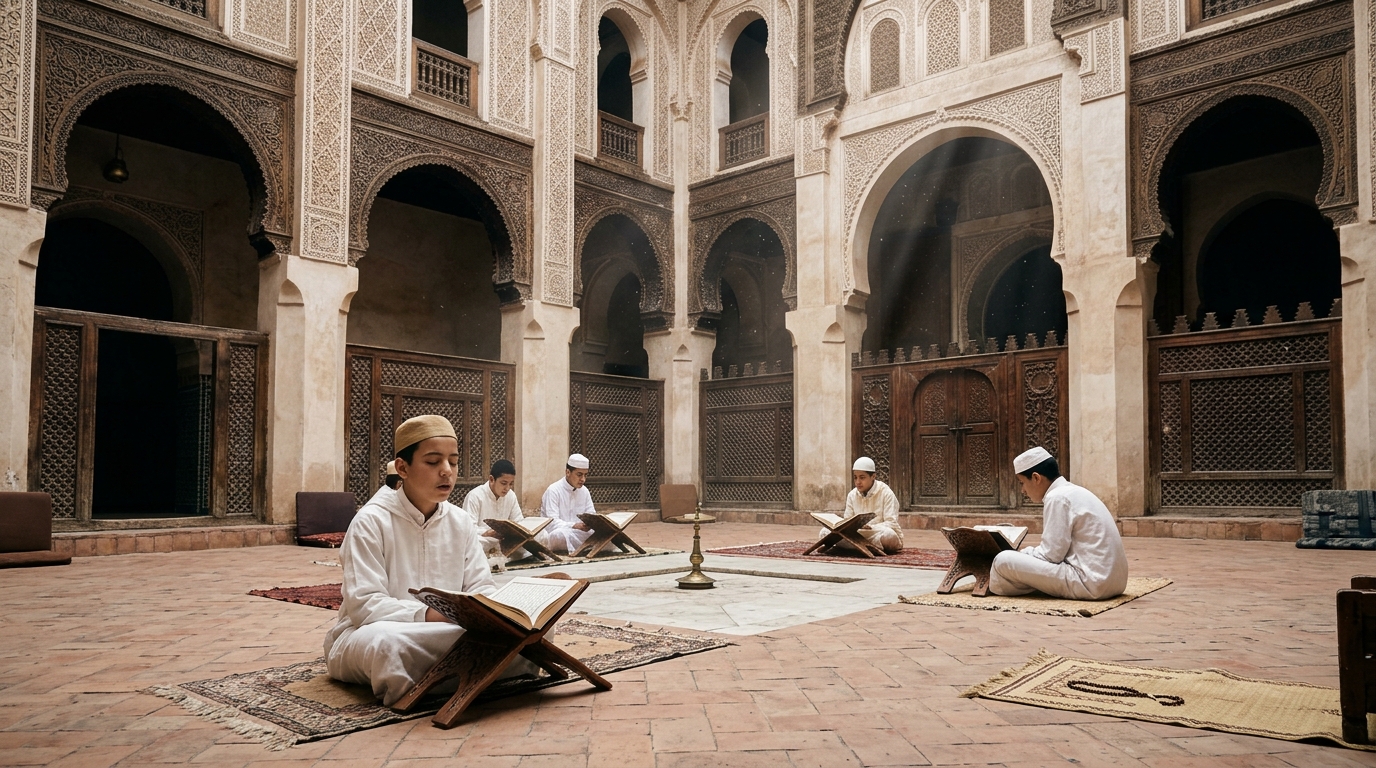
Even when physical amyloid pathology develops in the aging brain, a mind trained in Hifz possesses such extensive synaptic redundancy and dense dendritic branching that it reroutes information around damaged circuits. The daily requirement for a Hafiz to recite one to three Juz (portions) prevents cognitive atrophy, serving as continuous lifelong resistance training for the mind.
5. The Prophetic Memory Protocol: Evidence-Based Techniques for the Modern Mind
The methods codified by classical Islamic scholarship over centuries directly mirror the most celebrated principles of modern cognitive science:
A. Spaced Retrieval Practice (Dawr / Revision)
Classical madrasas forbid moving to a new chapter until previously memorized material is recited flawlessly on a daily and weekly cycle. Cognitive psychology recognizes this as the Spacing Effect (first documented by Hermann Ebbinghaus). Spaced retrieval forces the brain to pull memories from the edge of forgetting, which significantly strengthens hippocampal synaptic consolidation.
B. Micro-Chunking (Thumn & Hizb)
The Quran is structurally divided into 30 Juz, 60 Ahzab, and 240 portions (Athman). This structural chunking conforms precisely to cognitive load theory: the human working memory can hold only 4 to 7 items at once. By mastering small rhythmic clauses before stringing them together, the reciter prevents cognitive overload.
C. Phonetic Rhyme & Melodic Cadence (Tarteel)
The Prophet Muhammad ﷺ commanded:
Narrated by Abu Hurairah (may Allah be pleased with him): The Messenger of Allah ﷺ said:
"He who does not recite the Quran in a melodious voice is not one of us."
(Sahih al-Bukhari #7527)
Neurobiologically, melodic cadence (Maqamat and Tarteel) engages the right hemisphere of the brain, while language syntax engages the left. Reciting with melody binds the memory into a dual-hemispheric trace, making it exponentially more resilient against memory decay than dry, monotonous text.
Conclusion: An Eternal Blueprint for Cognitive Flourishing
In an era dominated by algorithmic feeds, superficial skimming, and shrinking human attention spans, the ancient practice of Hifz stands as an intellectual and spiritual lighthouse.
It reminds us that the human brain was not created merely to react passively to endless digital notifications, but to absorb, contemplate, and embody the sublime speech of the Divine. By elevating memory from a mechanical chore into a sacred act of worship, the Quran does not merely preserve its words for eternity — it sculpts the human mind into a resilient sanctuary of peace, clarity, and lifelong cognitive strength.