

 QuranGPT
The Microsecond Eye: How Event-Based Neuromorphic Cameras and Spiking Vision Transformers are Revolutionizing Autonomous High-Speed Perception
A comprehensive computer vision, neuromorphic engineering, and sensor technology report on Dynamic Vision Sensors (DVS event cameras) and Spiking Vision Transformers (Spikformer) capturing visual motion with microsecond temporal resolution, 140 dB dynamic range, and milliwatt power consumption.
The Holy Quran Team
Author
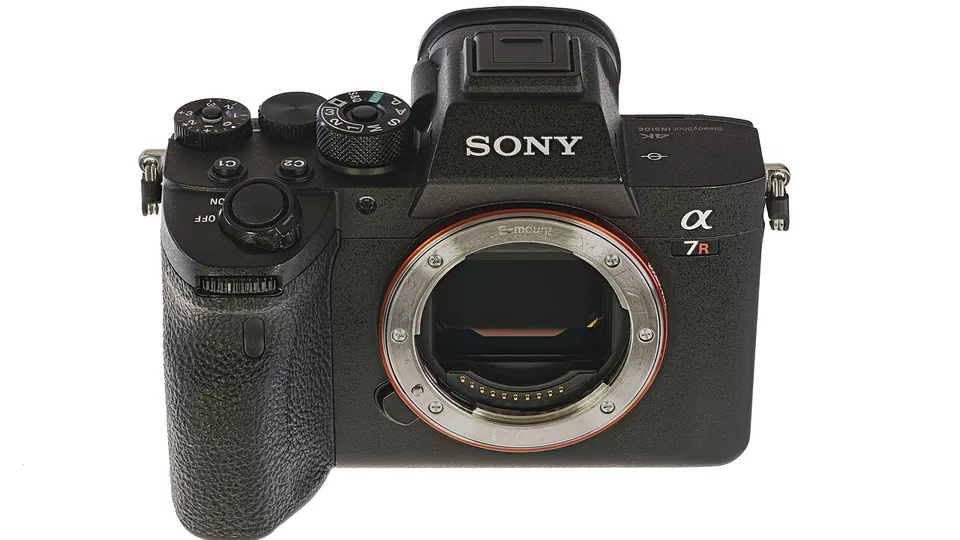
For over a century, digital photography and computer vision have operated under a flawed, unnatural paradigm: the Frame-Based Camera, which captures arbitrary slices of visual reality at fixed temporal intervals (e.g., 30 or 60 frames per second).
In high-speed autonomous environments—such as a hypersonic drone dodging obstacles in dense forests, or a self-driving vehicle navigating direct blinding sunlight exiting a dark tunnel—traditional frame-based cameras fail catastrophically: they suffer from severe motion blur, excessive latency (33 milliseconds between frames), massive data redundancy (wasting bandwidth re-encoding static backgrounds), and narrow dynamic range (washing out under glare or plunging into darkness).
To overcome these physical limitations, autonomous robotics labs and aerospace defense engineers have developed Neuromorphic Event-Based Cameras (Dynamic Vision Sensors / DVS) paired with Spiking Vision Transformers (Spikformer).
Inspired by the biological architecture of the human retina, each individual pixel in an event camera operates independently and asynchronously, firing a discrete temporal event spike (timestamp, x, y coordinate, and polarity) only the exact microsecond its local log-intensity of light changes, delivering microsecond temporal resolution (<10 µ s), an unprecedented 140 dB dynamic range, and a 99% reduction in visual compute power.
1. Physical Architecture: Asynchronous Biomimetic Pixel Array
In a Dynamic Vision Sensor, there is no global shutter or fixed frame rate:
graph TD
    A["Continuous Incident Photons Strike Autonomous Bio-Inspired Photodiode Array"] --> B["Logarithmic Transimpedance Amplifier: Computes Local Intensity Δln(I)"]

    B --> C["Differential Comparator Circuit Checks Against Precise Threshold ±θ"]

    C --> D["If Light Increases: Emits Asynchronous ON-Event (x, y, t, +1)"]
    C --> E["If Light Decreases: Emits Asynchronous OFF-Event (x, y, t, -1)"]
    C --> F["If Scene Static: Pixel Remains 100% Dormant (Zero Data & Zero Power Wasted)"]

    D --> G["Sparse Asynchronous Event Stream Ingested by Spiking Neural Network (SNN)"]
    E --> G

    G --> H["Executes Sub-Millisecond Autonomous Obstacle Avoidance & High-Speed Optical Flow Tracking"]
Key Technical Superpowers of Neuromorphic Event Vision:
- Microsecond Temporal Latency (<10 µ s): Detecting mechanical vibrations, high-speed projectile tracking, and rapid obstacle maneuvers at the equivalent temporal fidelity of a 100,000 FPS traditional high-speed camera, without generating unmanageable terabytes of redundant video data.
- Extreme High Dynamic Range (>140 dB): The logarithmic photoreceptor circuit prevents pixel saturation under direct headlights (>100,000 Lux) while simultaneously discerning subtle motion in near-total darkness (<0.01 Lux).
- Sparse Event-Driven Processing: Because static background pixels generate zero data, the entire perception pipeline consumes mere milliwatts of electrical power, making it ideal for micro-satellites and insect-scale bionic drones.
2. Technical Comparison: Frame-Based RGB Cameras vs. Neuromorphic Event Sensors
The operational performance differences between traditional video and event streams are dramatic:
| Vision Sensing Dimension | Traditional Frame-Based RGB Camera (60 FPS) | Neuromorphic Dynamic Vision Sensor (DVS) | Physical Advantage |
|---|---|---|---|
| Temporal Latency | 16.6 to 33.3 Milliseconds | <10 Microseconds (Asynchronous) | >1,000× Faster Reaction Time. |
| Motion Blur Susceptibility | High (Severe blur during high-speed rotation) | Zero Motion Blur (Continuous Time Stream) | Tracks bullets and fast rotor blades clearly. |
| Dynamic Range (HDR) | 60 to 75 dB (Blind in tunnels/glare) | >140 dB (Extreme Lighting Invariance) | Seamless transition from bright sun to darkness. |
| Data Output & Redundancy | Constant heavy video bitrate (>100 MB/s) | Sparse Sparse Event Packets (<2 MB/s average) | 98% Bandwidth & Storage Reduction. |
| Sensor Power Consumption | sim 2.5 to 5.0 Watts | <15 Milli-Watts | Extreme battery endurance for mobile IoT. |
3. Real-World Applications: Defense Aerospace and High-Speed Robotics
Neuromorphic event vision is unlocking unprecedented autonomous reaction capabilities:
- High-Speed Autonomous Drone Navigation: Enabling autonomous quadcopters to navigate through dense forest branches and indoor obstacle courses at speeds exceeding 100 km/h in total darkness, dodging thrown objects in under 3 milliseconds.
- Space Situational Awareness: Ground-based neuromorphic telescopes continuously track orbital space debris and low-Earth orbit satellites in broad daylight, outperforming conventional optical astronomical sensors blinded by solar glare.
4. Conclusion: Seeing the World at the Speed of Light
Event-based neuromorphic vision has broken the temporal handcuffs that have constrained computer vision since the birth of cinema.
By designing silicon sensors that mimic the asynchronous elegance of biological retinas, engineers have given autonomous machines the reflexes of living creatures—enabling artificial intelligence to perceive, react, and navigate our dynamic physical world with effortless grace and microsecond precision.