

 QuranGPT
The Neurobiology of Compassion: Maternal Rahmah, Oxytocin Circuits & Divine Mercy
An exhaustive biomedical and spiritual study on the neuroscience of compassion, maternal neural circuitry, oxytocin empathy pathways, and the Quranic concept of Divine Mercy (Rahmah).
The Holy Quran Team
Author
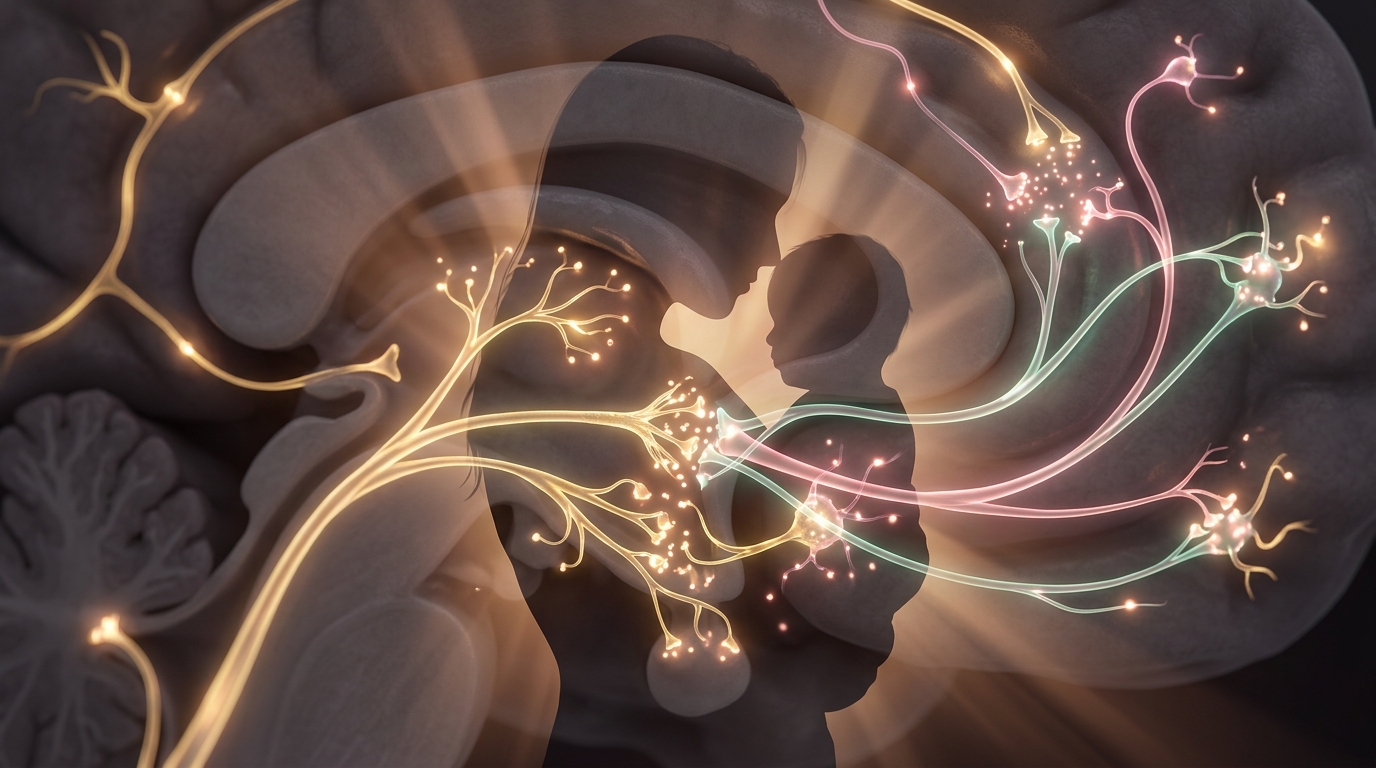
In 2026, neuroscience and cognitive psychology witnessed a profound convergence around the neural mechanisms governing compassion, maternal attachment, and prosocial empathy.
Functional neuroimaging (fMRI), magnetoencephalography (MEG), and biochemical assays have revealed that compassion is not merely a transient emotional sentiment, but an evolved, hardwired neurobiological system mediated by oxytocin-dopamine mesolimbic circuits, the anterior insula (AI), the anterior midcingulate cortex (aMCC), and the vagal-cardiac nerve network.
Remarkably, Islamic theology rooted in the Holy Quran established over 1,400 years ago that the universal archetype of earthly love and mercy (Rahmah) is inherently derived from maternal biology—sharing its linguistic and spiritual root with the maternal womb (Rahim).
This report investigates the neuroscience of maternal bonding, oxytocin signaling, social brain networks, and the theological dimensions of Divine Mercy in Islam.
1. Executive Summary: Neurobiology & Spiritual Mercy Matrix
               NEUROBIOLOGY OF COMPASSION & RAHMAH MATRIX

   • Primary Biochemical Mediators: Oxytocin (Neuropeptide), Dopamine, Endogenous Opioids
   • Core Neural Networks: Anterior Insula (AI), aMCC, Ventromedial Prefrontal Cortex (vmPFC)
   • Autonomic Nervous System Anchor: Polyvagal Theory (Ventral Vagal Social Engagement System)
   • Linguistic & Theological Root: Rahmah (Mercy) shares the exact trilateral root with Rahim (Womb)
   • Clinical & Mental Health Impact: Lower Cortisol, Reduced Systemic Inflammation, Elevated HRV
2. Neural Architecture: The Brain's Compassion and Empathy Networks
Modern neurobiology distinguishes between empathic distress (feeling another's pain) and active compassion (a warm, prosocial motivation to alleviate suffering):
                   EMPATHY vs. COMPASSION NEURAL PATHWAYS

  [Empathic Distress Pathway]             [Active Compassion & Care Pathway]
  - Anterior Insula & Dorsal ACC          - Ventral Striatum (Reward / Dopamine)
  - Pain Matrix Activation                - Medial Orbitofrontal Cortex (mOFC)
  - Elevated Amygdala (Stress Response)   - Oxytocin Receptors & Vagus Nerve Activation
  - Can Lead to Burnout and Anxiety       - Fosters Resilience, Love, and Social Connection
The Maternal Bonding Neuro-Circuitry:
During pregnancy, lactation, and nurturing interactions, the maternal hypothalamus releases massive surges of oxytocin, which binds to dense receptor fields in the nucleus accumbens and amygdala. This rewires maternal brain architecture to suppress personal fear responses and induce intense protective care for the infant.
                    MATERNAL CARE OXYTOCIN-DOPAMINE LOOP

   [Infant Gaze / Distress Signal] ──► [Sensory Thalamus & Cortex]
                                                     │
                                                     ▼
                                       [Hypothalamus (Oxytocin Release)]
                                                     │
               ┌─────────────────────────────────────┴─────────────────────────────────────┐
               ▼                                                                           ▼
   [Nucleus Accumbens (Reward / Joy)]                                         [Amygdala (Fear Suppression)]
               │                                                                           │
               └─────────────────────────────────────┬─────────────────────────────────────┘
                                                     ▼
                                      [Unconditional Nurturing Action]
3. The Quranic Root: Rahmah (Mercy) and Rahim (The Womb)
In Arabic linguistics and Quranic metaphysics, the profound connection between maternal biology and spiritual love is foundational:
The word رَحْمَة (Rahmah) (Mercy, Compassion, Loving-Kindness) and رَحِم (Rahim) (The Mother's Womb) are derived from the exact same root: R-H-M (ر - ح - م).
The Sacred Hadith Qudsi:
In a renowned authentic Prophetic tradition, Allah Almighty explicitly ties the creation of human relationships to the maternal womb:
"Allah the Exalted said: 'I am Ar-Rahman (The Most Merciful), and I created the Rahim (womb) and derived its name from My Name. Whoever keeps ties with it, I will keep ties with him; and whoever cuts it off, I will cut him off.'"
— Sunan Abi Dawud (1694), Sahih
The Prophetic Analogy of Maternal Love:
The Prophet Muhammad ﷺ frequently utilized maternal care to convey the incomprehensible magnitude of Divine Compassion:
When the Prophet ﷺ and his companions saw a mother desperately searching for her lost infant and, upon finding him, immediately pressing him to her chest to nurse him, the Prophet ﷺ asked:
"Do you think this woman would ever throw her child into the fire?"
They replied: "No, by Allah, not if she has the power not to."
The Prophet ﷺ said: "Verily, Allah is more merciful to His servants than this mother is to her child."
— Sahih al-Bukhari (5999)
4. Physiological and Cardiovascular Benefits of Practicing Rahmah
Engaging in daily acts of compassion, charity, and familial reconciliation activates the ventral vagus nerve, triggering powerful systemic healing responses:
                 PHYSIOLOGICAL BIOMARKERS OF COMPASSION

   Biomarker Parameter      | Under Chronic Stress/Anger | Under Active Rahmah (Compassion)
   -------------------------+----------------------------+---------------------------------
   Heart Rate Variability   | Low (Rigid Rhythm)         | High (Coherent Cardioprotective)
   Serum Cortisol           | Elevated (Hyper-arousal)   | Reduced by ~25% - 40%
   Pro-inflammatory Cytokines| Elevated (IL-6, TNF-alpha)| Suppressed
   Immune Secretory IgA     | Decreased                  | Significantly Elevated
5. Daily Practices to Cultivate the Biology of Compassion
- Reconnecting Family Ties (Silat ar-Rahim): Calling relatives, healing old estrangements, and supporting elderly parents directly stimulates oxytocin empathy loops.
- Mindful Invocation of the Basmalah: Contemplating the dual attributes Bismillahir Rahmanir Rahim (In the Name of Allah, the Entirely Merciful, the Especially Merciful) before all daily actions.
- Physical Acts of Charity & Care: Helping those in distress, feeding the hungry, and comforting orphans shifts the nervous system into restorative vagal parasympathetic coherence.
6. Frequently Asked Questions (FAQ)
Q1: What is the biological link between the word Rahmah and the womb?
In Arabic, both words share the root R-H-M. The womb (Rahim) physically shelters, nourishes, and protects life, serving as the biological reflection of Divine Mercy (Rahmah).
Q2: What happens in the brain when we feel compassion?
Compassion activates the brain's ventral striatum (reward center), releases oxytocin and dopamine, reduces amygdala fear reactivity, and stimulates the vagus nerve to calm heart rhythms.
Q3: How does cultivating compassion improve physical health?
Regular compassion practices lower systemic inflammation, decrease cortisol stress hormones, improve heart rate variability (HRV), and boost immune function.
7. Conclusion
The neurobiology of compassion confirms what the Quran revealed over fourteen centuries ago: that human beings are neurologically sculpted for mercy, connection, and maternal love. By living the values of Rahmah, we align our biology and our souls with the supreme purpose of creation.