

 QuranGPT
The Miswak (Salvadora persica): Phytochemistry, Oral Microbiome, and Periodontal Science
An exhaustive scientific investigation into the phytochemistry, natural fluorides, and antimicrobial efficacy of the Miswak (Salvadora persica) chewing stick.
The Holy Quran Team
Author
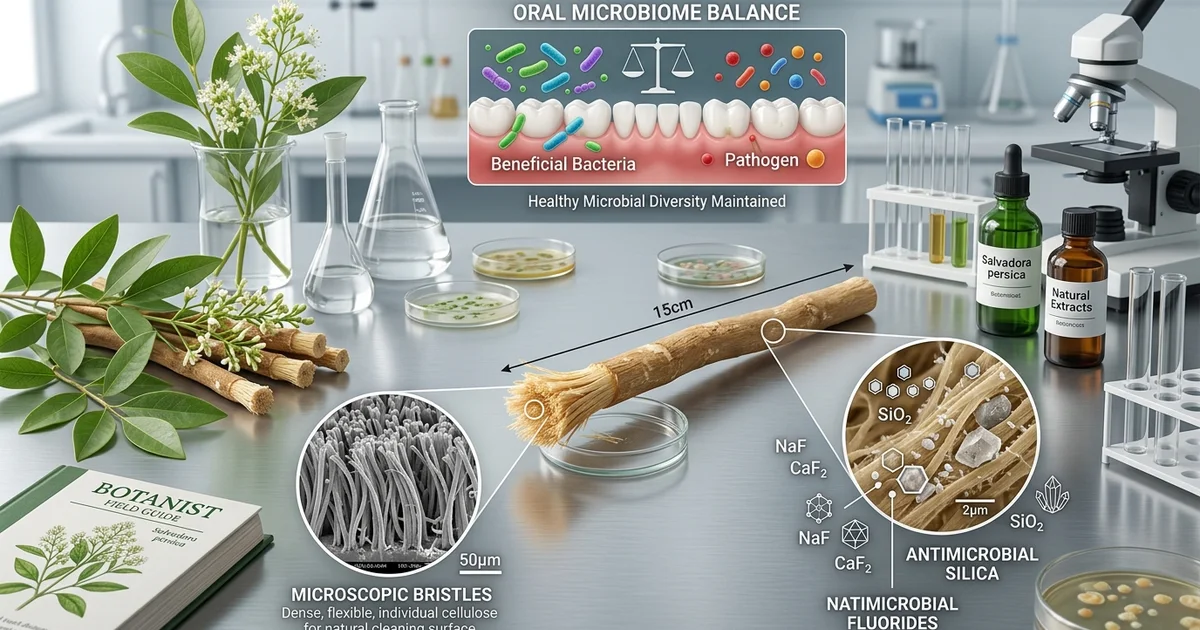
For millennia before the commercial mass production of synthetic nylon toothbrushes and fluoridated chemical toothpastes, ancient civilizations relied upon natural botanical twigs for oral hygiene. Among these, none has garnered greater historical reverence or extensive modern scientific validation than the Miswak—the natural chewing stick harvested primarily from the roots and stems of the Salvadora persica (commonly known as the Arak tree).
In Islam, oral hygiene via the Miswak is elevated to an essential spiritual and hygienic Sunnah, recommended before every prayer (Salah), upon waking, and before reciting the Quran. Today, contemporary dental research, gas chromatography-mass spectrometry (GC-MS) phytochemical analyses, and clinical trials published in leading periodontal journals have validated that Salvadora persica functions as a sophisticated, all-in-one natural oral care delivery system.
1. Executive Summary: Miswak Phytochemistry vs. Conventional Oral Care
The natural botanical composition of Salvadora persica contains over 19 active pharmacological compounds that simultaneously cleanse, remineralize, and disinfect:
| Active Phytochemical / Mineral | Concentration & Chemical Form | Mechanism of Action in the Oral Cavity | Dental & Periodontal Benefit |
|---|---|---|---|
| Natural Fluorides & Calcium | Bioavailable ionic fluoride & Ca2+ | Promotes enamel remineralization and fluorapatite crystal formation | Prevents dental caries and strengthens tooth enamel |
| Silicon Dioxide (Silica) | Microscopic abrasive crystals | Natural mechanical polishing agent | Gently removes dental plaque and surface extrinsic stains |
| Salvadorine & Alkaloids | Bioactive nitrogenous alkaloids | Exhibits potent bactericidal action against Streptococcus mutans | Inhibits acidogenic bacteria responsible for tooth decay |
| Tannins (Tannic Acid) | Polyphenolic astringents | Precipitates salivary proteins; strengthens gingival tissue | Reduces gum bleeding, gingivitis, and periodontal pockets |
| Essential Oils (Thymol & Eucalyptol) | Volatile aromatic terpenes | Stimulates parotid saliva flow and neutralizes sulfur compounds | Eliminates halitosis (bad breath) and provides natural freshness |
| Vitamin C & Flavonoids | Ascorbic acid & antioxidant glycosides | Enhances collagen synthesis in periodontal connective tissue | Accelerates healing of inflamed gingiva and oral ulcers |
2. Preserving the Oral Microbiome Balance
One of the most profound revelations of modern dental science is the critical importance of the oral microbiome—a diverse ecosystem of over 700 bacterial species residing in the mouth. Conventional alcohol-based synthetic mouthwashes indiscriminately eradicate both pathogenic and beneficial bacteria, disrupting microbial equilibrium and often exacerbating bad breath and systemic inflammation.
In contrast, peer-reviewed clinical studies demonstrate that Salvadora persica extracts exhibit selective antimicrobial activity:
- Targeting Pathogens: Effectively suppresses cariogenic Streptococcus mutans, Lactobacillus acidophilus, and periodontopathic Porphyromonas gingivalis.
- Spares Commensal Flora: Preserves beneficial commensal bacteria that maintain healthy oral pH and produce nitric oxide for cardiovascular health.
- Inhibition of Dental Biofilm: Prevents bacterial glucosyltransferase enzymes from synthesizing sticky dextran glucans that form dental plaque.
3. World Health Organization (WHO) Endorsement and Clinical Studies
The World Health Organization (WHO) has repeatedly evaluated and endorsed the use of the Miswak for oral hygiene:
- In the WHO Consensus Report on Oral Hygiene, Salvadora persica chewing sticks were recognized as an effective alternative to traditional toothbrushes in promoting oral health across developing and developed nations alike.
- A comparative clinical study published in the Journal of Periodontology comparing Miswak users against standard toothbrush users found that individuals using Miswak exhibited significantly lower plaque index scores, reduced gingival inflammation, and healthier subgingival flora.
Key Mechanical Advantages of Miswak Fibers:
1. Parallel Bristle Alignment: Natural cellulose bristles are aligned parallel to the stick axis, allowing optimal cleaning of interdental spaces and lingual tooth surfaces.
2. Self-Renewing Bristles: Cutting and refreshing the tip every 24-48 hours eliminates the bacterial contamination common on multi-month synthetic toothbrushes.
4. The Prophetic Emphasis on Dental Hygiene
The Prophet Muhammad ﷺ placed unprecedented emphasis on daily oral cleanliness, articulating its dual spiritual and physical dimensions:
"The Miswak cleanses the mouth and pleases the Lord."
— Sunan an-Nasa'i (5)
He further underscored its vital hygienic necessity, stating:
"Were it not that it would be too difficult for my Ummah (followers), I would have commanded them to use the Miswak before every prayer."
— Sahih al-Bukhari (887)
Practicing oral hygiene five times daily alongside the five daily prayers ensures continuous removal of food residues, maintaining optimal oral health throughout the day.
5. Frequently Asked Questions (FAQ)
What is the Miswak and what tree does it come from?
The Miswak is a natural chewing stick used for oral hygiene, harvested predominantly from the root and stem fibers of the Salvadora persica (Arak) tree.
Does the Miswak contain natural fluoride?
Yes. Salvadora persica naturally releases bioavailable ionic fluorides and calcium that remineralize enamel and protect against tooth decay.
How often should the bristles of a Miswak be replaced?
The tip of the Miswak should be cut and peeled fresh every 1 to 2 days to ensure maximum release of fresh phytochemicals and prevent bacterial accumulation on the bristles.
6. Actionable Takeaways & Daily Routine
- Integrate Miswak with Modern Hygiene: Use the Miswak as a portable, water-free oral hygiene tool throughout the workday, especially before prayer and after meals.
- Proper Preparation Technique: Gently peel back 1 cm of the outer bark and chew the exposed wood until the cellulose separates into soft, flexible bristles.
- Gentle Brushing Motion: Brush vertically along the gum line and circular over tooth surfaces to achieve gentle mechanical cleansing without scratching enamel.