

 QuranGPT
India's Leap to the Stars: Inside the Gaganyaan Human Spaceflight Mission, Astronaut Wing Designations, and the Vyommitra Humanoid Orbital Test Flight
A comprehensive aerospace engineering, astronautics, and national space policy report on the Indian Space Research Organisation (ISRO) preparing the landmark Gaganyaan crewed orbital mission, astronaut training at Yuri Gagarin Cosmonaut Centre, and the uncrewed test flight of humanoid robot 'Vyommitra'.
The Holy Quran Team
Author
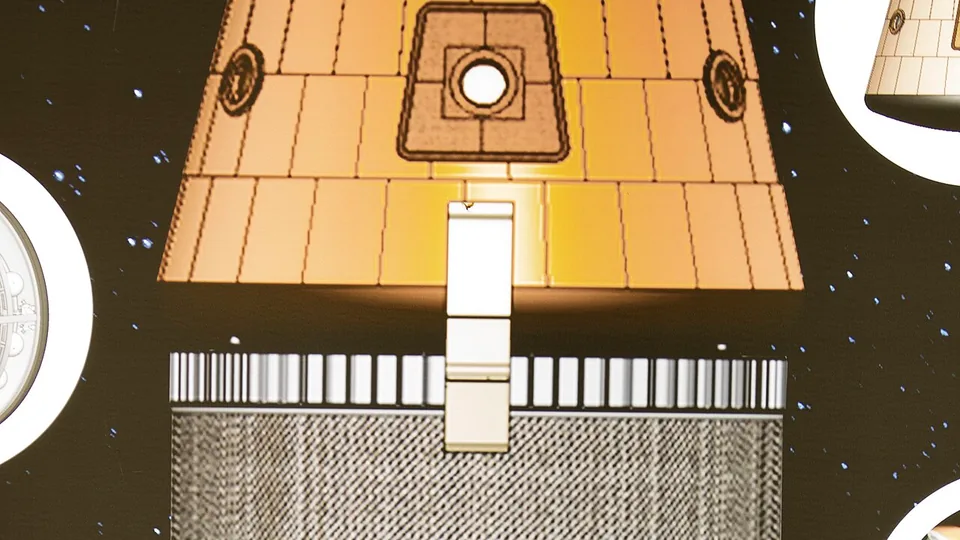
In what marks the ultimate coming-of-age milestone for India’s scientific and technological prowess, the Indian Space Research Organisation (ISRO) has entered the final qualification and countdown phases for the historic Gaganyaan Human Spaceflight Programme.
Designed to launch a three-member Indian astronaut crew into a 400-kilometer low-Earth circular orbit for a three-day mission and bring them safely back to Earth with a precision splashdown in the Arabian Sea, Gaganyaan establishes India as only the fourth sovereign nation on Earth (after the Soviet Union/Russia, the United States, and China) with independent human spaceflight launch capability.
Following the formal conferment of Astronaut Wings by Prime Minister Narendra Modi to Group Captain Prashanth Balakrishnan Nair, Group Captain Ajit Krishnan, Group Captain Angad Pratap, and Wing Commander Shubhanshu Shukla, ISRO is executing its critical uncrewed qualification milestone: the orbital mission of 'Vyommitra', a specialized AI-powered female humanoid robot equipped to monitor life-support telemetry, pressure fluctuations, and cosmic radiation levels in zero-gravity.
1. Aerospace Engineering Architecture: The Human-Rated Launch Vehicle (HLVM3)
Launching humans into space demands unprecedented safety redundancy (Loss of Crew probability less than 1 in 500):
graph TD
    A["Human-Rated LVM3 (HLVM3) Heavy-Lift Rocket Stacked at Sriharikota Launch Pad"] --> B["Equipped with Quick-Acting High-Altitude Crew Escape System (CES) Towers"]

    B --> C["Orbital Insertion: Launches Orbital Module (Crew Module + Service Module) into 400 km LEO"]

    C --> D["Uncrewed Precursor Flight: AI Humanoid Robot 'Vyommitra' Operates Instrument Switchboard"]

    D --> E["Monitors Environmental Control & Life Support Systems (ECLSS: Oxygen, CO2 Scrubber, Thermal Shield)"]

    E --> F["Autonomous De-Orbit Burn: Service Module Jettisons Prior to Atmospheric Entry"]

    F --> G["Apex Heat Shield Withstands 2,000°C Plasma Re-Entry Friction"]

    G --> H["Apex Parachute System Deploys (Drogue, Pilot, Main Tri-Parachutes) for Arabian Sea Splashdown"]

    H --> I["Indian Navy Special Operations Divers and Recovery Vessels Retrieve Crew Capsule within 30 Mins"]
Key Technological Milestones Developed by ISRO:
- The Human-Rated LVM3 (HLVM3): Upgrading India’s most powerful rocket with redundant avionics, solid-booster structural margins, and active fault-tolerant guidance controllers to ensure gentle G-force profiles for the crew.
- The Crew Escape System (CES): High-thrust solid propellant rocket motors capable of instantly pulling the astronaut capsule away from the launch vehicle in under 2.5 seconds at any stage from pad abort to hypersonic ascent.
- Environmental Control and Life Support System (ECLSS): Developing indigenous closed-loop oxygen supply regulators, humidity extraction systems, cabin nitrogen/oxygen gas mix stabilizers, and waste management systems suited for human habitation in microgravity.
2. Technical Comparison: Gaganyaan vs. Global Crewed Spacecraft
The engineering parameters of India’s Gaganyaan relative to international counterparts:
| Spacecraft Parameter | ISRO Gaganyaan Crew Module | NASA SpaceX Crew Dragon | Russian Soyuz MS |
|---|---|---|---|
| Crew Capacity | Up to 3 Astronauts (Vyomnauts) | Up to 4 to 7 Astronauts | 3 Cosmonauts |
| Orbital Module Mass | ~8,200 kg (Crew + Service Module) | ~12,500 kg | ~7,200 kg |
| Target Orbital Altitude | 400 km Low Earth Orbit (LEO) | 420 km (ISS Docking Orbit) | 420 km (ISS Docking Orbit) |
| Launch Abort Architecture | Solid-Rocket Escape Tower System | Integrated SuperDraco Liquid Thrusters | Solid-Rocket Escape Tower System |
| Recovery Medium | Ocean Water Splashdown (Arabian Sea / Bay of Bengal) | Ocean Water Splashdown (Atlantic / Gulf of Mexico) | Hard Land Landing (Steppes of Kazakhstan) |
3. The Vyommitra Humanoid: The Silicon Pioneer of the Cosmos
Before Indian astronauts take their seats, the uncrewed test flight will be piloted by Vyommitra ("Friend in the Sky"):
- Advanced Biomorphic Sensing: Engineered by ISRO's Inertial Systems Unit, Vyommitra features articulated bionic arms and sensors designed to mimic human motor movements, flip instrument panel switches, monitor cabin atmospheric pressure, and speak dual-language status reports.
- Simulating Human Physiological Stress: Embedded with internal sensor suites that measure exact vibration profiles, acoustic decibel spikes, and microgravity cardiovascular fluid shifts, validating that the cabin environment is 100% safe for human biology.
4. Conclusion: A New Chapter in Human Exploration
The Gaganyaan programme is far more than a space mission—it is the foundational stepping stone toward the planned Bharatiya Antariksh Station (BAS) and India's long-term vision of landing an Indian astronaut on the Moon by 2040.
Through indigenous engineering brilliance, visionary scientific leadership, and the courage of its astronaut corps, India has etched its name among the stars—inspiring a billion dreams and opening a golden era of discovery for generations to come.