

 QuranGPT
Islamic Eco-Ethics and Water Conservation: The Wudu Measurement Paradigm and Zero-Waste Living
Discover the environmental principles of Islamic eco-ethics, the Prophetic water conservation benchmark (one Mudd ~650ml for Wudu), and zero-waste stewardship.
The Holy Quran Environmental Ethics & Sustainability Bureau
Author
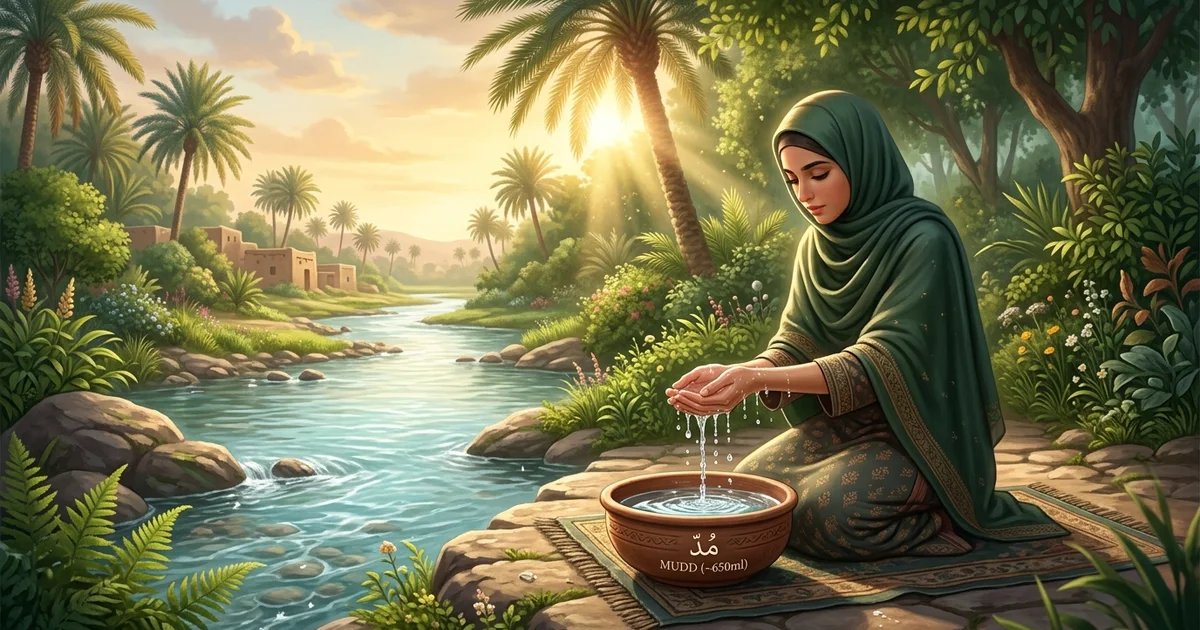
As the planet confronts severe climate change, escalating freshwater scarcity, and catastrophic biodiversity loss, global environmental philosophers are searching for durable ethical frameworks that can inspire sustainable human stewardship. In Islamic theology, ecological preservation is not a modern secular addendum, but a foundational spiritual pillar rooted in the concept of Khilafah (sacred stewardship of the Earth) and Amanah (divine trust).
Nowhere is this environmental ethos more practically demonstrated than in the Islamic jurisprudence (Fiqh) of water conservation. Despite water being abundant in many regions today, the Prophet Muhammad ﷺ instituted an exacting mathematical standard for personal water usage during ritual purification (Wudu and Ghusl), prohibiting wastefulness even on the banks of a flowing river.
1. Executive Summary: The Prophetic Water Metric vs. Modern Domestic Waste
The classical Islamic benchmarks for ritual purification stand in stark contrast to modern water consumption metrics:
| Purification Ritual | Prophetic Standard Benchmark (Sunnah) | Volume Equivalent (Metric) | Modern Tap Left Running (Average) | Water Saved by Following Sunnah |
|---|---|---|---|---|
| Ablution (Wudu) | 1 Mudd (Volume held in two cupped adult hands) | ~650 ml to 750 ml (0.65 – 0.75 Liters) | 6 to 12 Liters (standard running tap for 2 mins) | Up to 92% Water Saved |
| Full Bath (Ghusl) | 1 Saa' (Equivalent to 4 Mudds) | ~2.5 to 3.0 Liters | 50 to 90 Liters (standard 8-min shower head) | Up to 95% Water Saved |
| Daily 5x Wudu Total | 5 Mudds per day | ~3.25 to 3.75 Liters / Day | 30 to 60 Liters / Day | Massive aquifer conservation |
2. The Theological Foundations of Eco-Stewardship (Khilafah)
In the Quranic worldview, humanity does not possess absolute or destructive ownership over nature; rather, human beings are appointed as trustees (Khulafa) tasked with maintaining the primordial balance (Mizan) of creation:
"And He who produced for you the earth... eat and drink from the provision of Allah, and do not commit abuse on the earth, spreading corruption."
— Surah Al-Baqarah (2:60)
The Quran unequivocally condemns Israf (wastefulness and excess) in all dimensions of life:
"O Children of Adam, take your adornment at every masjid, and eat and drink, but do not be extravagant. Indeed, He does not like those who waste."
— Surah Al-A'raf (7:31)
3. The Flowing River Hadith: Conservation as an Unconditional Virtue
The universal principle that resource conservation is a moral obligation regardless of apparent abundance is anchored in one of the most famous environmental traditions in Islamic history:
The Messenger of Allah ﷺ passed by Sa'd ibn Abi Waqqas while he was performing ablution, and he said: "What is this extravagance, O Sa'd?"
Sa'd asked: "Is there extravagance even in ablution?"
The Prophet ﷺ replied: "Yes, even if you are on the banks of a flowing river."
— Sunan Ibn Majah (425)
The Core Environmental Axiom:
Resource conservation is an intrinsic spiritual virtue and character discipline,
independent of immediate supply availability or physical wealth.
4. Zero-Waste Living and Modern Green Mosques
The application of Islamic eco-ethics is driving sustainable architectural and lifestyle innovations across the Muslim world:
- Aerated Wudu Taps: Retrofitting ablution facilities in major mosques with pressure-reducing aerators that deliver misted streams of 0.5 liters per minute, slashing municipal water demand by 80%.
- Greywater Recycling Systems: Diverting nutrient-rich, soap-free Wudu runoff water into subsurface irrigation systems for mosque gardens, date palms, and urban community forestry.
- Single-Use Plastic Eradication: Banning disposable plastic water bottles during communal Ramadan Iftar meals in favor of stainless steel refill stations and compostable tableware.
5. Frequently Asked Questions (FAQ)
How much water did the Prophet Muhammad ﷺ use for Wudu?
The Prophet ﷺ performed Wudu with one Mudd of water—the volume held in two cupped adult hands, approximately 650 to 750 milliliters.
What does the Quran teach about environmental wastefulness (Israf)?
The Quran strictly prohibits wastefulness (Israf), declaring that God does not love those who commit excess (Surah Al-A'raf 7:31) and commanding humanity to preserve the balance (Mizan) of nature.
How can Muslims practice zero-waste living today?
By adopting the one-Mudd Wudu method (using a small container rather than a running tap), eliminating single-use plastics, composting organic food scraps, and conserving energy.
6. Actionable Takeaways & Daily Environmental Sunnah
- The Bowl Method for Wudu: Instead of letting the tap flow continuously, fill a small 700ml container or use a slow aerated trickle to complete your ablution.
- Audit Household Food Waste: Follow the Prophetic rule of portion control—filling the stomach with one-third food, one-third water, and one-third air—to prevent food spoilage.
- Plant and Preserve Trees: Uphold the Prophetic ethos: "If the Final Hour comes while one of you has a palm seedling in his hand, let him plant it." (Musnad Ahmad).