

 QuranGPT
Islamic Botany and Pharmacology: How Muslim Scholars Built the World's First Scientific Pharmacy
Explore how Islamic scholars — Ibn al-Baytar, Al-Dinawari, and Ibn Sina — catalogued thousands of medicinal plants, established systematic pharmacology, and built a drug science that powered Western medicine for 500 years.
The Holy Quran Team
Author
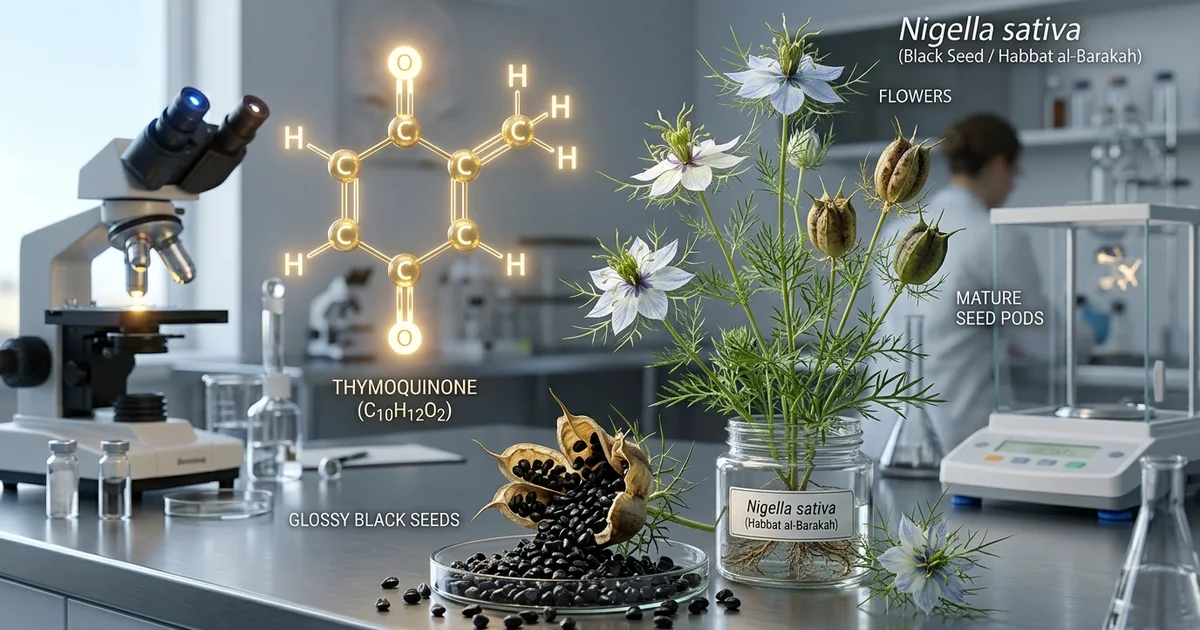
When medieval Europe sought cures for its diseases, it turned to Arabic pharmacological texts. When Renaissance physicians needed a drug reference, they consulted translations of Islamic botanical encyclopedias. When the first European apothecaries opened, they dispensed medicines whose formulas, preparation techniques, and dosage calculations came from Islamic pharmacy science.
The world's first systematic, evidence-based pharmacology was built by Muslim scholars who combined Quranic curiosity about plants, rigorous empirical testing, and a global network of botanical collection spanning from Spain to China.
1. The Quranic Invitation to Botanical Science
The Quran repeatedly draws attention to plants as signs of Allah's wisdom and mercy:
وَهُوَ الَّذِي أَنزَلَ مِنَ السَّمَاءِ مَاءً فَأَخْرَجْنَا بِهِ نَبَاتَ كُلِّ شَيْءٍ
"And it is He who sends down rain from the sky, and We produce thereby the growth of all things."
(Surah Al-An'am 6:99)
The verse continues to enumerate specific plants — grapes, olives, pomegranates, dates — inviting scientific observation of plant diversity. For Muslim scholars, botanical study was an act of reflection on Allah's signs.
The Prophet Muhammad ﷺ's own use of specific plants as medicine — black seed, honey, olive oil, figs — established a Prophetic tradition of botanical pharmacology that drove systematic plant research.
Ibn al-Baytar cataloged over 1,400 medicinal plants and natural substances in his magnum opus Kitab al-Jami fi al-Adwiya al-Mufrada.
2. Al-Dinawari: The Father of Islamic Botany (815–895 CE)
Abu Hanifa Ahmad ibn Dawud al-Dinawari wrote Kitab al-Nabat (Book of Plants) — the most comprehensive botanical encyclopedia of the early Islamic Golden Age.
Key Contributions of Kitab al-Nabat:
- Classified 637 plant species with Arabic names, regional distribution, and medicinal properties
- First to describe plant development stages — seed germination, growth, flowering, fruiting, and seasonal cycles
- Documented the agricultural uses of plants — irrigation needs, soil types, seasonal planting
- Described over 200 medicinal plant preparations with dosage and application
Al-Dinawari's work went beyond Greek botany (Dioscorides' De Materia Medica) by including plants from the Islamic world's broader geographic range — Arabia, Persia, India, and North Africa — significantly expanding the Mediterranean-focused Greek pharmacopoeia.
3. Ibn Sina's Pharmaceutical Canon: The World's Standard Drug Reference
Ibn Sina's Canon of Medicine (Volume 2) was a comprehensive pharmacopoeia — a reference guide to medicinal substances — that became the standard pharmaceutical reference in both Islamic and European medicine for 600 years.
Ibn Sina's Pharmacological Methodology:
- Drug identification — precise descriptions of plant, mineral, or animal source
- Drug properties — hot/cold, wet/dry classification (humoral) + specific effects observed
- Drug preparation — harvesting time, drying, extraction, and formulation methods
- Dosage — weight-based dosing with separate recommendations for men, women, children, elderly
- Drug interactions — documented incompatible drug combinations
- Side effects — documented adverse effects and antidotes
This is the pharmaceutical methodology used in modern clinical pharmacy — identification, properties, preparation, dosage, interactions, adverse effects. Ibn Sina's framework anticipates modern pharmacology's systematic approach by 700 years.
        IBN SINA'S PHARMACOLOGICAL FRAMEWORK (1020 CE)

   Drug Evaluation Criteria:
   ✓ Quality (purity of substance)
   ✓ Potency (strength of effect)
   ✓ Time (when effect begins, peaks, fades)
   ✓ Individual variation (patient-specific response)
   ✓ Reproducibility (effect must be consistent)
   ✓ Testing on simple vs. compound effects

   This is clinical pharmacology — 700 years early.
4. Ibn al-Baytar: The Greatest Botanist of the Medieval World (1197–1248 CE)
Diya' al-Din Abu Muhammad Abdallah ibn Ahmad al-Maliki ibn al-Baytar traveled across the Mediterranean world — Spain, North Africa, Egypt, Syria, Turkey — personally collecting, identifying, and documenting plants. His masterpiece:
Al-Jami' li-Mufradat al-Adwiya wal-Aghdhiya
(Compendium of Simple Medicaments and Foods)
catalogued 1,400 plants, foods, and drugs — the most comprehensive pharmacopoeia in history up to that point. Of these:
- 300 species were entirely new — not found in any previous Greek or Islamic botanical work
- 200+ new medicinal uses were documented for known plants
- Plants were cross-referenced with their Greek, Arabic, Berber, and Persian names — the first multilingual pharmaceutical dictionary
Ibn al-Baytar's compendium was translated into Latin in the 19th century and is still cited in ethnobotanical research today as a primary historical source.
5. The Islamic Pharmacy: A New Profession
The Islamic world institutionalized pharmacy as a distinct profession — separate from medicine — for the first time in history.
Under Caliph Al-Mu'tasim's 9th century regulations:
- Pharmacists (Saydalanis) were licensed separately from physicians
- Pharmacy shops were regularly inspected for drug quality and accurate weights
- Standard formularies specified drug preparation methods
- Pharmacists were legally liable for dispensing incorrect drugs or doses
This professional separation of pharmacy from medicine — ensuring that the person prescribing drugs is different from the person preparing and dispensing them — is the foundation of modern pharmaceutical regulation. It prevents prescribing errors and conflicts of interest. The Islamic world formalized this 1,100 years ago.
6. Key Medicinal Plants Documented by Islamic Botanists
| Plant | Arabic Name | Documented Use | Modern Validation |
|---|---|---|---|
| Willow bark | Qishrat al-Safsaf | Pain and fever reduction | Aspirin (salicin) |
| Foxglove | Anjbar | Heart strengthening | Digitalis (cardiac glycosides) |
| Opium poppy | Afyun | Pain relief and sedation | Morphine, codeine |
| Camphor | Kafur | Fever reduction, skin conditions | Confirmed antiseptic |
| Henna | Hinna | Wound healing, antifungal | Confirmed antimicrobial |
| Garlic | Thum | Antibacterial, blood thinning | Allicin: confirmed antibiotic |
| Cumin | Kamun | Digestive aid | Confirmed carminative |
| Turmeric | Kurkum | Anti-inflammatory | Curcumin: confirmed COX inhibitor |
| Senna | Sana | Laxative | Sennosides: standard laxative today |
| Myrrh | Murr | Wound healing, oral health | Confirmed antimicrobial |
Many of these — willow bark (the source of aspirin), foxglove (the source of digitalis heart drugs), opium poppy (the source of morphine) — went on to become the foundations of modern pharmaceutical drug classes.
7. Islamic Pharmacology's Global Reach
The Islamic pharmacy system benefited from the Islamic world's extraordinary geographic extent — from Spain to Central Asia to the Indian Ocean trade network. This meant:
- Plants from India (turmeric, black pepper, cardamom) entered the Islamic pharmacopoeia
- Plants from China (camphor, rhubarb, ginger) were systematically documented
- African medicinal plants reached Islamic pharmacists through trans-Saharan trade
- Southeast Asian spices with medicinal properties were catalogued
This was the world's first global pharmacological database — assembled through the Islamic world's position at the center of international trade networks, and driven by the Islamic duty to seek knowledge wherever it exists.
Conclusion: Every Pharmacy Counter Has an Islamic Address
The systematic, professional, evidence-based approach to drug preparation, dosage, quality control, and pharmaceutical separation from medical practice — all foundational to modern pharmacy — was established by Islamic scientists and institutions in the 9th–13th centuries.
Every prescription drug, every pharmacy regulation, every pharmaceutical safety system in use today has intellectual ancestors in the great Islamic pharmacological tradition — built by scholars who believed that understanding the healing properties of Allah's plants was an act of worship and service to humanity.
"Allah has not sent down a disease except that He has sent down a cure for it — except for old age."
(Abu Dawud 3855)
Islamic botanical pharmacology was the systematic search for those cures — and it built the foundation of the pharmaceutical industry that serves billions of people today.