

 QuranGPT
India's Private Space Sector Takes Flight: Skyroot's Vikram-1 and IN-SPACe Catalyze $44 Billion Commercial Launch Market
A comprehensive aerospace and business report on the explosive expansion of India's private space industry, analyzing Skyroot Aerospace's orbital Vikram-1 launch, Agnikul Cosmos's 3D-printed semi-cryogenic engines, and IN-SPACe's mission to capture 10% of the global space economy.
The Holy Quran Team
Author
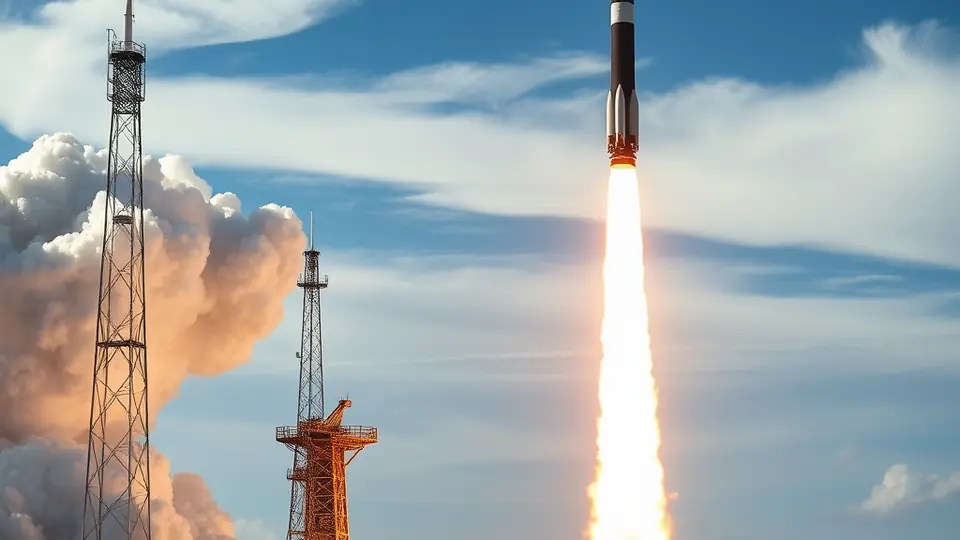
In a historic paradigm shift transforming India from a purely government-led space exploration ecosystem into a global commercial launch powerhouse, the country’s private space-tech industry has entered hyper-growth, propelled by the successful orbital flights of Skyroot Aerospace’s multi-stage Vikram-1 rocket and Agnikul Cosmos’s 3D-printed semi-cryogenic launch vehicles.
Under the catalytic regulatory oversight of the Indian National Space Promotion and Authorization Centre (IN-SPACe) and the commercial arm NewSpace India Limited (NSIL), India is rapidly executing an aggressive national roadmap to expand its share of the global commercial space economy from 2% to over 10% ($44 Billion) by 2033.
With over 200 registered private space startups pioneering breakthroughs in carbon-composite rocket fuselages, satellite constellation propulsion, hyperspectral Earth observation, and quantum optical communication, India has established itself as the world’s most cost-effective and reliable destination for commercial small-satellite orbital delivery.
1. Technological Milestones: The Vikram-1 Architecture
Skyroot Aerospace, founded by former ISRO scientists Pawan Kumar Chandana and Bharath Daka, has engineered Vikram-1 as a dedicated small-satellite launch vehicle (SSLV) optimized for low Earth orbit (LEO) rideshare missions:
graph TD
    A["Vikram-1 Launch Architecture"] --> B["All-Carbon Composite Solid Rocket Stages (Kalam Series)"]
    A --> C["3D-Printed Liquid Upper Stage (Raman Engine)"]
    A --> D["Payload Capacity: 480 kg to 500 km Low Earth Orbit (LEO)"]
    A --> E["Rapid Launch Turnaround: Assembled and Launched in 72 Hours"]
Key Engineering Breakthroughs of Vikram-1:
- Ultra-Lightweight Carbon Filament Winding: The solid motor casings are constructed from high-strength carbon fiber composite material, reducing dry structural weight by 40% compared to traditional metallic casings and drastically increasing payload mass fractions.
- Dynamic In-Flight Thrust Vector Control (TVC): Electro-mechanical gimbal actuators provide precision trajectory steering across dense atmospheric flight regimes.
- Multi-Payload Dispenser Mechanism: Capable of releasing multiple micro- and nano-satellites into distinctly customized sun-synchronous orbital inclinations during a single mission.
2. Competitive Global Launch Landscape: Cost Comparison
India’s private launch ecosystem provides unmatched economic value compared to legacy Western and regional aerospace competitors:
| Launch Provider / Rocket | Country | Payload to LEO | Estimated Launch Cost | Cost per Kg to LEO |
|---|---|---|---|---|
| Skyroot Vikram-1 | India | 480 kg | ~$4.2 Million | ~$8,750 / kg (Highly Competitive) |
| Rocket Lab Electron | USA / NZ | 300 kg | ~$7.5 Million | ~$25,000 / kg |
| Firefly Alpha | USA | 1,000 kg | ~$15.0 Million | ~$15,000 / kg |
| Arianespace Vega-C | Europe | 2,300 kg | ~$37.0 Million | ~$16,000 / kg |
3. The Role of IN-SPACe: Opening ISRO’s World-Class Infrastructure
The meteoric rise of private Indian space corporations is rooted in the government’s visionary decision to grant startups direct access to ISRO’s multi-billion-dollar testing and launch infrastructure:
- Sriharikota Launch Pads: Private companies operate dedicated launch pads and mission control centers at the Satish Dhawan Space Centre (SDSC-SHAR).
- Cryogenic & Acoustic Testing: Startups utilize ISRO’s specialized propulsion test facilities in Mahendragiri to test rocket engines without prohibitive capital expenditure.
- Geospatial Data Liberalization: High-resolution satellite imagery is now freely accessible to Indian software companies developing precision agriculture, flood prediction, and smart city infrastructure algorithms.
4. Conclusion: A New Frontier of Indian Industrial Leadership
The privatization and democratization of Indian space science marks the beginning of an extraordinary commercial renaissance.
By fusing ISRO’s half-century of cryogenic pedigree with the agile speed, venture capital backing, and software prowess of modern startups, India is boldly claiming its rightful place as the premier commercial gateway to the stars.