

 QuranGPT
Indian Navy Inducts INS Mangrol: Indigenously Built Anti-Submarine Warfare Corvette Commissioned at Cochin Shipyard
A comprehensive naval defense and technology report on the commissioning of INS Mangrol (ASW SWC), analyzing its advanced low-frequency active variable depth sonar, indigenously developed anti-submarine torpedoes, waterjet propulsion, and coastal defense doctrine.
The Holy Quran Team
Author
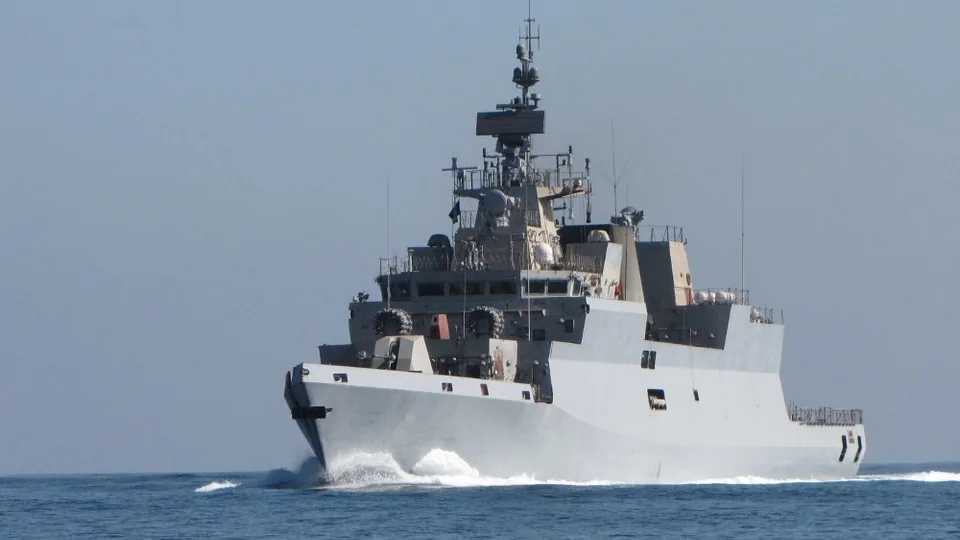
Indian Navy Inducts INS Mangrol: Indigenously Built Anti-Submarine Warfare Corvette Commissioned at Cochin Shipyard
In a major boost to India’s littoral maritime combat capabilities and sub-surface surveillance across the Arabian Sea and Bay of Bengal, the Indian Navy has officially taken delivery of INS Mangrol, the latest indigenously designed and constructed Anti-Submarine Warfare Shallow Water Craft (ASW SWC), manufactured by premier state-run shipbuilder Cochin Shipyard Limited (CSL).
Named after the historic maritime port town of Mangrol in Gujarat, the warship represents the cutting edge of the Aatmanirbhar Bharat naval modernization initiative, featuring over 80% indigenous indigenous content across its hull metallurgy, combat management systems, weapon suites, and acoustic detection arrays.
Designed specifically to detect, track, and neutralize silent, non-nuclear diesel-electric attack submarines operating in shallow coastal waters, INS Mangrol will serve as an agile hunter-killer shield guarding India's naval bases, critical energy ports, and offshore petroleum installations.
1. Technical Architecture of the ASW SWC Class
The ASW SWC platform incorporates state-of-the-art acoustic quieting and high-speed waterjet maneuverability:
graph TD
    A["INS Mangrol (ASW SWC Platform)"] --> B["Acoustic Suite: Indigenous Low-Frequency Active Towed Array Sonar (LFAS)"]
    A --> C["Propulsion: Advanced Multi-Pump Waterjets (Top Speed: 25+ Knots)"]
    A --> D["Weapons: Light-Weight Torpedoes (Shyena) & Anti-Submarine Rockets (RBU-6000)"]
    A --> E["Combat Suite: Integrated CMS with AI Submarine Acoustic Classification"]
Key Engineering Specifications:
- Length and Displacement: 78 meters overall length with approximately 900 tonnes full-load displacement.
- Shallow Draft Advantage: Draft of just 2.7 meters, enabling high-speed pursuit of adversary submarines in confined archipelago waters and coastal estuaries where large destroyers cannot safely navigate.
- Low Acoustic Signature: Shock-mounted propulsion machinery and cavitation-free waterjets reduce the vessel's own acoustic noise profile, preventing enemy submarines from detecting its approach.
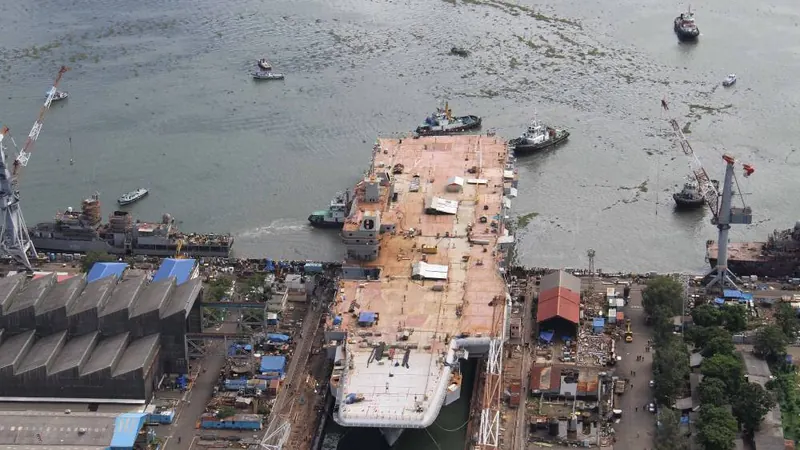 Cochin Shipyard Limited engineered and constructed the high-speed anti-submarine shallow watercraft.
2. Sensor and Armament Capabilities
INS Mangrol integrates an exceptionally lethal combination of indigenous DRDO weapons and sensors:
| System / Sensor | Indigenous Developer / Manufacturer | Tactical Combat Function |
|---|---|---|
| Hull-Mounted Sonar (Abhay) | NPOL / Bharat Electronics Limited | High-frequency active sonar for short-range submarine detection in shallow thermal layers. |
| Low-Frequency Towed Array Sonar | DRDO / CSL Integrated System | Deep variable-depth acoustic detection bypassing oceanic thermoclines. |
| Light-Weight Torpedoes (LWT) | BDL / NSTL (Shyena Torpedo) | Fire-and-forget acoustic homing torpedoes with active/passive guidance. |
| RBU-6000 Anti-Submarine Rocket Launcher | Larsen & Toubro / Ordnance Factory | Rapid-fire anti-submarine depth charge rockets creating an impenetrable acoustic barrier. |
| Remote Controlled Gun (30mm CRN-91) | Ordnance Factory Medak | Close-in defense against fast-attack craft, surface drones, and low-flying aerial targets. |
3. Strategic Importance in the Indian Ocean Littoral
With non-littoral powers expanding their submarine deployments into the northern Indian Ocean, shallow-water anti-submarine warfare has become a top strategic priority for the Indian naval command:
- Securing Critical Bottlenecks: Patrolling the shallow approaches to the Gulf of Khambhat, Palk Strait, and the Ten Degree Channel in the Andaman Sea.
- Mine-Laying and Littoral Interdiction: Capable of laying precision smart naval minefields across adversary transit chokepoints during wartime contingencies.
- Coordinated Multi-Domain Warfare: Real-time tactical datalinks sharing target tracks with P-8I Neptune long-range maritime patrol aircraft and MH-60R Seahawk helicopters.
4. Conclusion: A Triumph of Indigenous Naval Engineering
The swift delivery and commissioning of INS Mangrol by Cochin Shipyard underscores India's transition from a buyer’s navy to a self-reliant builder’s navy.
By deploying agile, heavily armed indigenous corvettes across its vast coastline, India solidifies its position as the primary net security provider in the Indian Ocean Region, ensuring peaceful and secure maritime commons.