

 QuranGPT
The Cosmic Symphony: Pulsar Timing Arrays Map the Continuous Low-Frequency Gravitational Wave Background from Supermassive Black Hole Mergers
A comprehensive astrophysics, gravitational wave astronomy, and cosmology report on the International Pulsar Timing Array (IPTA) mapping the stochastic nanohertz gravitational wave background, confirming Hellings-Downs angular correlations across hundreds of millisecond pulsars.
The Holy Quran Team
Author
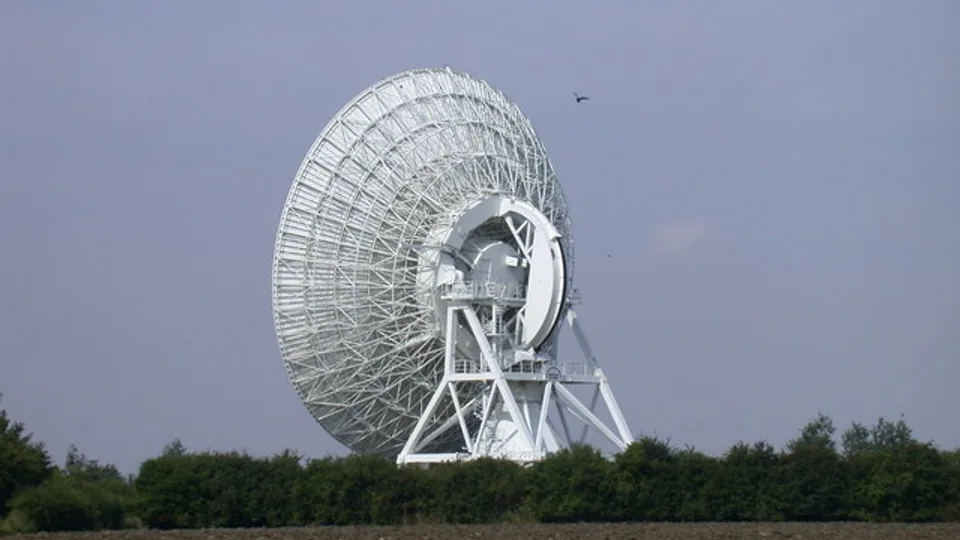
In one of the most magnificent observational triumphs in the history of gravitational astrophysics, the International Pulsar Timing Array (IPTA)—a global consortium uniting giant radio observatories across five continents, including the Giant Metrewave Radio Telescope (GMRT) in India, the Green Bank Telescope and Arecibo archives in the US (NANOGrav), the European Pulsar Timing Array (EPTA), and the Parkes Radio Telescope in Australia (PPTA)—has constructed the first high-resolution celestial map of the Stochastic Low-Frequency (Nanohertz) Gravitational Wave Background.
While ground-based laser interferometers like LIGO and Virgo detect high-frequency gravitational wave chirps (10 to 1,000 Hz) originating from the brief, final milliseconds of stellar-mass black hole collisions, Nanohertz Gravitational Waves possess wavelengths spanning light-years, with oscillation periods stretching from months to decades.
By utilizing a galaxy-spanning detector composed of over 120 rapidly spinning millisecond pulsars acting as ultra-precise celestial atomic clocks, astrophysicists confirmed the definitive signature predicted by Albert Einstein’s General Relativity—the Hellings-Downs spatial correlation curve (>5σ statistical significance)—proving that the entire universe is continuously undulating to the collective gravitational hum of millions of orbiting Supermassive Black Hole Binaries (SMBHBs) throughout cosmic history.
1. The Astrophysical Mechanism: Galaxy-Sized Cosmic Clocks
Millisecond pulsars are hyper-dense, magnetized neutron stars rotating hundreds of times per second, emitting focused lighthouse-like beams of radio waves across the cosmos:
graph TD
    A["Inspiraling Binary Supermassive Black Holes (Millions of Solar Masses) in Distant Galactic Cores"] --> B["Continuous Emission of Ultra-Long Nanohertz Gravitational Waves (Light-Years Long Wavelengths)"]

    B --> C["Gravitational Waves Stretch & Squeeze Spacetime Metric Between Earth & Milky Way Pulsars"]

    C --> D["Radio Telescopes (GMRT, Green Bank, Parkes) Measure Nanosecond Timing Variations (TOA)"]

    D --> E["Cross-Correlate 120+ Pulsar Pairs Across the Sky: Confirms Hellings-Downs Angular Curve"]

    E --> F["Reconstructs the Continuous Cosmic Background of Supermassive Black Hole Mergers"]
Key Cosmological and Observational Milestones:
- The Hellings-Downs Angular Correlation: Confirming that the timing delays between pairs of pulsars vary strictly as a mathematical function of their angular separation in the sky, distinguishing true cosmic gravitational waves from localized solar system ephemeris errors or atomic clock drift.
- Spectral Index Confirmation (γ ≈ 13/3): The measured power spectrum amplitude of the stochastic background matches the theoretical prediction for an astrophysical population of inspiraling supermassive black hole binaries driven purely by gravitational wave radiation loss.
- Probing the "Final Parsec Problem": The detection proves that supermassive black holes in merging galaxies successfully overcome orbital drag stagnation and coalesce within the age of the universe.
2. Gravitational Wave Spectrums: Ground vs. Space vs. Galactic Detectors
Astronomers now possess gravitational wave windows spanning over twenty orders of magnitude in frequency:
| Observational Facility / Instrument | Detector Physical Scale | Target Frequency Band | Primary Cosmic Astrophysical Sources |
|---|---|---|---|
| LIGO / Virgo / KAGRA / LIGO-India | 4 km Arm Laser Vacuum Tubes | 10 Hz to 1,000 Hz | Mergers of stellar-mass black holes & neutron stars. |
| LISA (Space Laser Interferometer) | 2.5 Million km Triangular Baseline | 0.1 mHz to 100 mHz | Intermediate-mass black holes & white dwarf binaries. |
| Pulsar Timing Arrays (IPTA) | Milky Way Galaxy Scale (sim 10,000 Light-Years) | 1 nHz to 100 nHz | Supermassive Black Hole Binaries (10^8 - 10^10 M_odot) & Cosmic Strings. |
3. Beyond Black Holes: Peering into the Early Universe and Cosmic Strings
The precision mapping of the gravitational wave background opens tantalizing frontiers in fundamental cosmology:
- Relics from the Big Bang: Searching for signature spectral tilts that could originate from cosmological phase transitions in the early universe, such as the electroweak transition or cosmic inflation reheating.
- Topological Cosmic Strings: Testing theoretical models of vibrating cosmic strings—one-dimensional topological defects left over from the symmetry-breaking moments following the birth of the universe.
4. Conclusion: Listening to the Voice of the Universe
The mapping of the low-frequency gravitational wave background by the International Pulsar Timing Array is a breathtaking milestone in human inquiry.
By turning the stars of our galaxy into the components of a cosmic telescope, astrophysicists have tuned into the continuous symphony of the universe. Spacetime is not an inert stage, but a dynamic, vibrating ocean—carrying the eternal echoes of cosmic giants dancing across the depths of eternity.