

 QuranGPT
Gold & Silver Price Surge 2026: Market Volatility & Islamic Wealth Preservation
An exhaustive economic analysis of the record surge in gold and silver prices (silver hitting ₹2.55 lakh/kg), fiat devaluation, and the Islamic bimetallic standard of wealth preservation.
The Holy Quran Economics & Finance Editorial
Author
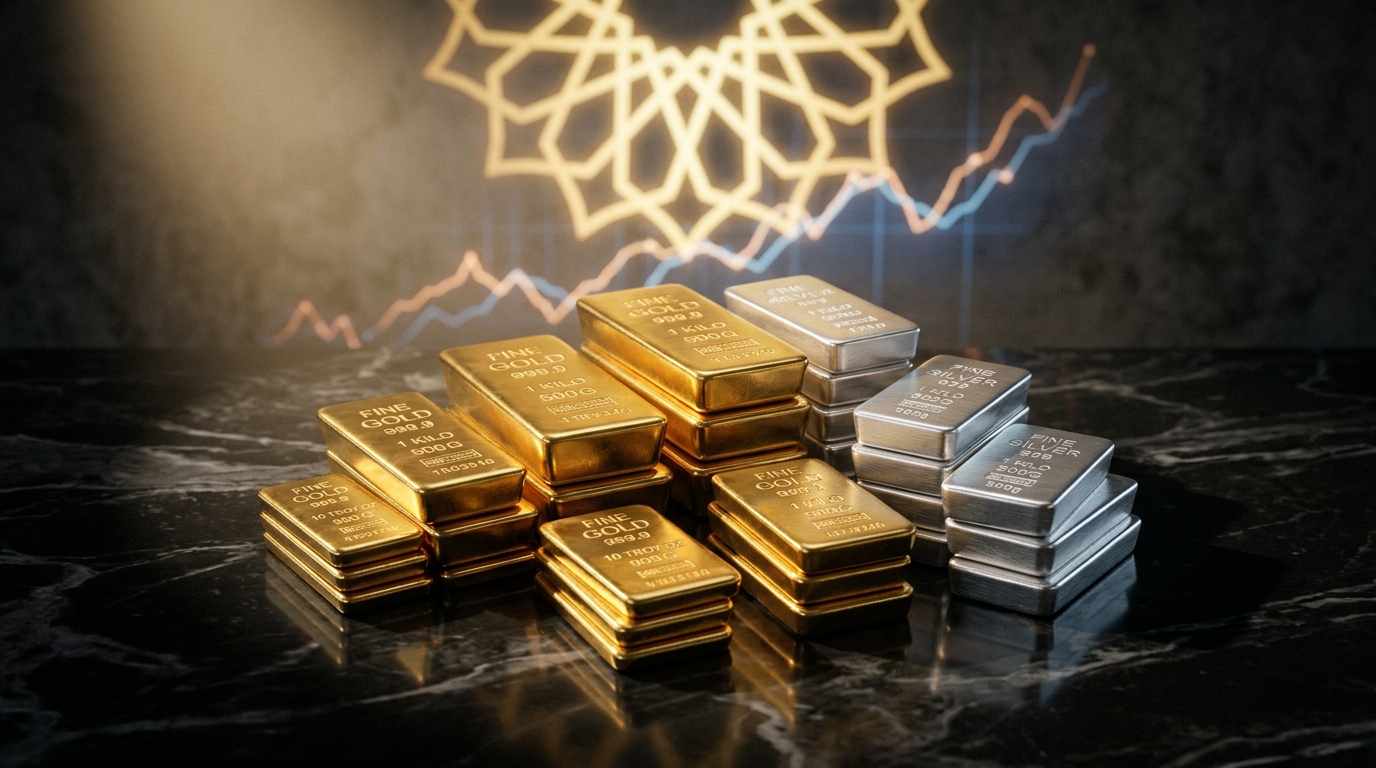
Gold & Silver Price Surge 2026: Market Volatility & Islamic Wealth Preservation
In August 2026, international financial markets experienced an unprecedented surge in precious metal valuations. Domestic silver prices in India breached historic psychological thresholds, climbing toward ₹2.55 lakh per kilogram, while gold reached all-time record highs amidst persistent geopolitical instability, currency volatility, and accelerated global de-dollarization.
As investors witness the erosive effects of fiat inflation and fractional-reserve banking shocks, capital is rapidly rotating back to the foundational anchors of human commerce: real, tangible, physical assets.
This comprehensive report examines the structural catalysts behind the 2026 precious metals rally, industrial silver supply deficits, currency depreciation dynamics, and the timeless principles of the Islamic Bimetallic Standard (Dinar & Dirham) for wealth preservation.
1. Executive Summary: 2026 Precious Metals Market Matrix
               2026 PRECIOUS METALS BENCHMARK MATRIX

   • Silver Valuation (India): ~ ₹2,55,000 / kg ($52 / oz equivalent)
   • Gold Valuation (24K India): ~ ₹1,12,000 / 10g ($3,100 / oz equivalent)
   • Primary Industrial Catalysts: Photovoltaic Solar Cells, Semiconductor Packaging, EV Grid
   • Macro Drivers: Global De-Dollarization, Central Bank Gold Accumulation, Rupee Volatility
   • Islamic Economic Parallel: Dinar (Gold) & Dirham (Silver) Zero-Riba Monetary Stability
2. Structural Drivers Behind the Historic Rally
The 2026 rally is characterized not merely by speculative trading, but by acute physical supply shortages and macroeconomic realignment:
                    CATALYSTS OF THE 2026 METALS SURGE

          ┌─────────────────────────┴─────────────────────────┐
          ▼                                                   ▼
   [Industrial Demand Explosion]                       [Monetary Hedging]
   - Perovskite-Silicon Solar Cells                    - Central Bank Gold Reserves
   - High-Density AI Server Solders                    - De-Dollarization (BRICS/SCO)
   - 4th Consecutive Year of Silver Deficit            - Fiat Inflation & Debt Crisis
The Industrial Silver Squeeze:
Unlike gold, which is predominantly held in vaults, over 60% of annual silver production is consumed industrially across solar PV panels, electronic contacts, medical equipment, and automotive electronics. With global silver mine supply stagnating at ~830 million ounces against demand exceeding 1.2 billion ounces, structural deficits have forced violent price re-evaluations.
3. Comparative Performance: Fiat Currencies vs. Precious Metals
                 5-YEAR PURCHASING POWER BENCHMARK (2021-2026)

   Asset Class         | Nominal Price Change | Real Purchasing Power Preservation
   --------------------+----------------------+------------------------------------
   Fiat Cash (Savings) | -24% (Cumulative Loss)| High Inflation Degradation
   Equities / Indices  | +62%                 | Moderate (Volatile)
   Physical Silver     | +240%                | Superior Long-Term Growth
   Physical Gold       | +165%                | Flawless Purchasing Power Anchor
4. The Islamic Bimetallic Standard: Sound Money Without Riba
Islamic economic thought has fundamentally recognized Gold (Dinar) and Silver (Dirham) as natural, intrinsic stores of value (Thamaniyyah).
Unlike fiat money created through fractional-reserve debt expansion, gold and silver cannot be artificially created out of thin air, making them inherently resistant to hyperinflation and arbitrary monetary debasement.
Historical Monetary Stability:
During the classical Islamic era, one Dinar (4.25g of 24K gold) was sufficient to purchase a sheep. Remarkably, over 1,400 years later in 2026, 4.25 grams of gold still purchases approximately one sheep anywhere in the world—a demonstration of purchasing power preservation unmatched by any paper currency in human history.
"O you who have believed, indeed many of the scholars and the monks devour the wealth of people unjustly and avert [them] from the way of Allah. And those who hoard gold and silver and spend it not in the way of Allah - give them tidings of a painful punishment."
— Surah At-Tawbah (9:34)
The Prohibition of Hoarding (Kanz):
While Islam validates gold and silver as sound money, it strictly commands that wealth must circulate actively in productive enterprise, charity, and fair trade. Hoarding wealth (Kanz) without paying the mandatory Zakat (2.5% annual wealth tax) is condemned, as it starves the real economy of liquidity.
5. Strategic Wealth Preservation Strategies for 2026
- Allocating to Physical Bullion: Holding physical gold coins/bars or allocated depository bullion rather than unbacked paper derivatives.
- Utilizing Metals for Zakat Calculation: Calculating annual Zakat based on the Nisab of Gold (85 grams) or Nisab of Silver (595 grams) to ensure equitable social wealth distribution.
- Avoiding Leveraged Speculation: Investing with zero debt and zero interest (Riba), ensuring investments represent 100% unleveraged, real asset ownership.
6. Frequently Asked Questions (FAQ)
Q1: Why did silver prices cross ₹2.5 lakh per kg in 2026?
A combination of structural industrial supply deficits (driven by solar energy and EV manufacturing), central bank monetary shifts, and global inflation hedges drove the surge.
Q2: What is the Islamic perspective on investing in gold and silver?
Gold and silver are recognized in Islam as real, tangible money (Thamaniyyah). Investing in them is completely permissible provided annual Zakat (2.5%) is paid and transactions are spot-settled without interest.
Q3: How is Zakat calculated on gold and silver in 2026?
Zakat is due at 2.5% on all gold exceeding the Nisab threshold of 85 grams and all silver exceeding 595 grams that has been held for one lunar year (Hawl).
7. Conclusion
The 2026 surge in gold and silver prices reaffirms a timeless economic reality: while paper fiat currencies come and go with shifting political tides, real asset-backed money preserves value across generations. By embracing sound money and ethical wealth circulation, individuals and economies can build resilience in an era of global financial uncertainty.