

 QuranGPT
Dopamine Detox & the Prophetic Sunnah: The Neuroscience of Islamic Fasting & Muraqaba
How 2026 neurobiology validates the prophetic traditions of fasting, sensory discipline, and mindful awareness as the definitive antidote to modern digital burnout.
The Holy Quran Team
Author
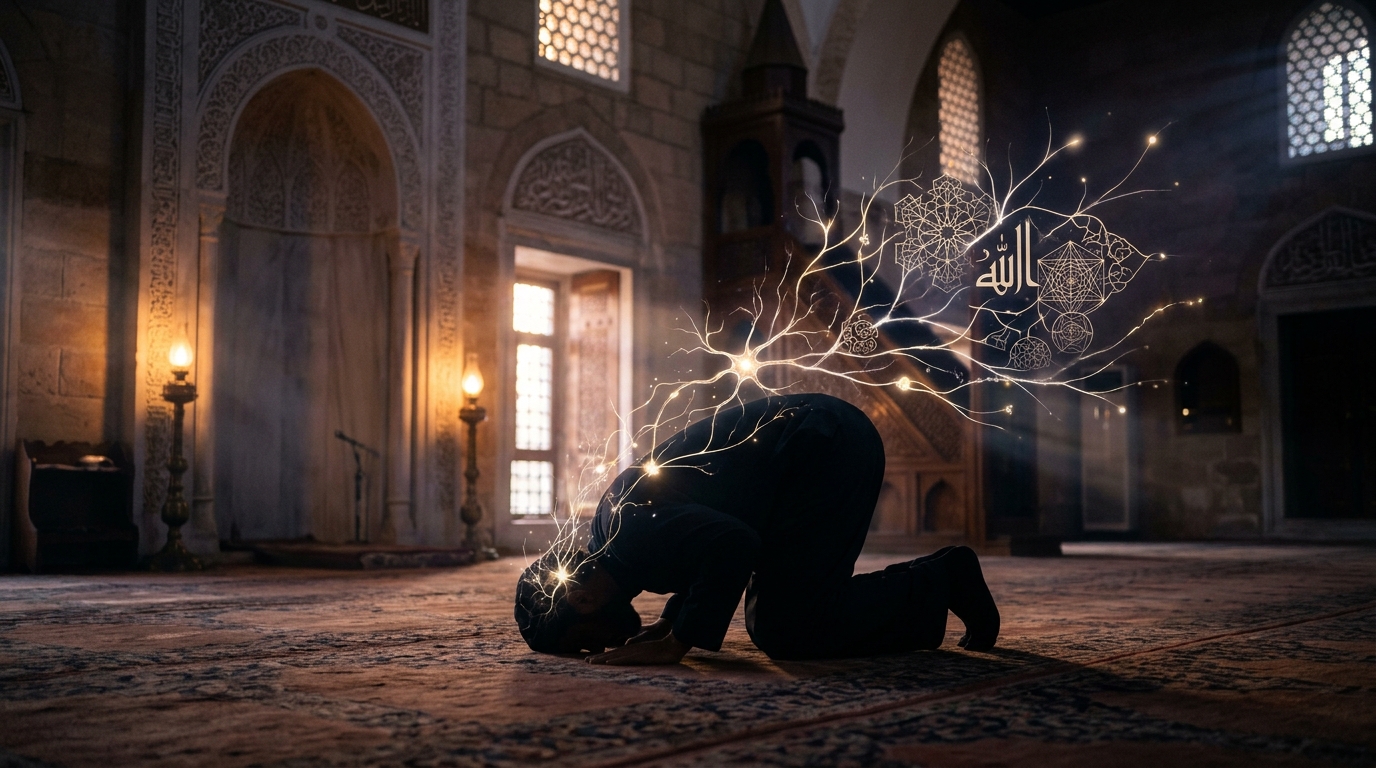
In 2026, the average human touches, taps, or swipes their digital devices over 2,600 times every single day. Within the neurochemical machinery of the human brain, this endless barrage of variable-reward notifications, algorithmic short-form video loops, and instant gratification triggers a relentless deluge of dopamine — the master neurotransmitter of anticipation, pursuit, and desire.
Yet, rather than producing lasting satisfaction, this relentless hyper-stimulation has precipitated a global psychological crisis: widespread attentional fragmentation, chronic low-grade anxiety, brain fog, and a pervasive inability to experience deep presence (Khushu) in prayer or peace in daily life.
To combat this cognitive exhaustion, modern Silicon Valley and neuroscience circles have popularized the concept of the "dopamine detox" — a deliberate, temporary withdrawal from high-stimulus inputs to recalibrate the brain's reward pathways.
Yet fourteen centuries before neuroscientists mapped the ventral striatum and D2 dopamine receptor downregulation, the Prophet Muhammad ﷺ codified a comprehensive, sustainable architecture for neural and spiritual recalibration. Through voluntary fasting (Sawm), intentional solitude (Uzlah), sensory discipline (Ghad al-Basar), and continuous divine mindfulness (Muraqaba), Islamic practice provides the ultimate neurobiological reset.
1. The Neurobiology of the Attention Crisis: Understanding Dopamine Downregulation
To understand why prophetic practices exert such profound restorative power on the modern mind, one must examine the delicate mechanics of the brain's reward circuitry.
Dopamine does not primarily mediate the feeling of pleasure itself; rather, it mediates craving, motivation, and reward-seeking behavior. Whenever an individual anticipates a reward — whether a high-calorie snack, a social media like, or an urgent email notification — dopamine spikes sharply in the nucleus accumbens and the mesolimbic pathway.
┌────────────────────────────────────────────────────────────────────────┐
│ The Dopamine Tolerance Cycle in the Digital Era                        │
│                                                                        │
│ Constant High-Stimulus Feeds ──► Sharp Dopamine Spike                  │
│                                           │                            │
│ Chronic Restlessness & Anhedonia ◄── D2 Receptor Downregulation        │
└────────────────────────────────────────────────────────────────────────┘
As landmark clinical research by Dr. Anna Lembke (Stanford University School of Medicine) and neurobiological investigations by Dr. Andrew Huberman demonstrate, the nervous system operates on a fundamental principle of homeostasis. When the brain is repeatedly subjected to artificially high dopamine peaks from digital feeds, it compensates through neuroadaptation: it downregulates the density and sensitivity of postsynaptic D2 dopamine receptors.
The consequence is catastrophic for the human psyche:
- Baseline Depletion: The individual's baseline dopamine level drops significantly below normal.
- Anhedonia & Restlessness: Ordinary, quiet life activities — reading the Quran, sitting in contemplative prayer, enjoying a quiet walk, or engaging in deep conversation — feel excruciatingly boring and unrewarding.
- Attentional Atrophy: The prefrontal cortex loses its capacity for top-down cognitive inhibition, creating impulsive scrolling cycles that mirror chemical addiction.
The Quran addressed this very cycle of insatiable worldly accumulation and distraction in terms that foreshadow contemporary neuroscience:
أَلْهَىٰكُمُ ٱلتَّكَاثُرُ حَتَّىٰ زُرْتُمُ ٱلْمَقَابِرَ
Surah At-Takathur (102:1–2): "Competition in [worldly] increase diverts you, until you visit the graveyards."
The Arabic term Alhakum signifies a diversion that does not merely occupy one's time, but captivates the cognitive faculties, rendering the soul oblivious to what truly matters.
2. Sawm (Fasting) as Neural Autophagy & Dopamine Reset
The primary pillar of the Islamic dopamine reset is the institution of fasting (Sawm). While secular dopamine fasting often focuses merely on avoiding electronics for twenty-four hours, the Islamic paradigm couples physical abstinence from food, drink, and intimacy with psychological restraint from gossip, anger, and vain entertainment.
يَـٰٓأَيُّهَا ٱلَّذِينَ ءَامَنُوا۟ كُتِبَ عَلَيْكُمُ ٱلصِّيَامُ كَمَا كُتِبَ عَلَى ٱلَّذِينَ مِن قَبْلِكُمْ لَعَلَّكُمْ تَتَّقُونَ
Surah Al-Baqarah (2:183): "O you who have believed, decreed upon you is fasting as it was decreed upon those before you that you may become righteous [gain Taqwa]."
Narrated by Abu Hurairah (may Allah be pleased with him), the Messenger of Allah ﷺ said:
"Fasting is a shield; when one of you is fasting on a day, he should neither indulge in obscene language nor raise his voice in commotion. And if someone reviles him or fights with him, let him say: 'I am fasting.'"
(Sahih al-Bukhari #1894, Sahih Muslim #1151)
From a neurobiological standpoint, voluntary periodic fasting — such as the Sunnah of fasting on Mondays and Thursdays, or the three white days (Ayyam al-Beed) of each lunar month — initiates profound cellular and neural rejuvenation:
| Physiological Domain | Mechanism During Prophetic Fasting (Sawm) | Cognitive & Neurobiological Outcome |
|---|---|---|
| Receptor Sensitivity | Sustained caloric & sensory restriction pauses dopamine flooding | D2 receptor density upregulates, restoring sensitivity to subtle joys |
| Brain-Derived Neurotrophic Factor | Increased BDNF synthesis in the hippocampus | Accelerated neurogenesis, enhanced synaptic plasticity, and memory retention |
| Neural Autophagy | Cellular clearing of misfolded proteins and damaged mitochondria | Reduced neuroinflammation and mitigation of mental fatigue |
| Prefrontal Activation | Intentional suppression of primal hunger instincts | Strengthened willpower, impulse control, and emotional regulation |
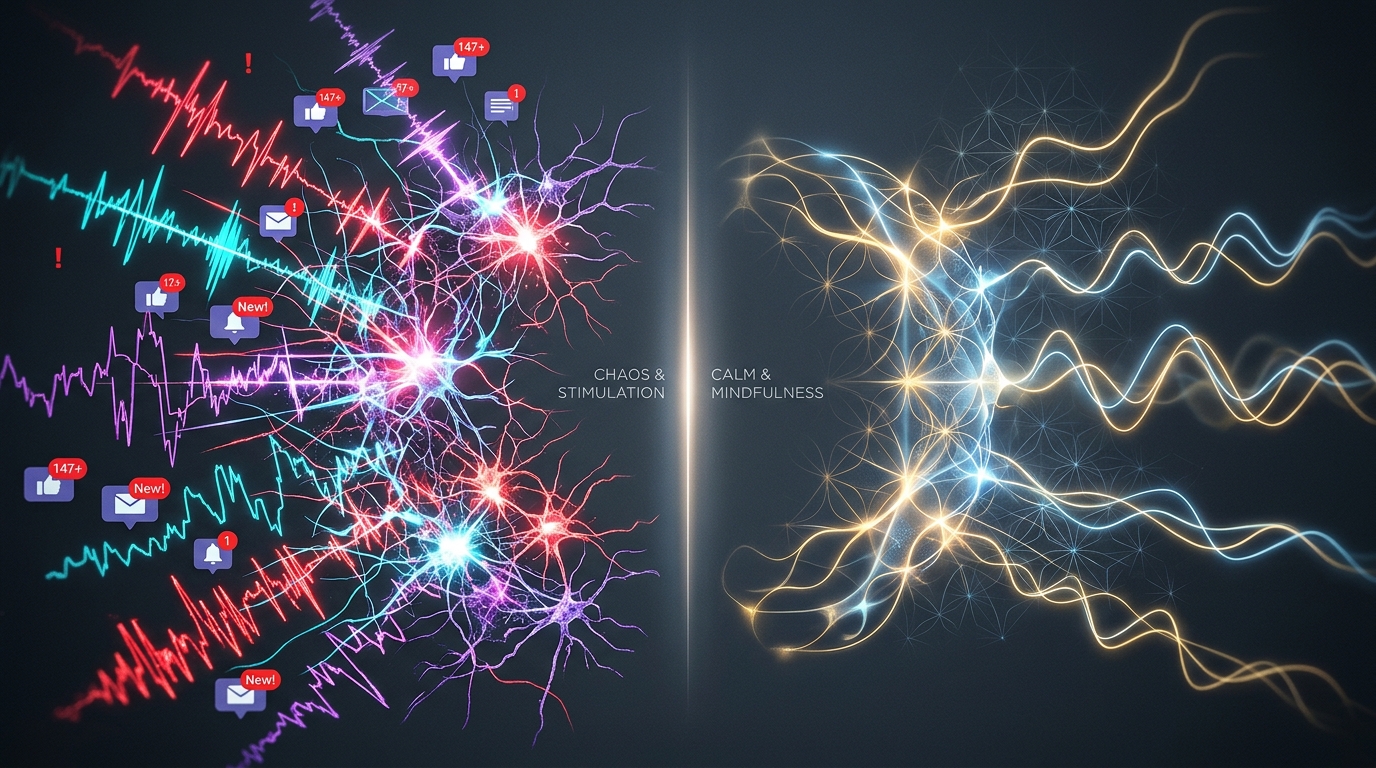
When the fasting believer consciously chooses not to consume water or food despite having immediate access to both, the prefrontal cortex overrides the primal impulses of the limbic system. This conscious friction builds measurable neural resilience, breaking the reactive habit loops upon which digital addiction thrives.
3. Muraqaba: The God-Centered Antidote to Restless Thoughts
In modern clinical psychology, mindfulness is frequently promoted as a secularized technique for stress management. However, secular mindfulness often falls into the trap of self-absorption, asking practitioners to observe their thoughts in an ethical and metaphysical vacuum.
In contrast, Islamic civilization developed the profound contemplative discipline of Muraqaba — an active, vigilant awareness of Allah's watchful presence over one's internal mental states, emotional fluctuations, and external actions.
The Quranic foundation of Muraqaba is encapsulated in the divine reality of Allah's omniscient closeness:
هُوَ ٱلَّذِى خَلَقَ ٱلسَّمَـٰوَٰتِ وَٱلْأَرْضَ فِى سِتَّةِ أَيَّامٍ ثُمَّ ٱسْتَوَىٰ عَلَى ٱلْعَرْشِ ۚ يَعْلَمُ مَا يَلِجُ فِى ٱلْأَرْضِ وَمَا يَخْرُجُ مِنْهَا وَمَا يَنزِلُ مِنَ ٱلسَّمَآءِ وَمَا يَعْرُجُ فِيهَا ۖ وَهُوَ مَعَكُمْ أَيْنَ مَا كُنتُمْ ۚ وَٱللَّهُ بِمَا تَعْمَلُونَ بَصِيرٌ
Surah Al-Hadid (57:4): "He is the one who created the heavens and earth in six days and then established Himself above the Throne. He knows what penetrates into the earth and what emerges from it and what descends from the heaven and what ascends therein; and He is with you wherever you are. And Allah, of what you do, is Seeing."
When an individual sits in silent Muraqaba — cultivating the deep awareness that Allah observes the secret thoughts of their heart — neuroscience observes a marked down-regulation of the Default Mode Network (DMN).
The DMN comprises the medial prefrontal cortex, posterior cingulate cortex, and angular gyrus. It is the anatomical seat of the narrative "ego" — the mental engine responsible for past regrets, future anxieties, social comparisons, and continuous rumination.
When the DMN is chronically hyperactive (as is typical in digital addiction and anxiety disorders), the mind feels scattered and perpetually distressed. By redirecting the focus from the fragmented self toward the infinite Creator through Dhikr and Muraqaba, the DMN quiets, and alpha-band brainwaves (8–12 Hz) proliferate, inducing deep physiological serenity.
As Allah declares in the Holy Quran:
ٱلَّذِينَ ءَامَنُوا۟ وَتَطْمَئِنُّ قُلُوبُهُم بِذِكْرِ ٱللَّهِ ۗ أَلَا بِذِكْرِ ٱللَّهِ تَطْمَئِنُّ ٱلْقُلُوبُ
Surah Ar-Ra'd (13:28): "Those who have believed and whose hearts are assured by the remembrance of Allah. Unquestionably, by the remembrance of Allah hearts are assured."
4. Ghad al-Basar: Sensory Gatekeeping and Prefrontal Conservation
One of the most overlooked aspects of the modern dopamine crisis is visual overstimulation. The human visual cortex consumes more metabolic energy than any other sensory system. In the digital ecosystem, algorithmic feeds exploit human curiosity through hyper-sexualized imagery, sensationalist news headlines, and rapid visual cuts designed to sustain high visual salience.
The Quran instituted a revolutionary protocol of visual hygiene fourteen centuries ago:
قُل لِّلْمُؤْمِنِينَ يَغُضُّوا۟ مِنْ أَبْصَـٰرِهِمْ وَيَحْفَظُوا۟ فُرُوجَهُمْ ۚ ذَٰلِكَ أَزْكَىٰ لَهُمْ ۗ إِنَّ ٱللَّهَ خَبِيرٌۢ بِمَا يَصْنَعُونَ
Surah An-Nur (24:30): "Tell the believing men to reduce [some] of their vision and guard their private parts. That is purer for them. Indeed, Allah is Acquainted with what they do."
Ghad al-Basar (lowering the gaze) is not merely a moral virtue; it is an active act of cognitive gatekeeping. Every visual stimulus that an individual permits into their visual field demands neurological processing, emotional appraisal, and dopamine anticipation.
By commanding believers to deliberately lower their gaze before visual triggers, Islam protects the prefrontal cortex from cognitive depletion and spares the soul the torment of desiring what it cannot or should not possess.
The Prophet Muhammad ﷺ warned against the progressive neuro-spiritual damage of unmonitored visual exposure:
Narrated by Jabir ibn Abdullah (may Allah be pleased with him): "I asked the Messenger of Allah ﷺ about the sudden glance (at something impermissible). He instructed me to avert my gaze."
(Sahih Muslim #2159)
5. The 7-Day Sunnah Dopamine Detox Protocol
To translate these profound theological and neurobiological insights into daily life, here is a practical, evidence-based 7-day protocol combining prophetic wisdom with modern cognitive hygiene:
┌────────────────────────────────────────────────────────────────────────┐
│ The 7-Day Sunnah Cognitive Hygiene Architecture                        │
│                                                                        │
│ 1. Fajr Sacred Solitude (No Screens for 60 Minutes After Dawn)         │
│ 2. The Bi-Weekly Voluntary Fast (Monday & Thursday Sawm)              │
│ 3. 15 Minutes of Daily Post-Salah Muraqaba & Silent Dhikr              │
│ 4. Digital Uzlah: Phone Turned Face-Down During Study & Meals          │
│ 5. Physical Sensory Grounding: Quran Recitation from Physical Mushaf   │
└────────────────────────────────────────────────────────────────────────┘

Step 1: The Golden Hour After Fajr (Digital Uzlah)
Keep your smartphone completely outside your bedroom overnight. Following the dawn prayer (Fajr), spend the first 60 minutes of the morning in absolute digital silence:
- 20 minutes of authentic Morning Adhkar (Awrad).
- 20 minutes reciting the Quran from a physical paper Mushaf (engaging tactile and visual circuits with sacred geometry rather than blue-light screens).
- 20 minutes of physical movement or walking in natural light to synchronize the circadian suprachiasmatic nucleus.
Step 2: Prophetic Intermittent Fasting
Observe the Sunnah fast on Monday and Thursday. When breaking the fast, follow the Prophet's instruction:
Narrated by Anas ibn Malik (may Allah be pleased with him): "The Messenger of Allah ﷺ used to break his fast with fresh dates before praying; if there were no fresh dates, then with dried dates; and if there were no dried dates, he would take a few sips of water."
(Sunan Abi Dawud #2356, Jami` at-Tirmidhi #696, graded Hasan Sahih)
Avoid the modern trap of turning Iftar into a hyper-caloric binge. Overeating immediately triggers dopamine surges that undermine the neurobiological benefits of the fast.
Step 3: Structured Sensory Gatekeeping (Ghad al-Basar)
Audit your digital inputs ruthlessly:
- Turn off all non-human notifications (news alerts, game notifications, algorithmic suggestions).
- Convert your smartphone display to grayscale mode (Color Filters > Grayscale) to remove the artificial visual dopamine cues that app developers engineer into icon designs.
- Practice the immediate aversion of gaze when stumbling upon provocative or frivolous online content.
Step 4: Daily Tahajjud & Emotional Solace
Dedicate the final 20 minutes before Fajr to the night vigil (Tahajjud). In the quiet of the night, pour out your stresses, anxieties, and ambitions directly to Allah in Sujood. Clinical psychiatry confirms that verbalizing vulnerability in a secure attachment relationship reduces amygdala hyperactivity; in Islam, this relationship is with the Creator of the universe.
Conclusion: Restoring the Fitrah
The modern obsession with dopamine detoxing is an instinctive human rebellion against an artificial environment that fractures our attention and starves our souls.
Islam does not demand that we retreat from modern technology entirely, but it commands that we never allow creation to usurp the place of the Creator in our hearts. By re-anchoring our daily routines to the rhythm of Salah, regular fasting, sensory discipline, and conscious Muraqaba, we do not merely optimize our brain chemistry — we fulfill our true purpose as servants of the Divine.
أَلَا يَعْلَمُ مَنْ خَلَقَ وَهُوَ ٱللَّطِيفُ ٱلْخَبِيرُ
Surah Al-Mulk (67:14): "Does He who created not know, while He is the Subtle, the Acquainted?"