

 QuranGPT
Neuroplasticity of Dhikr and Quranic Recitation: Cognitive Resilience, Alpha Waves, and Mental Well-being
An analytical neuroscience study exploring the neuroplasticity of Dhikr (remembrance of God), Quranic recitation, EEG alpha waves, and stress reduction.
The Holy Quran Team
Author
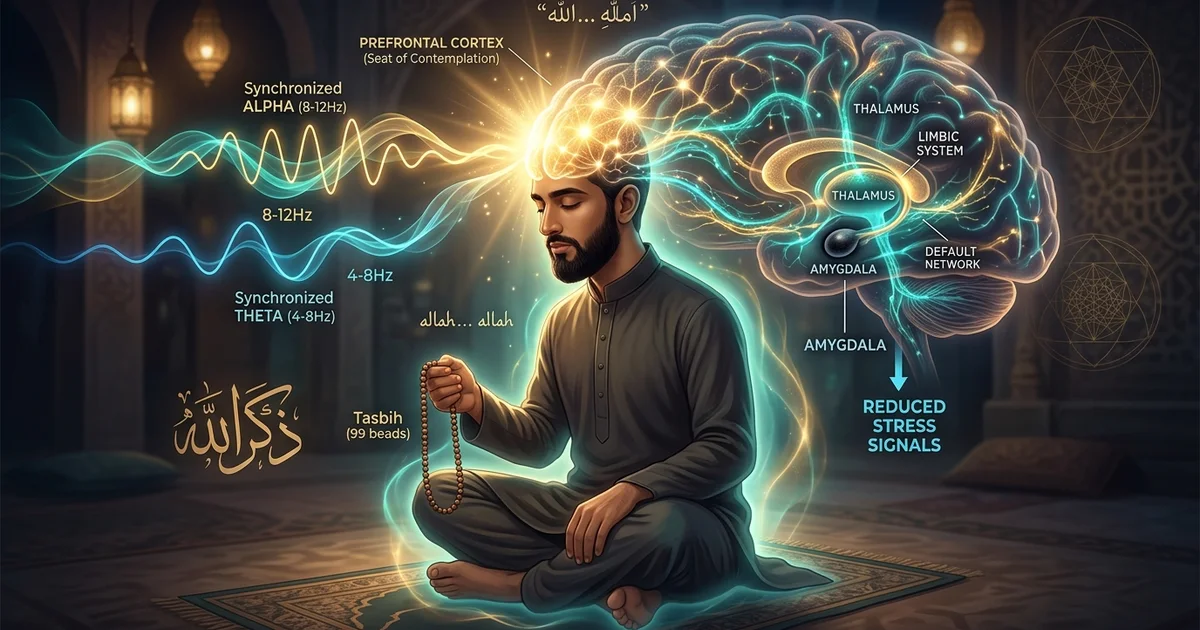
In an era characterized by chronic information overload, fractured attention spans, and an unprecedented global mental health crisis, cognitive neuroscientists are increasingly investigating practices that foster neuroplasticity—the brain's dynamic capacity to rewire neural pathways, strengthen synaptic connections, and buffer against stress-induced neurodegeneration.
Among the most powerful yet accessible neuromodulatory practices is Dhikr (the rhythmic, mindful remembrance of God) and Tartil (slow, melodious Quranic recitation). Modern electroencephalography (EEG), functional Magnetic Resonance Imaging (fMRI), and psychoneuroimmunology studies confirm that these devotional practices induce deep states of neural coherence, stimulating Alpha and Theta brainwaves, downregulating the brain's Default Mode Network (DMN), and fostering emotional tranquility.
1. Executive Summary: Neurological Correlates of Dhikr and Quranic Listening
The neurological impact of Dhikr spans multiple brain regions and oscillatory rhythms:
| Neurobiological Metric | Baseline Stress / Anxiety State | Neuromodulated State During Dhikr & Recitation | Mental Health & Cognitive Benefit |
|---|---|---|---|
| Dominant Brainwave Band | High-frequency Beta (13–30 Hz) & Gamma | Synchronized Alpha (8–12 Hz) & Theta (4–8 Hz) | Induces alert calmness, creativity, and deep emotional rest |
| Default Mode Network (DMN) | Hyperactive (rumination, self-criticism, anxiety) | Markedly quieted and deactivated | Breaks destructive cycles of overthinking and depressive rumination |
| Amygdala Reactivity | Hyper-responsive fear & alarm signaling | Suppressed and stabilized | Drastic reduction in cortisol, adrenaline, and acute panic |
| Prefrontal Cortex (PFC) | Fatigued executive attention | Enhanced functional connectivity | Heightened working memory, emotional regulation, and focus |
| Vascular & Heart Rate Coherence | Erratic, low Heart Rate Variability (HRV) | High rhythmic HRV synchronization | Cardiovascular calm and autonomic nervous balance |
2. Electroencephalography (EEG) and Alpha-Theta Wave Entrainment
When human brain electrical activity is monitored via high-density EEG caps during Quranic recitation:
- Alpha Wave Synchronization (8–12 Hz): Within 3 to 5 minutes of listening to melodious Quranic chanting or engaging in rhythmic Dhikr (such as SubhanAllah, Alhamdulillah, Allahu Akbar), high-amplitude Alpha waves propagate across the occipital, parietal, and frontal lobes. Alpha rhythms represent the brain's optimal idling state—a state of relaxed alertness and mental clarity.
- Theta Wave Emergence (4–8 Hz): During deep contemplative meditation (Tadabbur), frontal midline Theta waves emerge, mirroring the neural state observed in experienced meditators, facilitating memory consolidation and emotional healing.
Neural Oscillatory Shift:
High Beta Stress Waves (Anxiety & Rumination) ➔ Synchronized Alpha Waves (Calm Alertness)
➔ Frontal Theta Waves (Deep Contemplation & Emotional Restoration)
3. Deactivating the Default Mode Network: Quieting the Anxious Mind
The Default Mode Network (DMN)—comprising the medial prefrontal cortex, posterior cingulate cortex, and angular gyrus—is the brain network active when a person is engaged in mind-wandering, past regret, future worry, and self-referential rumination. Hyperactivity in the DMN is clinically linked to major depressive disorders and chronic anxiety.
fMRI studies reveal that repetitive linguistic and rhythmic mindfulness (the exact structure of Tasbih and Dhikr):
- Suppresses DMN Hyperactivity: Redirects neural blood flow away from self-centered anxiety loops and into the task-positive attention networks.
- Fosters Present-Moment Anchoring: Anchors human consciousness in the remembrance of the Divine, breaking the cognitive spirals of psychological distress.
4. The Quranic Axiom of Heart and Mind Serenity
The psychological and neurological reality of Dhikr is captured in one of the most famous verses of the Holy Quran:
"Those who have believed and whose hearts are assured by the remembrance of Allah. Unquestionably, by the remembrance of Allah hearts are assured."
— Surah Ar-Ra'd (13:28)
The Arabic term Tatma'innu (are assured / find rest) denotes an active stabilization—a soothing of turbulent cardiac rhythms and erratic brainwave patterns into harmonious physiological coherence.
5. Frequently Asked Questions (FAQ)
What brainwave changes occur during Dhikr and Quran recitation?
EEG studies demonstrate a significant increase in synchronized Alpha waves (8–12 Hz) and Theta waves (4–8 Hz), which induce alert relaxation, reduce stress, and enhance cognitive resilience.
What is the Default Mode Network (DMN) and how does Dhikr affect it?
The DMN is the brain network responsible for mind-wandering and anxiety rumination. Dhikr quiets this network, preventing depressive overthinking and anchoring attention in peaceful contemplation.
How many minutes of daily Dhikr are recommended for mental wellness?
Neuroplasticity research suggests that dedicating 15 to 20 minutes daily to mindful Dhikr and Quranic listening produces measurable improvements in emotional regulation and stress tolerance within a few weeks.
6. Actionable Takeaways & Daily Mental Wellness Routine
- Morning and Evening Adhkar: Practice the traditional Adhkar al-Sabah wal-Masaa for 10 minutes upon waking and before sunset to inoculate the brain against daily stress.
- Mindful Tactile Tasbih: Use physical prayer beads or fingers to engage sensory-motor feedback while reciting SubhanAllah, Alhamdulillah, and Allahu Akbar.
- Slow Melodious Recitation (Tartil): Recite the Quran slowly with proper rhythm (Tajweed), coordinating your breath with vocal vibrations to stimulate the vagus nerve and induce deep neural serenity.