

 QuranGPT
Circadian Rhythms, Sleep Architecture, and Tahajjud: The Chronobiology of Islamic Prayer Times
Discover how the Islamic prayer schedule, Fajr dawn awakening, and nocturnal Tahajjud prayer align perfectly with human circadian biology, melatonin, and sleep cycles.
The Holy Quran Neuroscience & Spiritual Health Editorial
Author
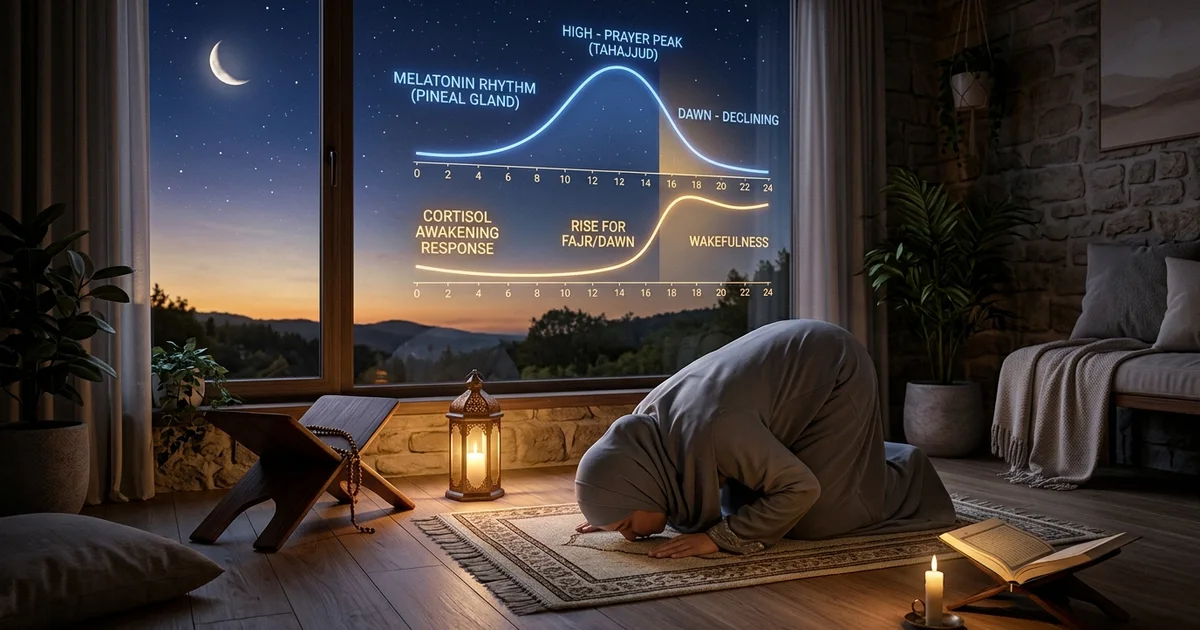
Inside the human hypothalamus lies a tiny cluster of approximately 20,000 neurons known as the Suprachiasmatic Nucleus (SCN)—the master biological pacemaker that coordinates the circadian rhythm (the internal 24-hour biological clock). This master clock regulates hormone synthesis, core body temperature, cellular repair, and the delicate architecture of human sleep.
In recent years, the field of chronobiology has demonstrated that modern chronic diseases—including cardiovascular disorders, metabolic syndrome, depression, and immune dysfunction—are heavily exacerbated by circadian misalignment caused by artificial late-night blue light exposure and irregular sleep patterns. In contrast, the Islamic daily routine—anchored by the five daily prayers aligned with solar movements, early evening sleep, the pre-dawn Tahajjud (Qiyam al-Layl), and the Fajr dawn awakening—constitutes a masterclass in circadian synchronization.
1. Executive Summary: The Chronobiological Rhythm of Islamic Worship
The distribution of Islamic prayer times mirrors the human endocrine and neurological circadian rhythm:
| Solar & Prayer Phase | Biological Clock & Hormone Profile | Physiological State | Health & Neurological Benefit |
|---|---|---|---|
| Isha (Nightfall) | Melatonin secretion rises; core body temperature drops | Transition to slow-wave restorative sleep | Early sleep initiation optimizes human growth hormone (HGH) release |
| Last Third of Night (Tahajjud) | Melatonin reaches peak; deep REM sleep transitions to light cycle | Highest parasympathetic stability and mental clarity | Neuroplastic memory consolidation and spiritual focus |
| Fajr (True Dawn) | Cortisol Awakening Response (CAR) initiates | Cortisol, blood pressure, and alertness rise naturally | Prevents sluggish morning lethargy and optimizes metabolic readiness |
| Dhuhr (Solar Midday) | Post-prandial circadian dip in alertness | Natural afternoon drop in vigilance (Qailulah) | Brief power nap (15–20 mins) restores cognitive motor performance |
| Asr & Maghrib (Sunset) | Core temperature peaks; transition to evening | Winding down metabolic exertion | Prepares the nervous system for evening rest |
2. The Science of Qiyam al-Layl (Tahajjud) and Biphasic Sleep
Anthropological and historical sleep research (such as the landmark work of historian A. Roger Ekirch) reveals that before the advent of industrial electric lighting, humans naturally practiced biphasic sleep: sleeping in two distinct segments separated by a period of quiet wakefulness in the middle of the night.
The Prophetic Sunnah embodies this ideal physiological pattern:
- Early Sleep After Isha: The Prophet ﷺ discouraged staying awake for idle conversation after the night prayer (Isha), retiring early to complete the vital first cycles of Non-REM Deep Slow-Wave Sleep (Stage N3), during which the brain's glymphatic system flushes out toxic beta-amyloid plaques.
- Awakening in the Last Third of the Night: Rising during the final third of the night for Tahajjud interrupts prolonged physical immobility, activating blood circulation, deep breathing, and oxygenation when the incidence of morning myocardial infarctions (heart attacks) and thromboembolisms naturally peaks.
The Restorative Sleep Architecture of Tahajjud:
Early Isha Sleep ➔ Deep Slow-Wave Sleep (N3 Glymphatic Detox) ➔ Tahajjud Awakening (Vascular Reactivation & Prayer)
➔ Light Rest Before Fajr ➔ Dawn Awakening with Natural Cortisol Surge
3. The Cortisol Awakening Response (CAR) and Fajr Prayer
Between 4:00 AM and 6:00 AM, the human endocrine system initiates the Cortisol Awakening Response (CAR): an endogenous surge in adrenocortical hormone production designed to elevate blood pressure, mobilize glucose reserves, and prime the human body for wakeful activity.
Awakening for Fajr prayer aligns human consciousness perfectly with this natural biological surge:
- Cold Water Wudu Stimulation: Performing ablution with cool water stimulates peripheral cutaneous thermoreceptors, sending activating impulses through the trigeminal and sympathetic nerve pathways to dissipate morning grogginess.
- Photoperiodic Entrainment: Exposing the eyes to the gentle blue-wavelength morning twilight suppresses residual melatonin synthesis, setting the circadian clock for the subsequent 24 hours.
4. The Prophetic Qailulah (Midday Rest)
The Prophet Muhammad ﷺ explicitly advocated for a brief midday rest:
"Take a nap at midday (Qailulah), for the devils do not nap."
— Tabarani, Sahih al-Jami (4138)
Modern neuroscience has validated the immense restorative power of the power nap (10 to 20 minutes) between 1:00 PM and 3:00 PM:
- Studies from NASA and sleep laboratories demonstrate that a brief 20-minute midday nap improves cognitive performance by 34% and increases alertness by 54%.
- Prevents adenosine build-up in the brain, restoring executive function and reducing afternoon cardiovascular strain without interfering with nocturnal sleep onset.
5. Frequently Asked Questions (FAQ)
How does waking up for Tahajjud benefit physical health?
Rising for Tahajjud breaks prolonged nighttime physical stagnation, improves cardiovascular circulation, stimulates the immune system, and aligns with natural biphasic sleep cycles.
What is the scientific connection between Fajr prayer and cortisol?
Fajr prayer coincides with the Cortisol Awakening Response (CAR), a natural biological hormone surge that prepares the human body for alertness and daily activity.
How long should the Sunnah midday nap (Qailulah) last?
Neuroscientists recommend limiting the midday nap to 15–20 minutes to prevent entering deep slow-wave sleep, which causes sleep inertia (grogginess).
6. Actionable Takeaways & Chronobiological Routine
- Prioritise Early Sleep Post-Isha: Avoid late-night screen time and artificial blue light; aim to sleep within 1 to 2 hours of Isha prayer.
- Rise for Tahajjud and Fajr Consistently: Maintain a fixed sleep-wake schedule 7 days a week to anchor your master circadian clock (SCN).
- Embrace the 15-Minute Qailulah: Take a short, restful pause in the early afternoon to refresh cognitive alertness and boost daily productivity.