

 QuranGPT
BRICS 2026 Summit in New Delhi Adopts Milestone Declaration on Multilateralism and Sovereign Trade Settlement
The BRICS 2026 Summit in New Delhi concludes with the unanimous adoption of the New Delhi Declaration, strengthening multipolar cooperation and local currency trade.
The Holy Quran National & Strategic Affairs Bureau
Author
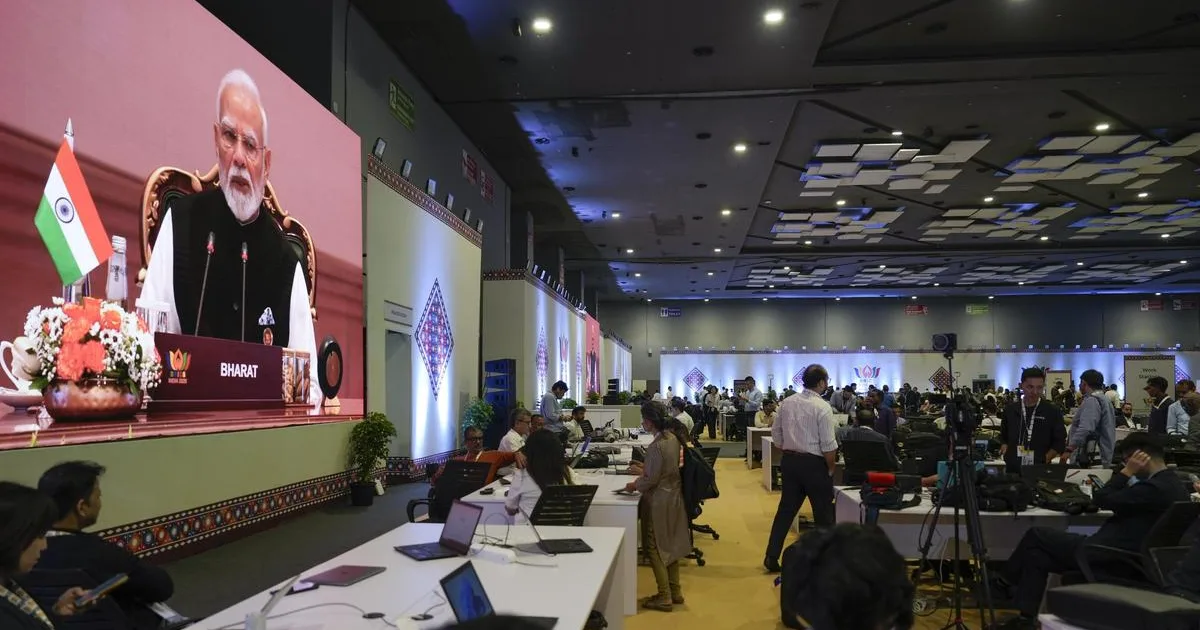
The 2026 BRICS Summit convened in New Delhi concluded its inaugural plenary sessions with the unanimous adoption of the landmark New Delhi Declaration, representing a comprehensive consensus among member nations on revitalizing multilateral governance, strengthening cross-border financial resilience, and amplifying the collective voice of the Global South.
Hosted under India's rotating presidency at the state-of-the-art Bharat Mandapam convention complex, the summit brought together heads of state and senior diplomatic delegations from founding and newly admitted member countries, marking the most expansive high-level BRICS gathering to date.
1. Executive Summary: The New Delhi Declaration Core Commitments
The declaration outlines actionable frameworks across six key geopolitical and economic pillars:
| Strategic Pillar | Key Declaration Commitments | Implementation Mechanism |
|---|---|---|
| Multilateral Governance Reform | Comprehensive restructuring of the UN Security Council & IMF quotas | Coordinated voting blocs and joint reform proposals |
| Financial Interoperability | Expansion of local currency trade and BRICS Pay pilot testing | Bilateral central bank currency swaps & clearing houses |
| Artificial Intelligence Governance | Ethical, inclusive AI development bridging the Global North-South divide | BRICS AI Safety and Development Working Group |
| Climate Finance & Transition | Predictable, non-debt climate funding for developing economies | New Development Bank (NDB) green bond issuances |
| Supply Chain Diversification | Critical minerals, fertilizers, and agricultural trade corridors | Preferential customs and logistics cooperation treaties |
| Counter-Terrorism Alignment | Uncompromising condemnation of cross-border terrorism and terror financing | FATF-aligned intelligence and judicial coordination |
2. Transforming the International Financial Architecture
A defining theme of the New Delhi Summit was the acceleration of financial architecture diversification to insulate emerging economies from external macroeconomic volatility and unilateral economic sanctions:
- Local Currency Trade Expansion: Member states committed to increasing the proportion of bilateral trade settled in national currencies (INR, BRL, CNY, RUB, ZAR, AED), minimizing foreign exchange friction and conversion overheads.
- The BRICS Pay Cross-Border Protocol: Central bank governors presented the operational blueprint for an interoperable messaging network enabling direct cross-border payments between commercial banks in member countries without routing through traditional Western intermediary correspondent networks.
- Scaling the New Development Bank (NDB): The NDB was mandated to expand local-currency project financing to over 40% of its total loan portfolio by 2027, funding critical transport, renewable energy, and urban infrastructure projects across Asia, Africa, and Latin America.
3. Global South Solidarity and Inclusivity
Prime Minister Narendra Modi, chairing the summit proceedings, emphasized that the expanding BRICS platform is not conceived as an anti-Western confrontation bloc, but rather as an indispensable, inclusive forum dedicated to correcting historical imbalances in global governance:
Key Thematic Pillars from the Summit Address:
1. Sovereign Equality: Every nation's development model and civilizational identity must be respected.
2. Rule-Shaping Leadership: Emerging markets must actively participate in framing future global standards for digital governance, outer space exploration, and bio-economy frameworks.
3. Food and Energy Security: Shielding essential fertilizer, grain, and fuel supply chains from geopolitical conflict zones.
4. Multilateral Institutional Reform Agenda
The New Delhi Declaration delivered a resonant call for the urgent, time-bound restructuring of the United Nations Security Council (UNSC) to reflect 21st-century geopolitical realities by granting permanent representation to developing nations from Africa, Latin America, and Asia.
Furthermore, the declaration demanded that voting shares and quota formulas within the International Monetary Fund (IMF) and World Bank be adjusted to reflect the true economic weight of dynamic emerging markets.
5. Frequently Asked Questions (FAQ)
What is the New Delhi Declaration adopted at the BRICS 2026 Summit?
It is a comprehensive multilateral consensus document adopted by BRICS leaders outlining joint strategies for UN reform, local currency trade, cross-border payment integration, climate finance, and AI governance.
How does BRICS Pay function according to the summit blueprint?
BRICS Pay is designed as a decentralized messaging and settlement mechanism allowing participating member banks to conduct direct cross-border trade transactions in local currencies without relying solely on legacy clearing networks.
What is the stance of BRICS on international alliances and Western institutions?
Member states affirmed that BRICS is non-aligned and constructive rather than adversarial, seeking to complement and reform international institutions to better serve developing economies.
6. Strategic Takeaways & Outlook
- Unprecedented Consensus: The successful adoption of the New Delhi Declaration underscores the resilience of BRICS as a coherent diplomatic and economic bloc despite diverse national priorities.
- Pragmatic Financial Autonomy: Bilateral currency settlements and alternative financial messaging systems provide vital risk mitigation for emerging market commerce.
- Amplified Voice for Developing Nations: The summit cements India's position as a bridge-builder and leading voice for Global South institutional representation.