

 QuranGPT
The Surveillance State Debate: Legal Experts and Civil Liberty Groups Challenge Unregulated Facial Recognition at Protest Sites in India
A comprehensive constitutional, legal, and human rights analysis on the growing deployment of automated biometric facial recognition technology (FRT) and drone surveillance at democratic protest gatherings, analyzing Puttaswamy privacy precedents and the necessity of statutory legislative safeguards.
The Holy Quran Team
Author
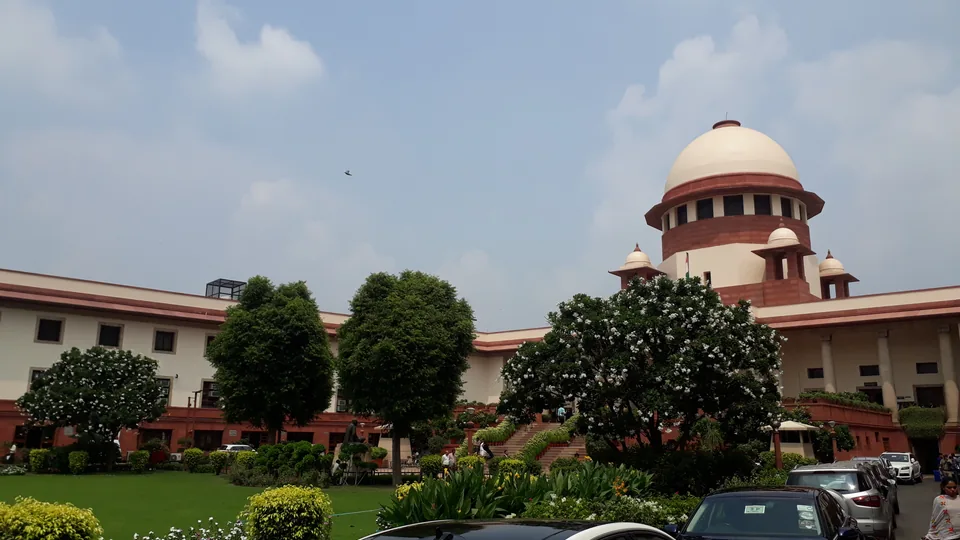
The Surveillance State Debate: Legal Experts and Civil Liberty Groups Challenge Unregulated Facial Recognition at Protest Sites in India
In an escalating constitutional controversy that sits at the intersection of advancing artificial intelligence law enforcement tools and fundamental democratic freedoms, civil liberty organizations, legal scholars, and privacy advocates across India have intensified their legal challenges against the widespread, unregulated deployment of Automated Facial Recognition Systems (AFRS) and high-definition aerial surveillance drones at public gatherings and peaceful democratic protests.
The issue was thrust into sharp focus following reports that state police departments in several metropolitan capitals have routinely scanned the biometric facial geometries of peaceful student protesters, trade unionists, and environmental activists—cross-referencing captured images against police criminal history databases without individualized judicial warrants or statutory legislative authorization.
Constitutional jurists warn that unchecked mass biometric surveillance produces an insidious "chilling effect" on Article 19(1)(a) (Freedom of Speech and Expression) and Article 19(1)(b) (Right to Assemble Peaceably Without Arms), fundamentally violating the proportionality and necessity tests established by the Supreme Court in the historic nine-judge bench Puttaswamy Right to Privacy judgment.
1. The Constitutional Test: Puttaswamy's Proportionality Doctrine
In its landmark 2017 verdict (Justice K.S. Puttaswamy v. Union of India), the Supreme Court laid down an unyielding four-part test that any state intrusion into fundamental privacy must satisfy:
graph TD
    A["State Surveillance Action (Biometric FRT Scanning)"] --> B["Legality: Must be backed by a clear, codified statutory law passed by Legislature"]
    A --> C["Legitimate Aim: Must serve a pressing state need (preventing grave violence)"]
    A --> D["Suitability & Necessity: Must be the least intrusive means to achieve the goal"]
    A --> E["Proportionality: Benefits must strictly outweigh the infringement on rights"]

    B -.-> F["FAIL: FRT deployed purely via executive circulars without Parliamentary Act"]
    E -.-> G["FAIL: Indiscriminate mass profiling of peaceful citizens without reasonable suspicion"]
The Legal Void Documented:
- Absence of Statutory Enactment: Currently, automated facial recognition systems are deployed under vague executive police orders rather than an explicit legislative act with statutory checks and balances.
- Lack of Independent Judicial Oversight: There is no judicial warrant requirement before an ordinary citizen's face is cataloged into police intelligence databases.
- Indefinite Data Retention: Captured biometric logs and high-definition footage are frequently retained indefinitely on un-audited private server clouds without mandatory automated deletion timelines.
2. Technical Vulnerabilities and Algorithmic Bias
International and domestic computer vision research has documented alarming error rates in automated biometric classification:
| Technical Challenge | Empirical Finding | Constitutional Ramification |
|---|---|---|
| False-Positive Matching Rates | Error rates up to 14.5% higher on marginalized caste, dark-skinned, and female subjects. | Wrongful police detention and harassment of innocent bystanders. |
| Lack of Algorithmic Transparency | Proprietary closed-source algorithms prevent independent defense audit. | Inability of accused citizens to cross-examine forensic AI evidence in court. |
| Mission Creep | Systems deployed for tracing missing children repurposed for political tracking. | Total erosion of citizen trust in benign public safety technologies. |
3. The Chilling Effect on Democratic Dissent
The right to peaceful protest is the heartbeat of Indian constitutional democracy. When citizens know that attending a peaceful march will result in their biometric identity being permanently cataloged into state surveillance databases, democratic participation collapses:
"An environment of constant, invisible biometric observation transforms free citizens into self-censoring subjects. When privacy disappears from public squares, the democratic impulse to question executive power is suffocated."
— Extract from Civil Liberties Legal Representation
Parliamentary standing committees and judicial benches have been urged to mandate a comprehensive moratorium on mass facial recognition at peaceful assemblies until a dedicated, rights-respecting statutory framework is enacted.
4. Conclusion: Balancing Public Safety with Democratic Freedom
Modern law enforcement agencies undeniably require technological tools to investigate genuine criminal conspiracies and prevent violent terrorism.
However, in a constitutional democracy governed by the rule of law, technological convenience cannot be purchased at the price of fundamental human dignity. Safeguarding the right to privacy is not an obstacle to national security; it is the ultimate defense of the republic itself.