

 QuranGPT
The Synthetic Workforce: How Autonomous Multi-Agent Orchestration and Tool-Calling Loops are Transforming Enterprise Software Engineering
A comprehensive artificial intelligence systems, agentic workflow, and autonomous computing report on multi-agent frameworks (LangGraph, CrewAI, AutoGen) utilizing hierarchical planning, dynamic tool-calling, reflection loops, and persistent state machines to execute complex enterprise workflows.
The Holy Quran Team
Author
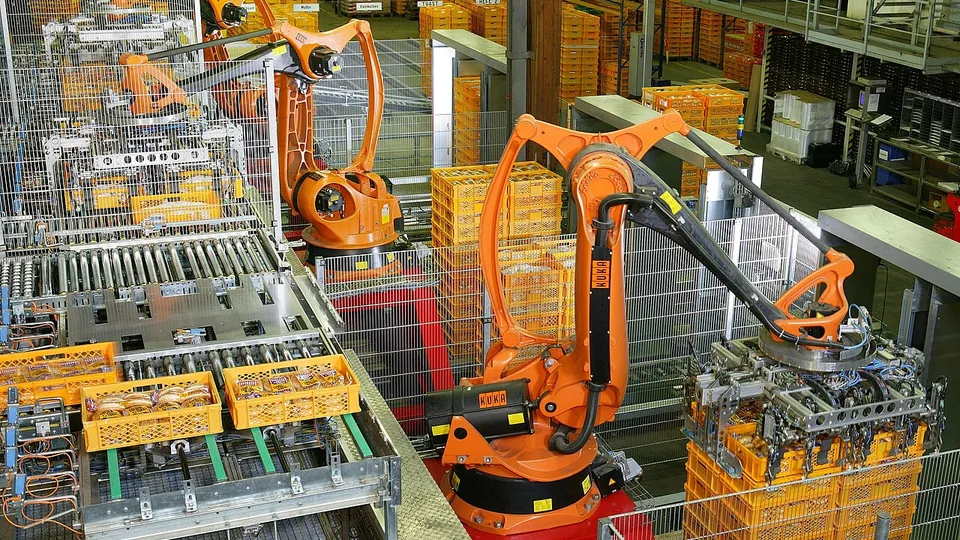
The artificial intelligence paradigm has officially migrated beyond single-prompt conversational chat interfaces. Today, the most sophisticated enterprise software applications are driven by Autonomous Multi-Agent Systems (MAS)—networks of specialized, collaborative artificial agents operating within cyclical, stateful execution graphs with dynamic tool-calling capabilities.
While a single LLM invocation is constrained by prompt context limits and linear completion tendencies, Agentic Workflows empower artificial agents to act as autonomous actors: decomposing ambiguous, multi-step human goals into hierarchical task trees, invoking external APIs and terminal shells, inspecting tool execution outputs, reflecting on errors, and self-correcting their code in an iterative loop until the verified goal is achieved.
Across financial analysis, full-stack software development, automated cybersecurity red teaming, and legal contract discovery, enterprise engineering teams are orchestrating hierarchical swarms of specialized agents—acting as project managers, research specialists, software architects, code reviewers, and automated QA testers—collaborating seamlessly across shared memory state machines.
1. Architectural Foundations: The Agentic Loop and Reflection Cycle
An autonomous agent operates fundamentally as a closed-loop control system governed by perception, reasoning, action, and reflection:
graph TD
    A["User Submits High-Level Goal: 'Build and Deploy Full-Stack Next.js App'"] --> B["Lead Planner Agent: Decomposes Goal into Directed Acyclic Graph (DAG) Task Tree"]

    B --> C["Worker Agent 1 (Researcher): Queries Web Search APIs & Synthesizes Spec"]
    B --> D["Worker Agent 2 (Architect): Generates Database Schema & API Route Signatures"]
    B --> E["Worker Agent 3 (Coder): Writes TypeScript Code via File-System Tools"]

    E --> F["Worker Agent 4 (Tester): Executes Unit Tests in Isolated Docker Sandbox"]

    F --> G{Did All Unit Tests Pass 100%?}
    G -- "NO: Test Errors Detected" --> H["Critic / Reflection Agent: Analyzes Error Stack-Trace & Sends Fix Plan to Coder Agent"]
    H --> E

    G -- "YES: All Tests Green" --> I["Deployment Agent: Commits to Git & Triggers CI/CD Pipeline"]
Key Architectural Superpowers of Multi-Agent Systems:
- Dynamic Tool Calling (Function Calling): Rather than hallucinating facts, agents autonomously invoke external deterministic tools—such as database SQL queries, web search engines, Python REPL sandboxes, and browser automation drivers—converting natural language into executable JSON tool schemas.
- Stateful Graph Orchestration (LangGraph / State Machines): Structuring agent interactions as cyclic directed graphs with explicit state checkpoints, human-in-the-loop approval pause points, and transactional time-travel rollback capabilities if an agent veers off course.
- Hierarchical Multi-Agent Delegation: Implementing a "Manager-Worker" hierarchy where a master coordinator agent monitors subordinate specialized agents, dynamically re-allocating compute and sub-tasks based on intermediate progress.
2. Technical Comparison: Single LLM Prompting vs. Agentic Workflow
The productivity and accuracy differences between linear prompting and autonomous multi-agent execution are profound:
| Engineering Dimension | Traditional Single LLM Prompting | Autonomous Multi-Agent System (MAS) | Impact on Complex Tasks |
|---|---|---|---|
| Task Complexity Ceiling | Limited to single-shot text generation | Multi-Day, Multi-Step Enterprise Projects | Executes 50+ tool steps autonomously. |
| Error Handling & Hallucination | Output accepted blindly (High Error Risk) | Iterative Unit-Testing & Self-Correction Loops | Slashing software defect rates by >90%. |
| Tool & Environment Interaction | Passive text generator (No real-world action) | Active API Execution, File I/O & Terminal Shells | Reads/writes code and deploys live cloud apps. |
| Context Window Management | Monolithic prompt fills up and degrades | Distributed Shared State Memory & Sub-Agent RAG | Infinite effective working memory. |
| Human-in-the-Loop Governance | All-or-nothing interaction | Granular Checkpoint Approvals & Rollbacks | Safe, audit-compliant enterprise deployment. |
3. Real-World Deployments: The Autonomous Software Engineering Team
Enterprise software engineering is currently experiencing the most radical transformation of the agentic era:
- Autonomous Bug Triage and Code Refactoring: Multi-agent swarms monitor production Sentry error alerts, pull the offending GitHub repository branch, reproduce the bug in a container, write the minimal surgical patch, verify test coverage, and submit a fully documented Pull Request to human senior engineers for one-click approval.
- Autonomous Financial Due Diligence: Agent teams ingest thousands of pages of corporate SEC 10-K filings, reconcile balance sheet footnotes, execute automated forensic Python cash-flow analysis scripts, and generate institutional investment committee memos in minutes.
4. Conclusion: The Emergence of Synthetic Collaboration
Autonomous multi-agent architectures mark the realization of computing systems that do not merely wait for instructions, but actively plan, execute, learn, and collaborate to achieve complex human objectives.
By harmonizing the specialized intelligence of diverse agents within disciplined, self-correcting state machines, humanity has created a synthetic workforce of boundless capability—multiplying human creative and intellectual leverage to solve the greatest engineering challenges of our time.