

 QuranGPT
Artificial Intelligence & Islamic Ethics: The Amanah of the Algorithm in 2026
As AI reshapes civilization, Islam's ethical framework of Amanah, Adl, and Hikmah offers the world's most comprehensive guide to building trustworthy, just, and compassionate technology.
The Holy Quran Team
Author
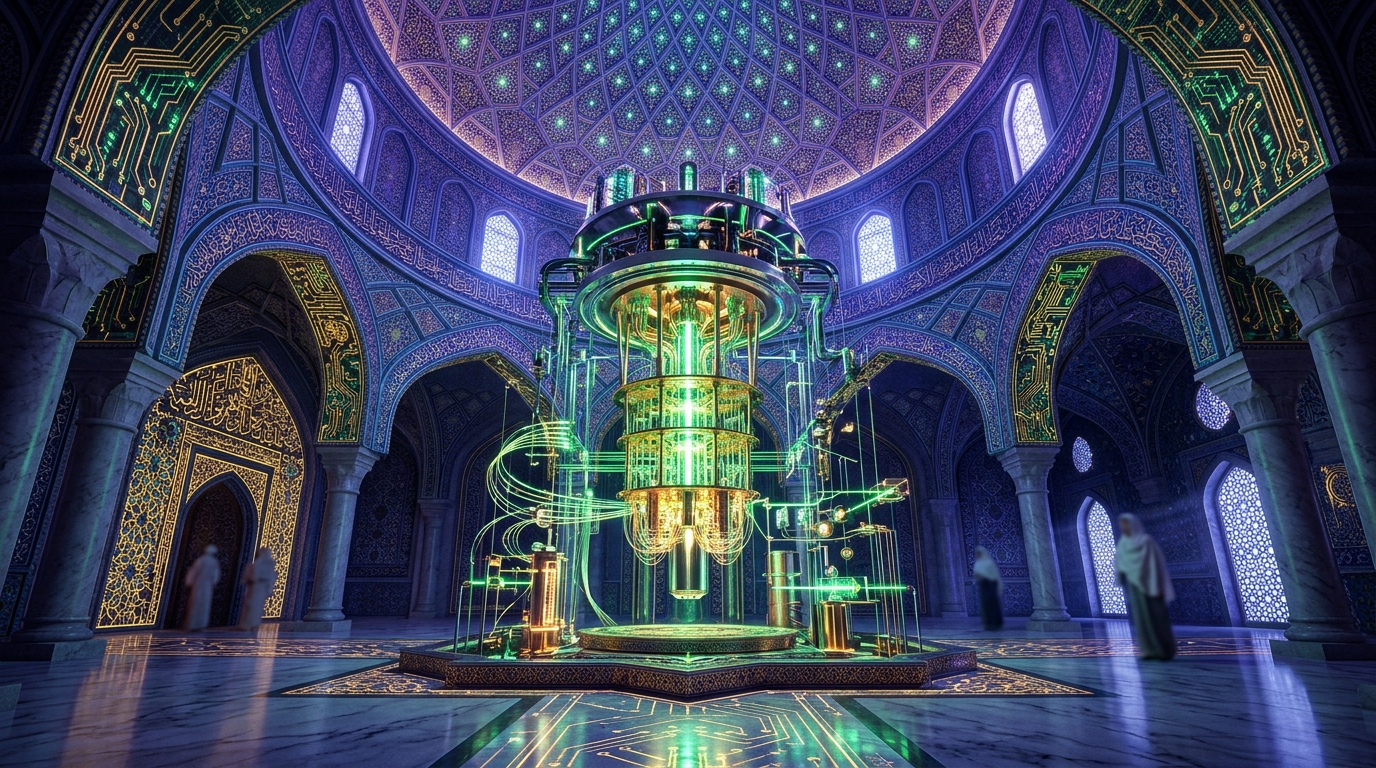
In October 2026, OpenAI's GPT-5 Omni, Google's Gemini Ultra 3, and Anthropic's Claude 4 are embedded into the daily decisions of over four billion people — writing their legal contracts, diagnosing their illnesses, selecting their news, grading their children's examinations, and even composing their wedding vows. Humanity has, for the first time in its history, delegated the sacred faculty of Aql — rational judgment — to a machine built from mathematics and electricity.
This is not a distant hypothetical. It is the present tense of civilization. And it poses a question that neither Silicon Valley nor Brussels has been able to answer with coherent moral authority: What are the ethical foundations upon which artificial intelligence must be built?
Fourteen centuries ago, a revelation descended upon the Prophet Muhammad ﷺ in the mountains of Makkah that contains, with breathtaking precision, the complete philosophical foundation for answering this question. The Islamic worldview — with its interlocking concepts of Amanah (sacred trust), Adl (absolute justice), Hikmah (wisdom), Maslaha (public interest), and La Darar (do no harm) — represents not merely a religious tradition but the most sophisticated and complete ethical system for governing transformative technology that humanity possesses.
1. The Crisis of Machine Ethics: What Western Frameworks Are Missing
The dominant frameworks for AI ethics emerging from Western institutions — the EU AI Act (2024), the US Executive Order on AI Safety (2023), the IEEE's Ethically Aligned Design principles — share a common philosophical ancestor: Enlightenment liberalism. They are built on concepts of individual rights, utilitarian calculus, and procedural fairness.
These frameworks produce principles: transparency, accountability, fairness, privacy, safety. But they fail at a fundamental level because they lack what philosophers call a telos — a vision of what human beings are for, what the purpose of technology in human life should be, and what moral obligations flow from the act of creation itself.
The result is a profound ethical vacuum. Machine learning systems optimize relentlessly for engagement metrics while destroying adolescent mental health (Instagram's own internal research, leaked 2021, confirmed Instagram made body image issues worse for 32% of teenage girls). Facial recognition systems deployed by law enforcement carry error rates up to 34.7% higher for darker-skinned women than for lighter-skinned men (NIST FRVT Report, 2019). Large language models trained on billions of web pages reflect and amplify the full spectrum of human biases — racism, sexism, religious prejudice — at industrial scale.
The architects of these systems know they are causing harm. They continue because no framework with genuine moral authority compels them to stop.
Islam has that moral authority. And it begins with a single concept.
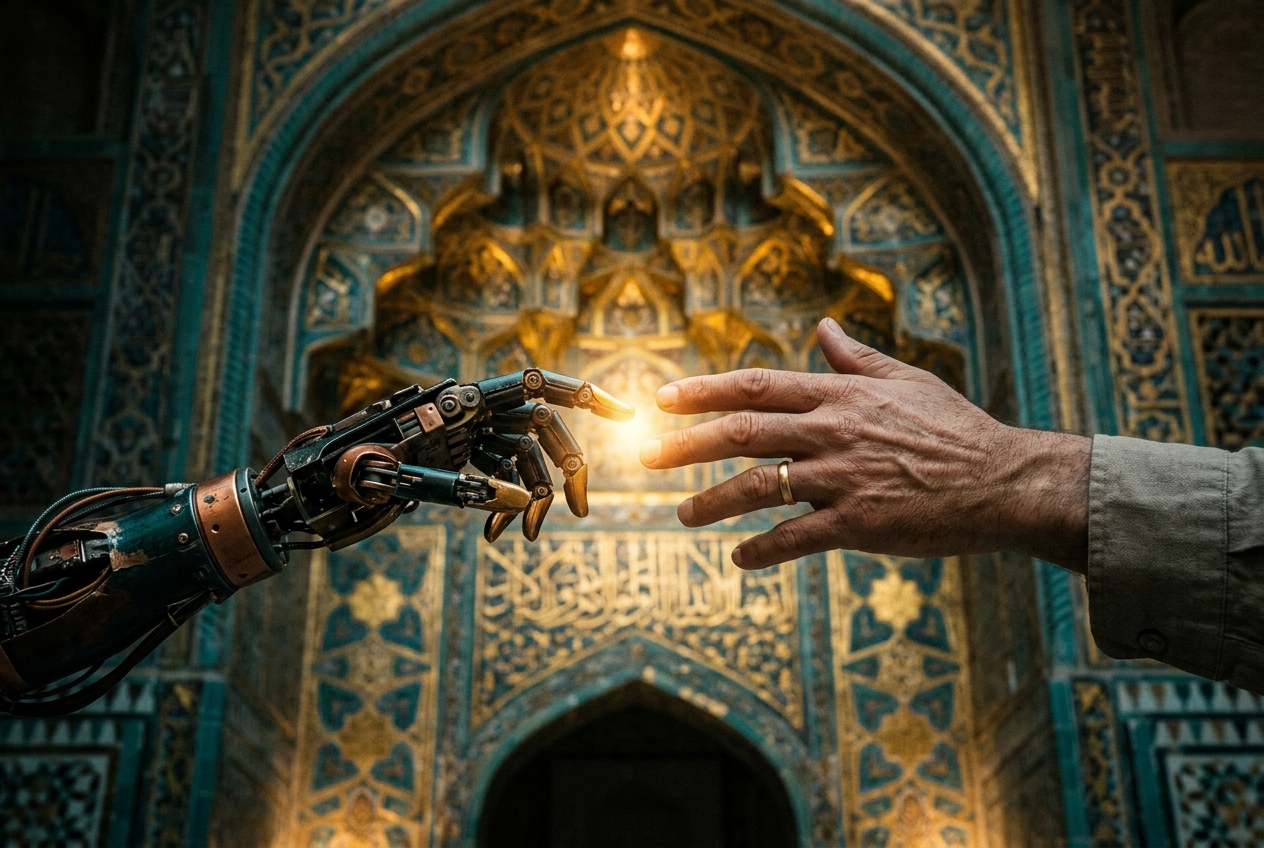
2. Amanah: The Sacred Trust That Technology Cannot Escape
The Quran introduces the concept of Amanah in one of its most profound and philosophically demanding passages:
إِنَّا عَرَضْنَا ٱلْأَمَانَةَ عَلَى ٱلسَّمَـٰوَٰتِ وَٱلْأَرْضِ وَٱلْجِبَالِ فَأَبَيْنَ أَن يَحْمِلْنَهَا وَأَشْفَقْنَ مِنْهَا وَحَمَلَهَا ٱلْإِنسَـٰنُ ۖ إِنَّهُۥ كَانَ ظَلُومًۭا جَهُولًۭا
Surah Al-Ahzab (33:72): "Indeed, We offered the Trust to the heavens and the earth and the mountains, and they declined to bear it and feared it; but the human being [undertook to] bear it. Indeed, he was unjust and ignorant."
Classical exegetes — Imam Ibn Kathir, Imam al-Tabari, and Imam al-Qurtubi — interpreted Amanah as the comprehensive moral responsibility that distinguishes humanity: the capacity and obligation to choose between right and wrong, to be accountable to God for one's choices, and to exercise one's freedom in service of justice and truth.
When a Muslim engineer at Google, Meta, or a Riyadh-based tech startup writes code that will influence the decisions of millions, they are carrying the Amanah. The algorithm is not ethically neutral infrastructure. It is an extension of human moral agency — and every bias it encodes, every harm it perpetuates, every injustice it automates is a betrayal of the trust that Allah placed upon every rational adult (Mukallaf) human being.
The Prophet Muhammad ﷺ defined the betrayal of Amanah with exceptional clarity. Narrated by Abu Hurairah (may Allah be pleased with him):
"There are three signs of a hypocrite: when he speaks he lies, when he makes a promise he breaks it, and when he is trusted he betrays." (Sahih al-Bukhari #33, Sahih Muslim #59)
Replace "he speaks" with "the system outputs," replace "he makes a promise" with "the product's marketing," and replace "he is trusted" with "user data is collected" — and you have a precise moral audit of the technology industry in 2026.
3. Adl: Justice as a Non-Negotiable Algorithm
The second pillar of Islamic AI ethics is Adl — absolute, impartial justice. Allah commands:
يَـٰٓأَيُّهَا ٱلَّذِينَ ءَامَنُوا۟ كُونُوا۟ قَوَّٰمِينَ بِٱلْقِسْطِ شُهَدَآءَ لِلَّهِ وَلَوْ عَلَىٰٓ أَنفُسِكُمْ أَوِ ٱلْوَٰلِدَيْنِ وَٱلْأَقْرَبِينَ
Surah An-Nisa (4:135): "O you who have believed, be persistently standing firm in justice, witnesses for Allah, even if it be against yourselves or parents and relatives."
The command is absolute: justice must be upheld even when it is costly to you personally, to your family, or to your corporate shareholders. Applied to AI systems, this means:
First: An AI hiring tool that screens resumes must be audited for bias against protected groups — not because a regulator mandates it, but because perpetuating racial or gender discrimination in employment is a violation of Adl that the Creator Himself prohibits, and for which every engineer involved in its deployment will be accountable.
Second: An AI medical diagnostic system must be trained on datasets that include adequate representation of all ethnic groups. A system trained primarily on European genetic data that fails at higher rates for African or South Asian patients does not merely fail a regulatory standard — it violates the Islamic prohibition on causing harm (La Darar wa La Dirar: "There shall be no harm and no reciprocation of harm," a foundational maxim of Islamic jurisprudence narrated by Ibn Abbas, may Allah be pleased with him, and graded Hasan by Imam al-Nawawi).
Third: Algorithmic content recommendation systems that maximize watch-time by feeding conspiracy theories, radical content, or depression-inducing comparison to vulnerable users are actively causing harm. They are Zulm — injustice — perpetrated at industrial scale.
4. Hikmah: Wisdom — The Irreducible Human Element
يُؤْتِى ٱلْحِكْمَةَ مَن يَشَآءُ ۚ وَمَن يُؤْتَ ٱلْحِكْمَةَ فَقَدْ أُوتِىَ خَيْرًۭا كَثِيرًۭا ۗ وَمَا يَذَّكَّرُ إِلَّآ أُو۟لُوا۟ ٱلْأَلْبَـٰبِ
Surah Al-Baqarah (2:269): "He grants wisdom to whom He wills, and whoever has been granted wisdom has certainly been given much good. And none will remember except those of understanding."
Hikmah is contextual, holistic, value-laden judgment that integrates knowledge with moral purpose. It is, by definition, what artificial intelligence cannot possess. A large language model processes tokens and predicts probable continuations. It has no understanding of why words mean what they mean, no lived experience of suffering and joy, no accountability before the Divine, and no love for the people it serves.
The most dangerous error of 2026 is not that AI will become conscious and rebel. The danger is that humans will mistake statistical competence for wisdom and abdicate their own moral judgment to machines that have none. When a doctor accepts an AI diagnostic without applying her own clinical wisdom. When a judge accepts a recidivism risk score without interrogating its racial assumptions. When parents accept an algorithm's content recommendations for their children without exercising Hikmah about what their children should consume.
Islam's anthropology is unambiguous: Al-Khalifa (vicegerency) — the human being's stewardship of the earth — requires the exercise of Aql, Hikmah, and moral responsibility. These cannot be delegated to software. They can be assisted by it, but never replaced.
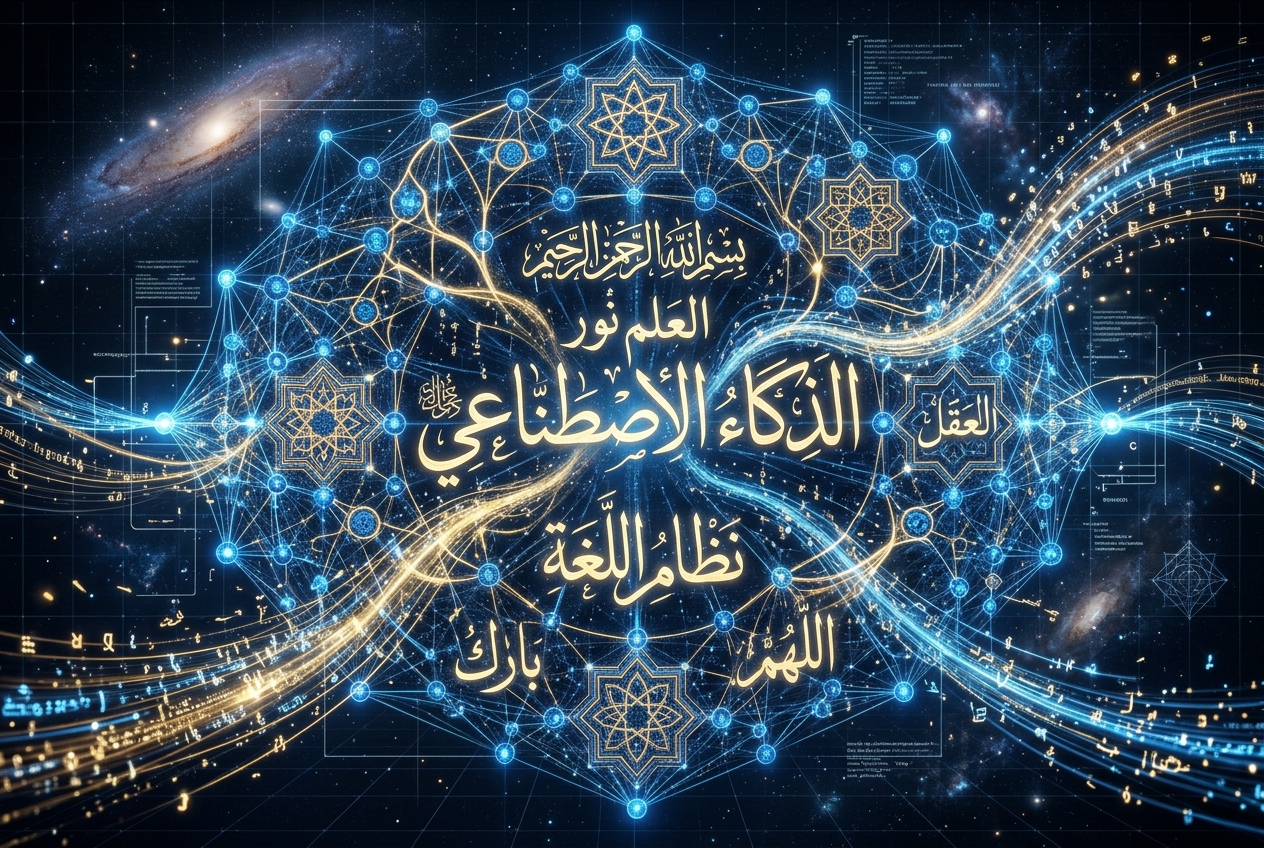
5. Maslaha Mursala: Islamic Public Interest Theory & AI Governance
The classical Maliki and Shafi'i concept of Maslaha Mursala — unrestricted public interest — provides Islam's most powerful tool for governing novel technologies. Formulated by Imam Al-Ghazali (d. 1111 CE) in his Al-Mustasfa and further developed by Imam Al-Shatibi (d. 1388 CE) in his Al-Muwafaqat, Maslaha theory holds that any action or policy must be evaluated by its effect on five essential human interests: life (Nafs), intellect (Aql), lineage/family (Nasl), property (Mal), and religion (Din).
Applied to contemporary AI governance, this five-interest framework produces a remarkably comprehensive regulatory checklist:
| Essential Interest | AI Threat | Islamic Response |
|---|---|---|
| Life (Nafs) | Autonomous weapons, medical AI errors | Prohibition on systems with unchecked lethal authority |
| Intellect (Aql) | Addiction algorithms, misinformation | Obligation to design for cognitive freedom, not exploitation |
| Family (Nasl) | Surveillance of reproductive choices, child data harvesting | Strict privacy protections for family life |
| Property (Mal) | Algorithmic price discrimination, deepfake fraud | Zero-tolerance for AI-enabled financial manipulation |
| Religion (Din) | AI-generated anti-Islamic content, blasphemy generation | Red-line prohibition on systems that attack religious sanctity |
This framework, developed by scholars writing in 11th–14th century Andalusia and North Africa, maps onto the most sophisticated contemporary AI ethics discourse with an exactness that should humble secular ethicists.
6. The Emerging Landscape: Muslim Scholars and AI in 2026
The Muslim scholarly world is actively engaging with these questions. The Fiqh Council of North America issued a landmark Fatwa in March 2026 establishing that AI-generated content may not be attributed to human scholarship without clear disclosure, that using AI to generate Fatwas without qualified human oversight is impermissible (Haram), and that data collection without informed consent violates Hifz Al-Mal (protection of property, which includes data as property).
The Islamic Development Bank's 2026 AI Ethics Charter — signed by 34 member nations — incorporates Maslaha principles directly into its AI investment criteria. The Saudi Arabia National Data Management Office has adopted an "AI Shari'ah Compliance" certification pathway. The UAE's AI Minister Omar Al Olama has publicly stated that "Islamic values are not a constraint on AI development — they are its conscience."
These are not merely rhetorical gestures. They represent the beginning of a serious institutional effort to ensure that the most transformative technology in human history is governed by principles that have guided one of humanity's greatest civilizations for fourteen centuries.
7. A Practical Islamic AI Ethics Framework
For Muslim technologists, entrepreneurs, regulators, and citizens engaging with AI, the following Islamic principles should function as concrete, operational guidelines:
1. Niyyah (Intention) at System Design: Before building, clearly articulate whose interests the system serves. An AI system that maximizes shareholder profit by exploiting user psychology violates Amanah from its inception.
2. Shura (Consultation) in Dataset Curation: Diverse, inclusive consultation in training data selection is not merely good practice — it is the technological expression of the Quranic principle: "And consult them in the matter" (Surah Aal-e-Imran 3:159).
3. Hisba (Accountability Mechanism): Islamic governance traditionally employed a Muhtasib — a market inspector — to ensure merchants dealt fairly. AI systems require continuous, independent auditing that functions analogously: regular red-team testing, bias auditing, and public reporting.
4. La Darar (No Harm) as Hard Constraint: Unlike Western utilitarian frameworks that permit harm to minorities if aggregate benefit is maximized, Islamic ethics treats La Darar as an absolute constraint. An AI system that systematically harms any identifiable group cannot be justified by aggregate benefit to others.
5. Tawbah (Correction and Redemption): When an AI system causes documented harm, Islamic ethics demands swift, transparent correction — not litigation management and minimal disclosure. The concept of Tawbah applied institutionally means organizations must genuinely repent of harm caused and make measurable Kaffarah (amends).
8. Conclusion: The Algorithm Has a Lord
The deepest insight that Islamic ethics brings to the AI age is this: every line of code, every model weight, every product decision made by a Muslim engineer or technologist is a form of Ibadah — worship — if done with Ikhlas (sincerity) in service of what Allah has commanded: justice, mercy, truth, and the flourishing of all human beings.
وَمَا خَلَقْتُ ٱلْجِنَّ وَٱلْإِنسَ إِلَّا لِيَعْبُدُونِ
Surah Adh-Dhariyat (51:56): "And I did not create the jinn and mankind except to worship Me."
Worship, in Islam, is not confined to the prayer mat. It encompasses every conscious, intentional act performed in alignment with Divine command. Building technology that serves human dignity is worship. Refusing to deploy a system you know is biased is worship. Whistleblowing on an employer who causes harm is worship.
The algorithm has no soul, no conscience, and no Lord. But its creators do. And on the Day when every deed is weighed with absolute precision, the question will not be "how many parameters did your model have?" but "did you carry the Amanah?"
The most consequential engineering challenge of our era is not achieving artificial general intelligence. It is ensuring that the humans who build it never forget that they answer to a Standard infinitely higher than a benchmark.