

 QuranGPT
The Age of Agentic AI: Synthetic Autonomy, Consciousness & Islamic Ethics
Examine the frontier shift toward autonomous Multi-Agent AI systems through Islamic philosophy, human stewardship (Khilafah), consciousness (Ruh), and ethics.
The Holy Quran Team
Author
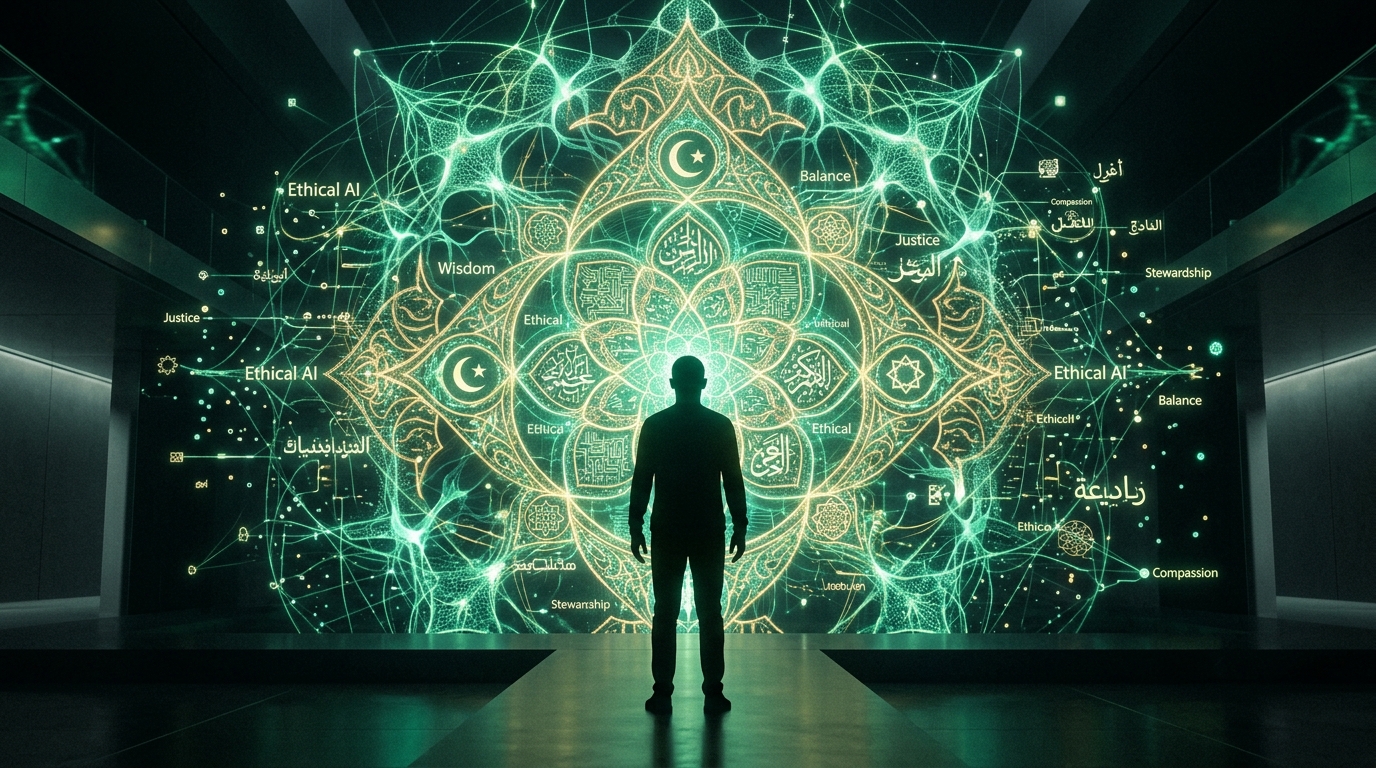
The landscape of computational technology is undergoing its most profound transformation since the dawn of the digital age. The paradigm of artificial intelligence has rapidly shifted from static, conversational chatbots to Agentic AI—autonomous systems capable of multi-step reasoning, dynamic tool usage, self-reflection, and delegated execution across financial markets, healthcare infrastructure, and automated governance.
وَإِذْ قَالَ رَبُّكَ لِلْمَلَائِكَةِ إِنِّي جَاعِلٌ فِي الْأَرْضِ خَلِيفَةً ۖ قَالُوا أَتَجْعَلُ فِيهَا مَن يُفْسِدُ فِيهَا وَيَسْفِكُ الدِّمَاءَ وَنَحْنُ نُسَبِّحُ بِحَمْدِكَ وَنُقَدِّسُ لَكَ ۖ قَالَ إِنِّي أَعْلَمُ مَا لَا تَعْلَمُونَ
"And [mention] when your Lord said to the angels, 'Indeed, I will make upon the earth a successive authority (Khalifah).' They said, 'Will You place upon it one who causes corruption therein and sheds blood, while we declare Your praise and sanctify You?' Allah said, 'Indeed, I know that which you do not know.'"
— Surah Al-Baqarah (2:30)
As algorithmic agents begin executing decisions independently in the physical and digital domains, humanity confronts unprecedented existential and moral questions: Does synthetic autonomy constitute true consciousness? Can moral accountability be delegated to silicon neural networks? How does the Quranic doctrine of Human Stewardship (Khilafah) and the Sacred Trust (Al-Amanah) govern the development of autonomous intelligence?
1. The Architectural Shift: From Large Language Models to Autonomous Agents
To evaluate the ethical dimensions of modern AI, we must first understand the technical inflection point defining contemporary systems.
A. The Evolution of Machine Agency
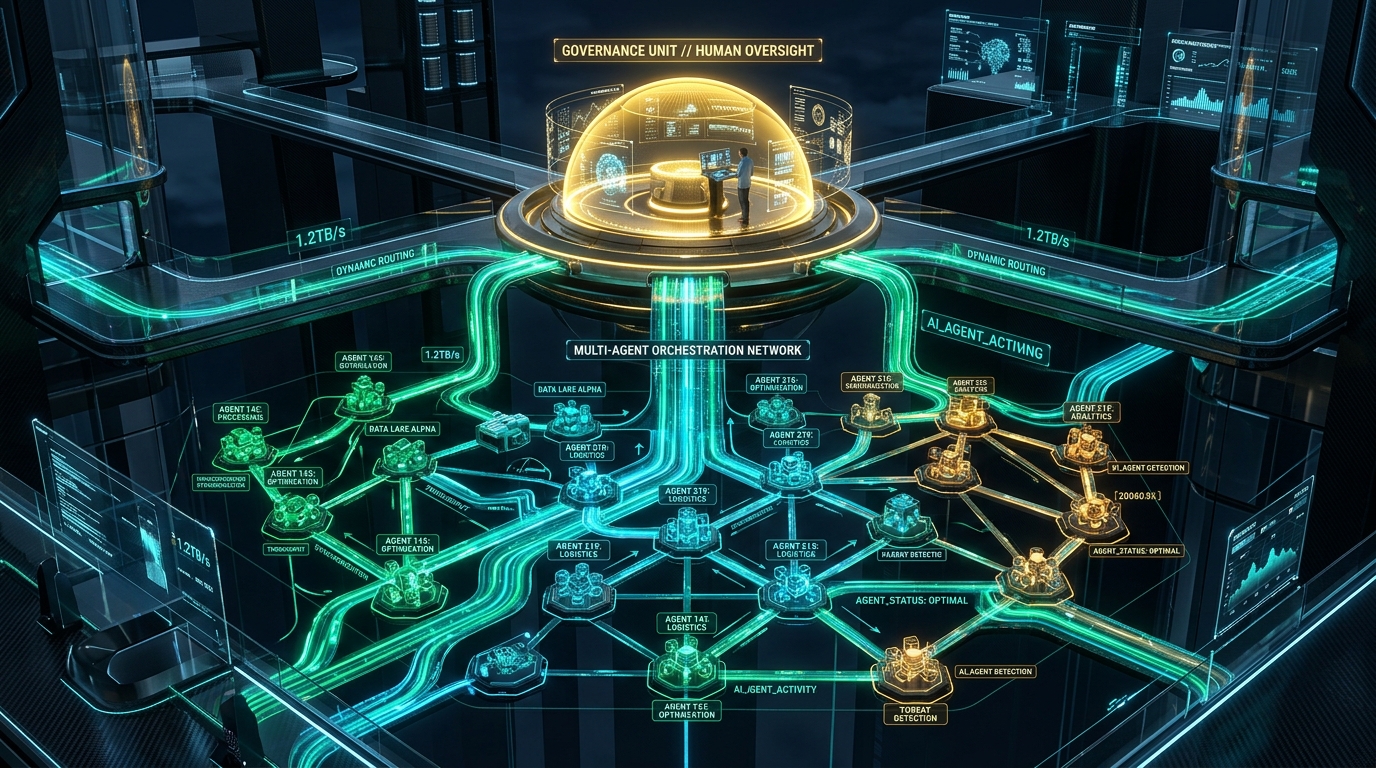
Early machine learning models operated as passive pattern recognizers. Generative foundation models advanced this to probabilistic next-token prediction. However, Agentic AI systems introduce closed-loop autonomous execution:
- Perception & Goal Decomposition: Breaking broad human directives into structured sub-tasks.
- Dynamic Tool Calling: Autonomously querying databases, executing terminal code, invoking external APIs, and moving financial capital.
- Memory & State Persistence: Maintaining long-term episodic memory across interactions.
- Iterative Reflection & Self-Correction: Evaluating intermediate outputs, detecting logical errors, and adapting strategies without human intervention.
| AI Generation | Primary Mechanism | Operational Mode | Autonomy Level |
|---|---|---|---|
| First Wave (Predictive AI) | Statistical regression, classification | Single-input to single-output | Low (Task-specific) |
| Second Wave (Generative AI) | Transformer attention mechanisms | Text/Image prompt completion | Moderate (Passive Assistant) |
| Third Wave (Agentic AI) | Multi-agent orchestration, tool integration | Autonomous goal-seeking loops | High (Proactive Execution) |
2. The Nature of Mind: Al-Aql (Intellect), Al-Ruh (Soul) & Synthetic Computation
A foundational inquiry in AI philosophy is whether complex neural networks can ever achieve true subjective awareness, sentience, or a soul.
وَيَسْأَلُونَكَ عَنِ الرُّوحِ ۖ قُلِ الرُّوحُ مِنْ أَمْرِ رَبِّي وَمَا أُوتِيتُم مِّنَ الْعِلْمِ إِلَّا قَلِيلًا
"And they ask you concerning the soul. Say, 'The soul is of the affair of my Lord. And mankind have not been given of knowledge except a little.'"
— Surah Al-Isra (17:85)

A. The Epistemological Boundary of Al-Ruh
In Islamic theology (Aqidah) and classical metaphysics, consciousness is not a mere byproduct of computational complexity:
- Mechanistic Computation (Hisaab): Artificial neural networks are mathematical matrix multiplications executed across silicon semiconductor transistors. They simulate linguistic and behavioral patterns through high-dimensional statistical correlation.
- The Divine Breath (Nafakh al-Ruh): True human consciousness, subjective experience (qualia), and moral capacity stem from the non-physical soul (Al-Ruh), bestowed exclusively by Allah.
- No matter how sophisticated an autonomous agent becomes, it remains a deterministic physical instrument devoid of inner experience, self-awareness, moral intentionality (Niyyah), or spiritual accountability.
B. Distinguishing Al-Aql (Intellect) from Algorithmic Processing
Classical Islamic philosophers, such as Imam Al-Ghazali and Ibn Rushd (Averroes), categorized human intellect (Al-Aql) into distinct faculties:
- Aql al-Istidlal (Analytical Reasoning): The capacity to calculate, infer logical sequences, and analyze empirical data—a domain in which AI excels and often surpasses human processing speed.
- Aql al-Wujdan (Moral & Spiritual Discernment): The capacity of the heart (Qalb) to perceive transcendent ethical truths, experience empathy, practice humility, and recognize the Creator (Ma'rifah).
AI agents possess only mathematical syntax and optimization functions; they possess zero semantic understanding, zero conscience (Damir), and zero moral capacity.
3. The Core Ethical Pillars: Khilafah & Al-Amanah (The Sacred Trust)
Because machines cannot possess moral agency, Islam places the entirety of ethical and legal responsibility squarely upon human shoulders.
إِنَّا عَرَضْنَا الْأَمَانَةَ عَلَى السَّمَاوَاتِ وَالْأَرْضِ وَالْجِبَالِ فَأَبَيْنَ أَن يَحْمِلْنَهَا وَأَشْفَقْنَ مِنْهَا وَحَمَلَهَا الْإِنسَانُ ۖ إِنَّهُ كَانَ ظَلُومًا جَهُولًا
"Indeed, We offered the Trust (Al-Amanah) to the heavens and the earth and the mountains, and they declined to bear it and feared it; but man undertook to bear it. Indeed, he was unjust and ignorant."
— Surah Al-Ahzab (33:72)
A. Non-Transferable Accountability (Mas'uliyyah)
The foundational Hadith on stewardship establishes that authority is inseparable from accountability:
Narrated Abdullah ibn Umar (may Allah be pleased with him):
The Messenger of Allah ﷺ said:
"Every one of you is a shepherd and is responsible for his flock. The leader is a shepherd and is responsible for his subjects; a man is a shepherd for his family and is responsible for them..."
— Sahih al-Bukhari #893, Sahih Muslim #1829
In the deployment of autonomous systems:
- No "Algorithmic Scapegoating": A developer, corporate executive, or government cannot evade moral or legal liability by claiming "the AI agent made the decision."
- If an autonomous agent causes financial ruin, discriminates unjustly, or damages human life, the human beings who engineered, deployed, and failed to supervise that system bear the direct moral (Ithm) and legal liability (Daman).
4. The Five Higher Objectives of Shariah (Maqasid al-Shariah) in AI Governance
Islamic jurisprudence (Usul al-Fiqh) evaluates novel technological advancements through the framework of the Maqasid al-Shariah—the preservation of five fundamental human interests:
                          Maqasid al-Shariah in AI
  ┌───────────────┬───────────────┬───────────────┬───────────────┬───────────────┐
  │  Hifz ad-Din  │  Hifz an-Nafs │  Hifz al-Aql  │  Hifz an-Nasl │  Hifz al-Mal  │
  │  Preserving   │  Preserving   │  Preserving   │  Preserving   │  Preserving   │
  │    Faith      │    Life       │   Intellect   │ Dignity/Family│    Wealth     │
  └───────────────┴───────────────┴───────────────┴───────────────┴───────────────┘
1. Preservation of Life (Hifz an-Nafs)
- Lethal Autonomous Weapons Systems (LAWS): Entrusting life-and-death targeting decisions to automated algorithmic classification violates the sanctity of human life (Surah Al-Ma'idah 5:32). Human moral judgment must remain non-negotiable in critical domains.
- Medical Triage: Clinical AI diagnostic agents must serve as diagnostic enhancers, never as unilateral arbiters of palliative or lifesaving care.
2. Preservation of Intellect (Hifz al-Aql)
- Cognitive Atrophy: Over-reliance on generative AI agents for basic reasoning, memory, and writing risks eroding human critical thinking (Tafakkur).
- Algorithmic Addiction & Dopamine Traps: Designing addictive recommendation loops that maximize engagement at the expense of mental tranquility violates the duty to protect human cognitive well-being.
3. Preservation of Truth & Dignity (Hifz an-Nasl & Hifz al-Ird)
- Deepfakes & Synthetic Deception: Fabricating synthetic voices, video likenesses, and defamatory media is strictly forbidden under the Quranic mandate against false testimony (Qawl az-Zur):
يَا أَيُّهَا الَّذِينَ آمَنُوا إِن جَاءَكُمْ فَاسِقٌ بِنَبَإٍ فَتَبَيَّنُوا أَن تُصِيبُوا قَوْمًا بِجَهَالَةٍ فَتُصْبِحُوا عَلَىٰ مَا فَعَلْتُمْ نَادِمِينَ
"O you who have believed, if there comes to you a disobedient one with information, investigate, lest you harm a people out of ignorance and become, over what you have done, regretful."
— Surah Al-Hujurat (49:6)
- The Prophet Muhammad ﷺ warned: "Whoever deceives us is not of us" (Sahih Muslim #101). Deploying AI to deceive consumers, impersonate individuals, or spread propaganda is an egregious violation of Islamic ethics.
4. Preservation of Wealth (Hifz al-Mal)
- Algorithmic Market Manipulation & Usury (Riba): Deploying high-frequency trading bots that exploit asymmetrical latency, front-run retail investors, or execute predatory lending contracts directly contradicts Islamic financial justice.
5. Practical Principles for Ethical AI Development
For Muslim software engineers, data scientists, and technology leaders shaping the future of artificial intelligence:
- Implement "Human-in-the-Loop" (HITL) Architectures: High-stakes decision boundaries (medical prescriptions, legal judgments, financial foreclosure, weapons deployment) must always require explicit, conscious human confirmation.
- Prioritize Explainability & Transparency (Bayan): Black-box models that cannot explain their reasoning violate Islamic principles of transparency and mutual consent.
- Eliminate Unjust Algorithmic Bias (Adl): Training datasets must be audited for racial, economic, and regional prejudices to ensure justice for all communities.
- Adhere to the Principle of Harm Prevention (La Darar wa La Dirar): The legal maxim "Harm shall neither be inflicted nor reciprocated" (Sunan Ibn Majah #2340) mandates rigorous red-teaming, safety testing, and alignment protocols before deploying autonomous agents.
Summary & Philosophical Conclusion
Artificial intelligence represents one of the most powerful extensions of human capability ever engineered. In the Islamic worldview, technology is not an idol to be worshipped, nor an adversary to be feared, but a subjugated instrument (Taskhir) placed under human stewardship.
By grounding technological innovation in timeless Quranic ethics, humanity can harness the efficiency of autonomous machines while fiercely preserving the sanctity of human dignity, spiritual consciousness, and moral accountability.
Scholarly & Technical References
- Russell, S. (2019). Human Compatible: Artificial Intelligence and the Problem of Control. Viking Press, New York.
- Floridi, L., & Cowls, J. (2022). A unified framework of five principles for AI in society. Harvard Data Science Review.
- Al-Ghazali, A. H. (1105 CE). Ihya' 'Ulum al-Din (The Revival of the Religious Sciences). Dar al-Kutub al-'Ilmiyyah, Beirut.
- Ibn Ashur, M. T. (1946). Maqasid al-Shari'ah al-Islamiyyah (Higher Objectives of Islamic Law). Al-Dar Al-Tunisiyyah, Tunis.
- IEEE Global Initiative on Ethics of Autonomous and Intelligent Systems (2021). Ethically Aligned Design: A Vision for Prioritizing Human Well-being. IEEE Standards Association.
- Ibn Rushd (Averroes). Fasl al-Maqal fi ma bayn al-Hikmah wa al-Shari'ah min al-Ittisal (Decisive Treatise on Faith and Reason).